


Key points
- Frankfurt’s independent hotel The Blasky is now called Vienna House by Wyndham Frankfurt South. The rooftop restaurant and bar keep their name.
- As a stand-alone property, the hotel risked losing market share, says Tim Lichtenberg. The brand is above all meant to bring reach in sales and distribution.
- The hotel’s look was changed over in less than three months, along with new systems and processes, all while the hotel stayed open.
- A further 35 rooms are planned by the end of 2027. The building’s history, from the kindergarten to the table from Manila, remains visible.
An independent hotel, an international brand partner and a manager who knows both worlds: Frankfurt’s The Blasky is becoming Vienna House by Wyndham Frankfurt South. For Managing Director Tim Lichtenberg, the switch is a business decision that goes far beyond a new logo. While operations are converted to international brand standards in less than three months, the building’s special history is to be preserved. It is an example of the opportunities and challenges a franchise model brings for independent hoteliers.
When Tim Lichtenberg took over the management of the Frankfurt hotel, he faced a fundamental decision. Should The Blasky continue to operate as an independent hotel, or would a partnership with an international hotel group be the better way forward? With its rooftop restaurant, its individual design and an unusual building history, the hotel had built a profile of its own. At the same time, it had to hold its own in a hotel market strongly shaped by international brands.
Lichtenberg already knew the advantages of such a partnership from his own experience. He had previously run Vienna House by Wyndham Ernst Leitz Wetzlar, where, by his own account, the hotel became a regional market leader within two years. It was therefore clear to him early on that joining a brand was an option. However, he did not want just any international brand; he wanted to find a partner that matched the hotel’s existing identity.
“Right after I took over in Frankfurt, we started looking for a brand that suits our hotel – rather than a hotel concept into which we would first have to squeeze our property.”
The choice fell on Vienna House by Wyndham. The former The Blasky now bears the name Vienna House by Wyndham Frankfurt South, while the rooftop restaurant and the bar continue to operate under their existing name.¹
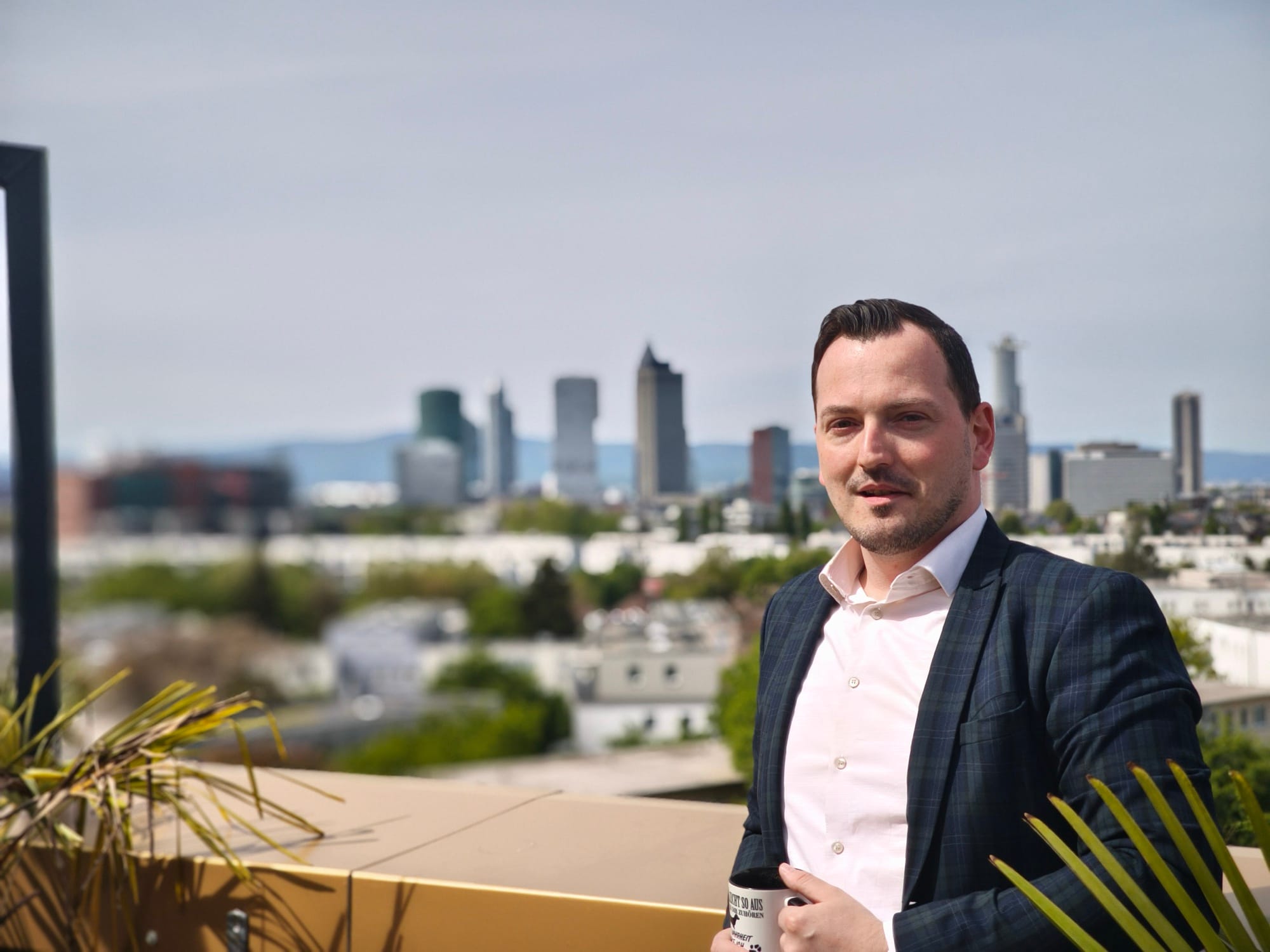
Why an independent hotel gives up its own brand
For many independent hoteliers, their own brand is an essential part of their entrepreneurial identity. They can make decisions immediately, shape their offering individually and do not have to follow the rules of an international organisation. This freedom comes at a price, however, especially in sales and international visibility.
Lichtenberg describes the Frankfurt hotel market as extremely competitive. According to him, around 380 hotels in and around Frankfurt make up the competitive environment. Many of these properties benefit from international brands, established distribution structures and loyalty programmes. An independent hotel, on the other hand, largely has to build that kind of reach on its own.
“We had to recognise that, as an independent property, we were increasingly at risk of losing market share.”
An independent hotel could try to make up for structural disadvantages with additional investment in marketing and sales. In The Blasky’s case, however, the manager estimates that this would have required considerable funds. Joining Wyndham is intended to change these conditions without the hotel having to give up its entire previous positioning.
For other independent hoteliers, this raises an interesting strategic question. The choice between independence and joining a brand is not only about which name will hang over the entrance in future. It is also about which investments a hotel can shoulder itself and which services can be organised more economically within a larger network.
Open-heart surgery
Just how demanding the switch really is becomes clear in day-to-day operations. In less than three months, The Blasky’s previous look had to be changed in almost every area guests come into contact with. At the same time, a new property management system, a new point-of-sale system and new workflows were introduced. Some new suppliers came on board as well, along with additional requirements and a considerably more complex distribution structure.
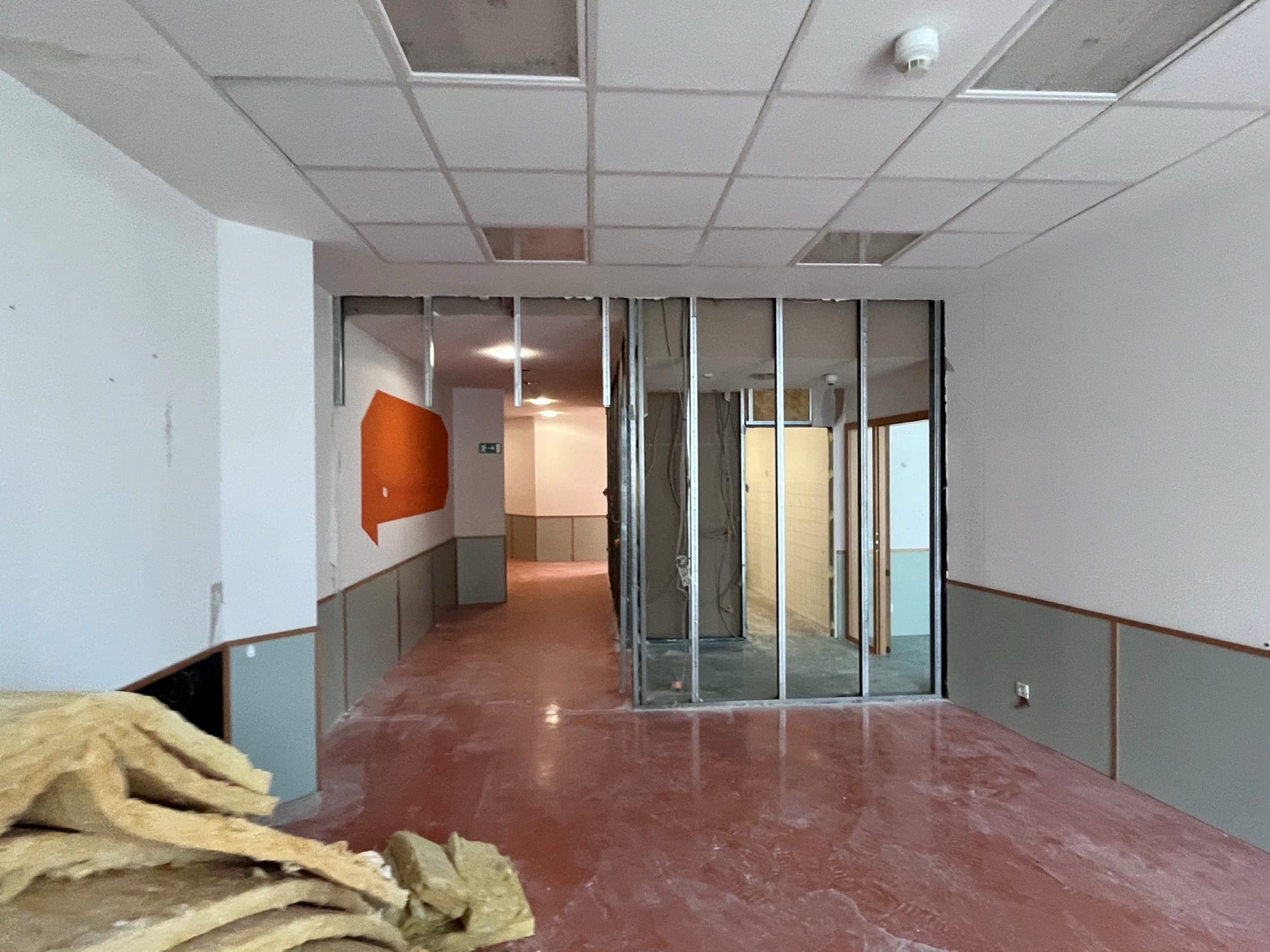
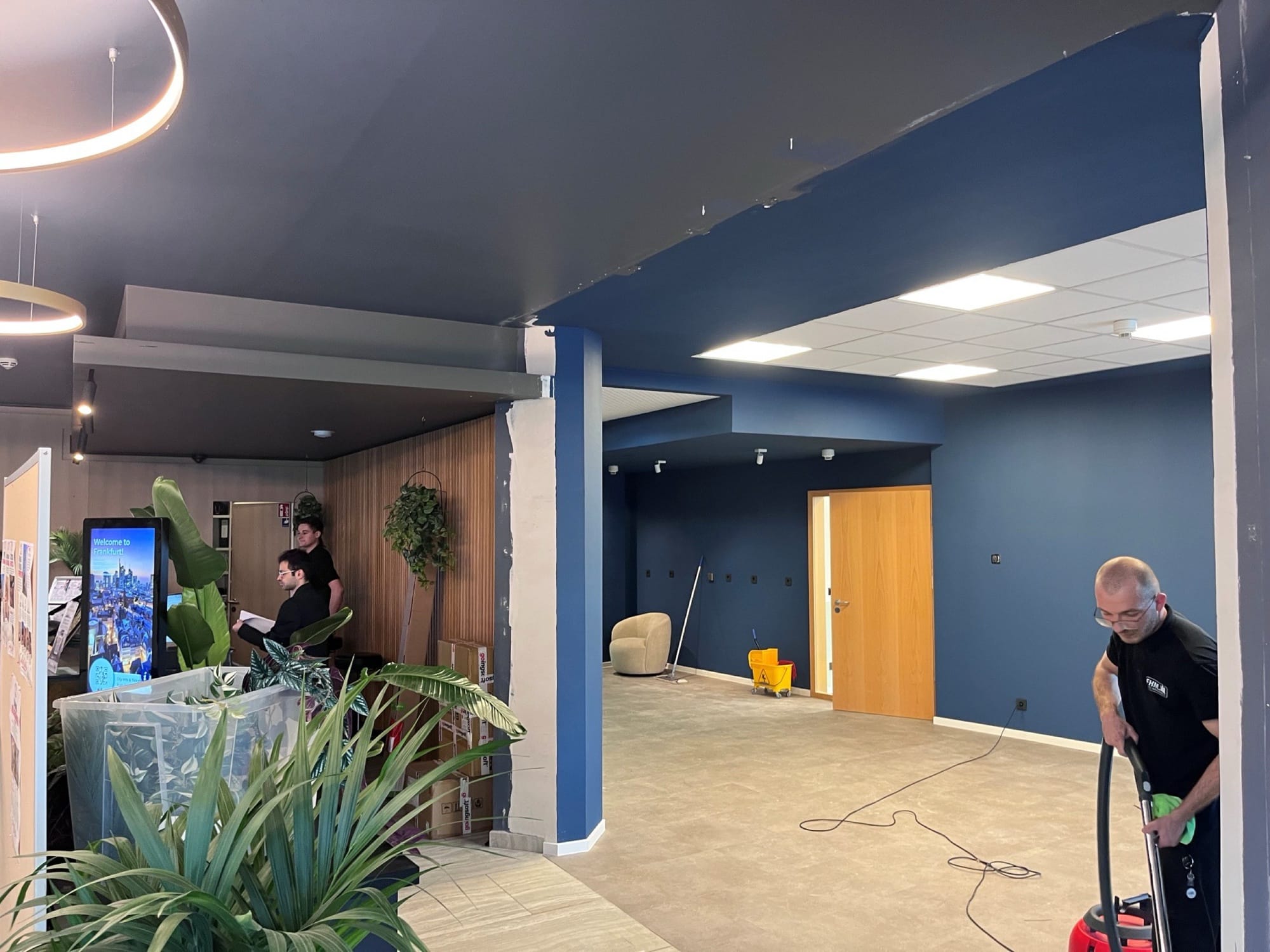
Renovating while the hotel stays open: the lobby during the works and shortly before completion. Photos: Vienna House by Wyndham Frankfurt South
Lichtenberg describes this phase with an unusually vivid comparison: “Making a changeover like this while the hotel is running is a bit like open-heart surgery.”
While guests continue to check in, eat in the restaurant and attend events, employees have to learn new systems and adjust to new processes. On top of that comes working with international teams from sales, marketing, brand management and guest relations. Where personal contacts and short decision-making paths used to shape everyday work, many more people and departments are now involved.
For the manager, leading the team is therefore one of the most important tasks during the rebrand. The new standards have to be implemented without overwhelming the team with the additional demands. He has already experienced how seemingly small details can be overlooked in a changeover like this.
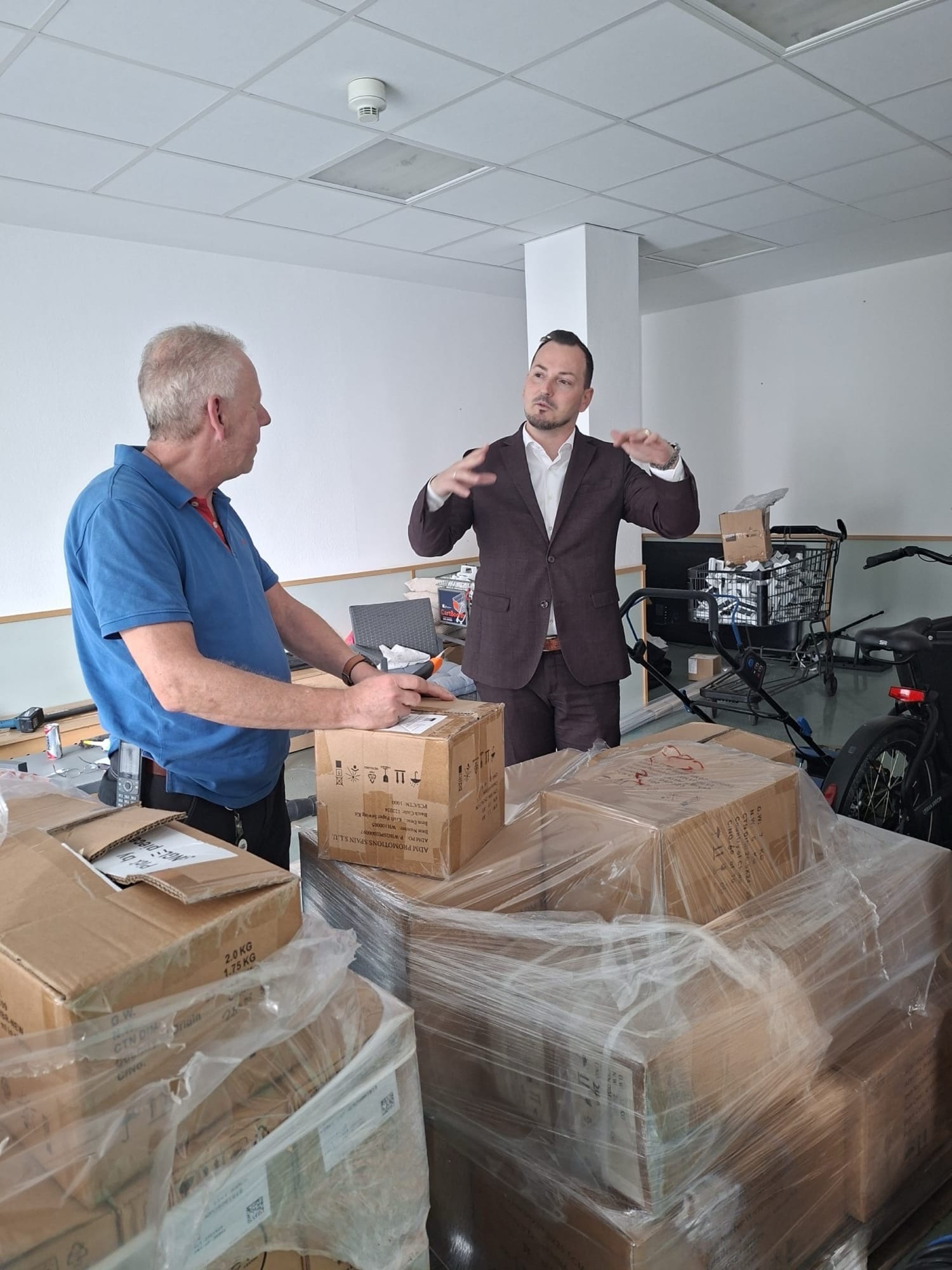
“For example, we simply forgot to inform the taxi companies. So there were a few guests who were driven to the wrong hotel. That’s part of it, too.”
The story shows how far the consequences of a rebrand can reach. It is not only booking systems, websites and signage that have to be adapted. External service providers and long-standing partners also need to know under which name a hotel can be found in future.
A kindergarten, a Chinese restaurant and a table from Manila
For all the organisational change, Lichtenberg wants to make the building’s past more visible. After all, the story of today’s hotel began long before its time as The Blasky.
Until recently, part of today’s meeting area housed a kindergarten. Instead of letting this past disappear completely during the redesign, the hotel is now deliberately drawing on it. The design of one of the meeting rooms recalls a former kindergarten group room. The idea is to create an atmosphere that differs from classic conference rooms and leaves room for new ideas.


Old becomes new: the Palmengarten meeting room before, during and after the renovation. Photos: Vienna House by Wyndham Frankfurt South
“Perhaps a guest is sitting today in a meeting room where they once played as a child.”
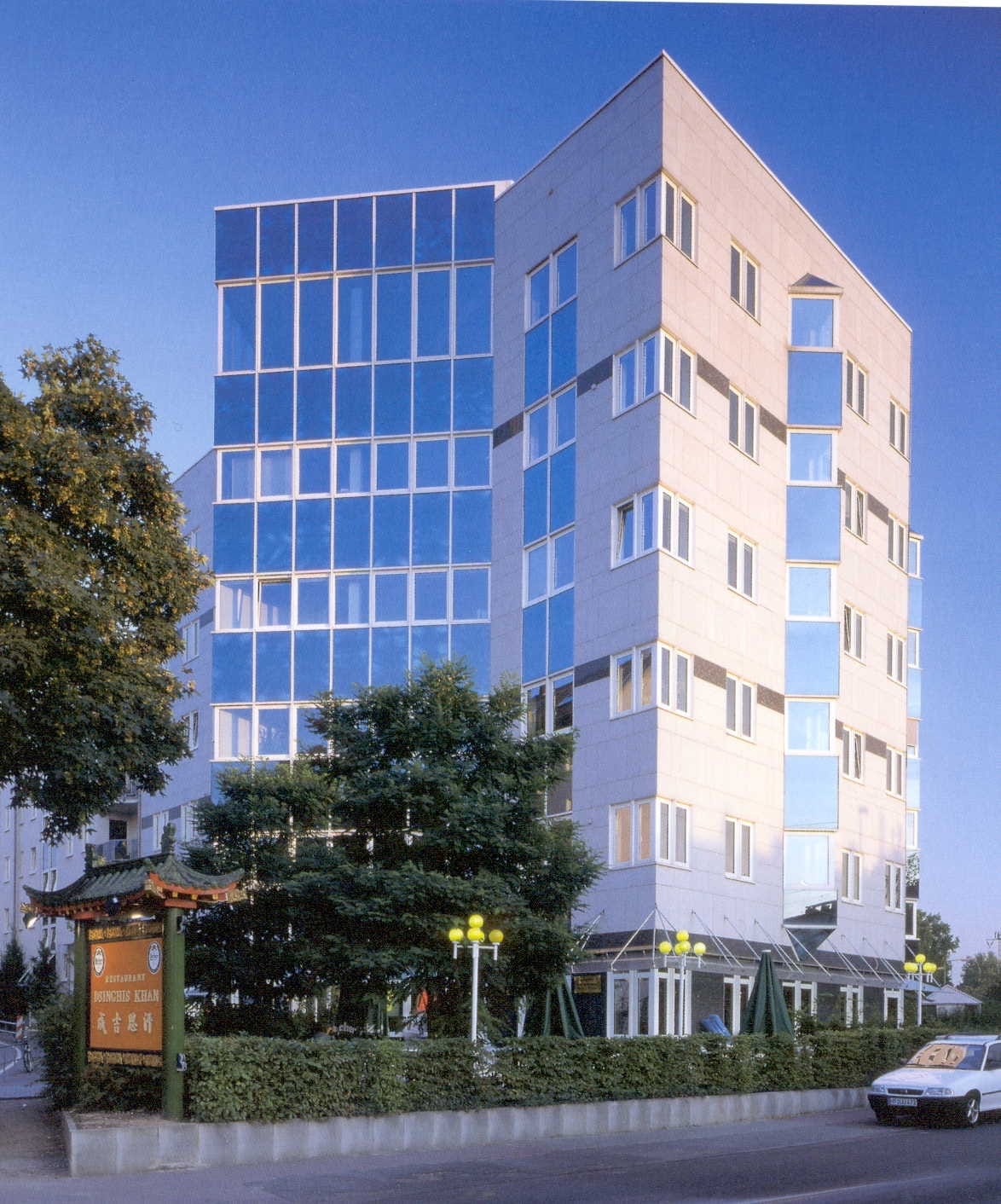
Walk through the building and you come across more traces of its past. In 1993, the ground floor was still home to a Chinese restaurant; today, photographs, original plans and archive material from the building’s history are on display in the hotel.¹ In between hang travel photos that employees have brought back from their trips. In this way, the building tells not only its own story but also that of the people who work in it.
One object is particularly closely linked to the building’s history: a large table that now stands in the Alexander Boardroom. It originally comes from Manila and was already an important meeting point during early planning and later changes to the building. To bring it to its current location on the ground floor, it had to be moved at considerable effort and even reduced in size.
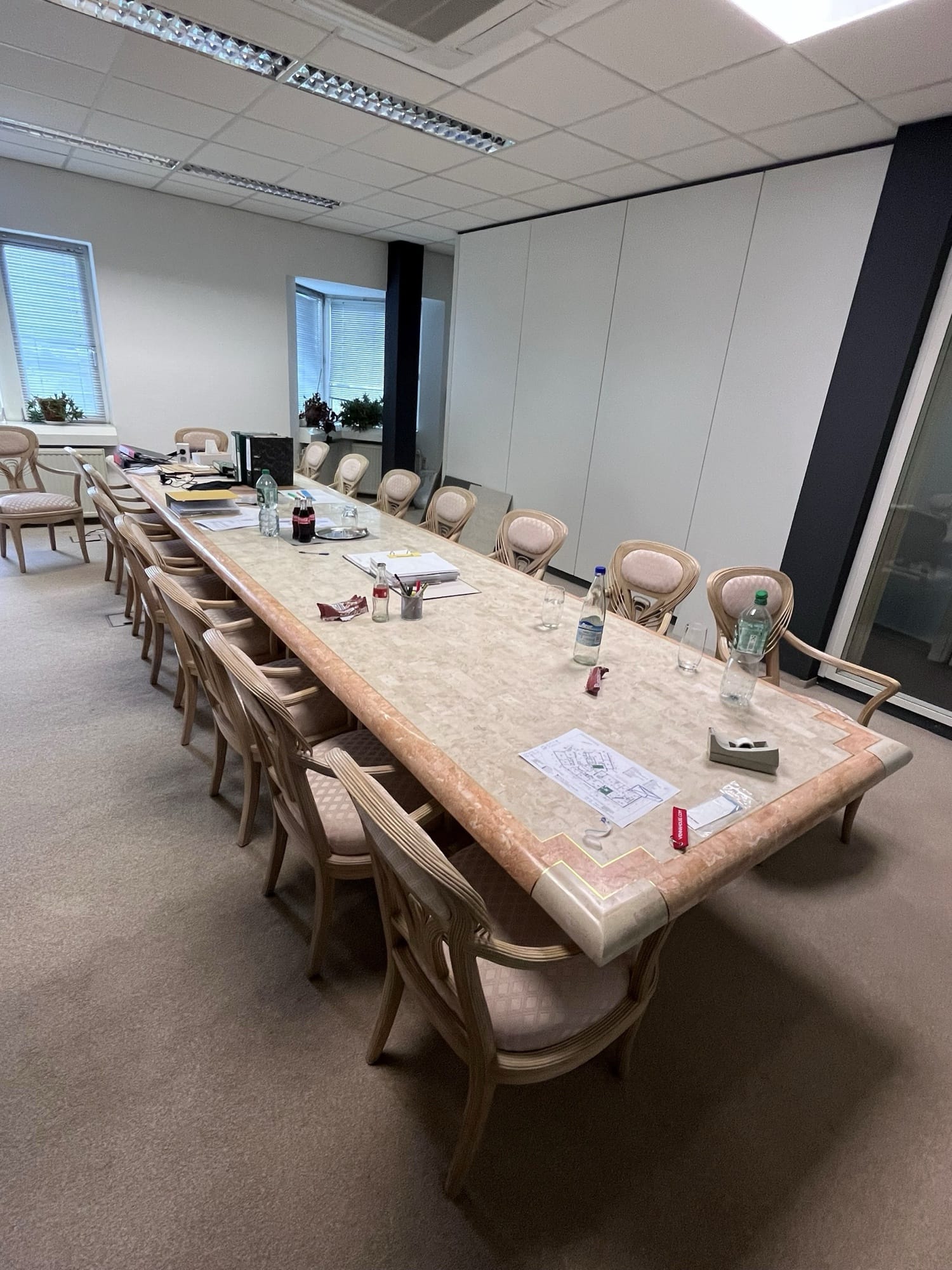
For Lichtenberg, the table is more than a piece of furniture. It traces the development of the building, which has been put to new uses again and again over the years. It also keeps the connection to the owner, Alexander Tesler, visible.¹
It is precisely these personal details that, for the manager, are an important reason why Vienna House suits the hotel’s existing identity. Within the brand, the individual hotels are meant to be able to tell their different stories rather than all following the same design concept.
“So we haven’t said goodbye to our history. On the contrary: today we can show it even more clearly and bring it closer to our guests in many different ways – in the hotel room, at a conference or in the rooftop restaurant.”
What joining the brand is expected to deliver
Lichtenberg expects the benefits of the new partnership above all in sales. Through Wyndham, the hotel gains access to international marketing channels and customer groups that it could previously only reach with considerable effort of its own. These include business travellers, corporations, event organisers, tour operators and airlines.
He also sees economic potential in purchasing and in managing the distribution channels. Spreading bookings better across different channels could, for example, lower distribution costs. At the same time, the partnership brings additional requirements and investments that have to be taken into account in the business case.
Lichtenberg therefore warns against seeing a brand affiliation as an automatic guarantee of success. What matters, he says, is whether the new structures actually add value for the hotel and its guests.
For the first year under the brand, he considers growth of up to twelve per cent realistic. Initial positive signs are already visible. Whether expectations are fully met, however, will only become clear as business continues.
The conference and events business is particularly important to the manager. Here he sees additional opportunities in the Frankfurt market, which the international sales organisation should help to tap more effectively.
35 additional rooms by the end of 2027
The rebrand is also part of a wider development of the hotel. According to the plans, a further 35 rooms are to be created by the end of 2027. This would increase capacity from the current 104 to a total of 139 rooms.
The additional space is mainly on the fifth floor and partly on the fourth. Plans include new room categories and classic twin rooms, which will allow the hotel to accommodate groups and business travellers more flexibly. Especially in periods of weaker demand, such offers could help to win additional bookings.
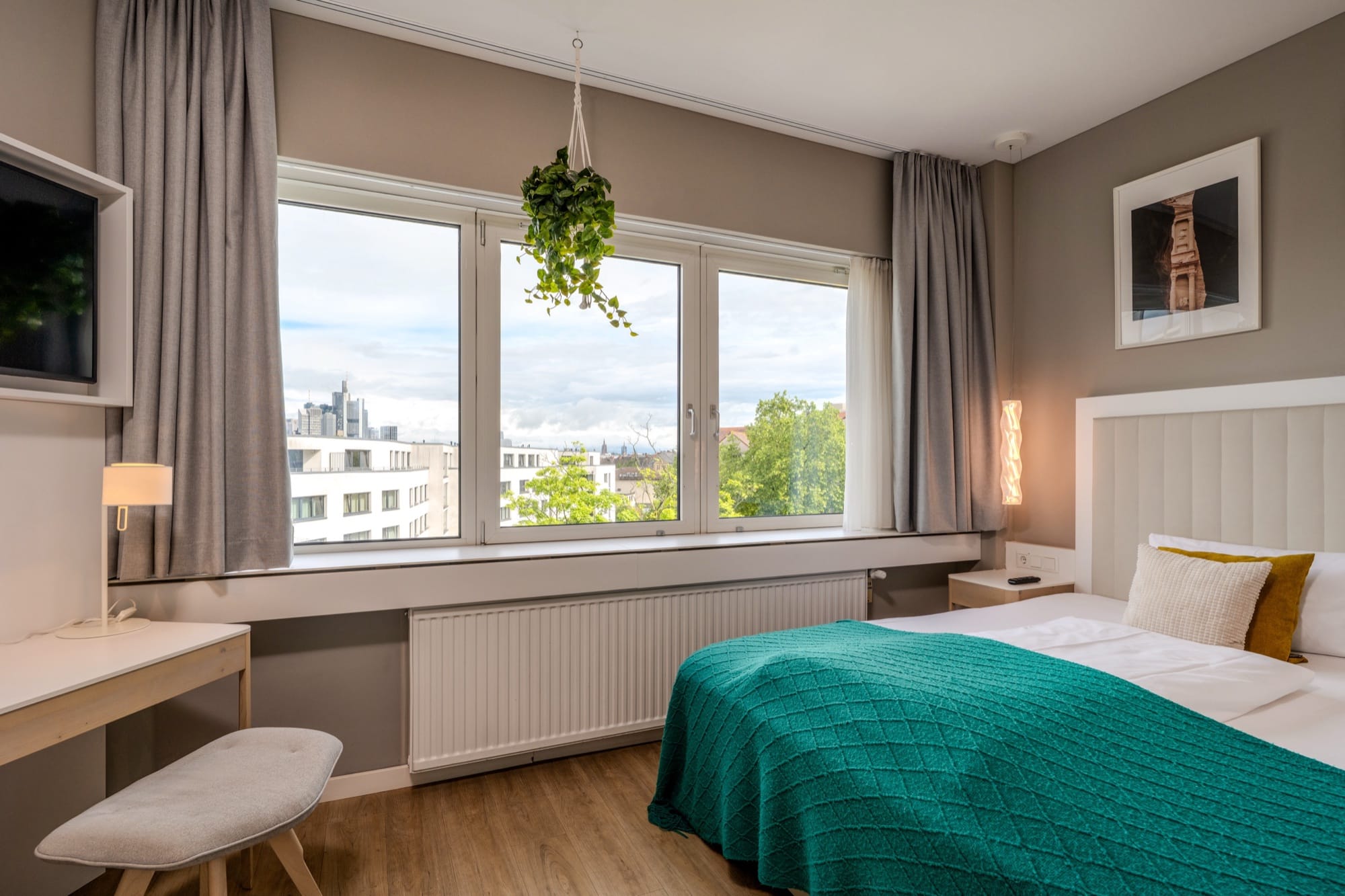
The event spaces are also to be developed further. Lichtenberg envisages several different events taking place at the same time in future: for example, a celebration in the rooftop restaurant, a sales conference on the ground floor and a press conference with a view of the Frankfurt skyline.
In addition, a fitness room in the kindergarten’s former gym and a sauna are planned. The hotel garden is to remain a quiet retreat.
The planned investments show that those in charge do not want to rely solely on the additional reach of the new brand. The product itself is also to be developed further so that the hotel can better serve different guest groups.
Vienna House by Wyndham Frankfurt South
Check current rates and availability directly with the property.
Visit hotel websiteWhat other hoteliers can take away
Lichtenberg’s experience offers three lessons for other independent hoteliers.
The brand has to fit the hotel. Lichtenberg was not looking for the best-known name, but for a brand with room for the hotel’s history. That, he says, is the very core of Vienna House: every hotel has its own story, and that story is part of the brand.
The team carries the change. Systems, standards and rate codes can be switched over in less than three months. Whether it all works day to day is down to the employees. “Because in the end, the best system is of no use if the team isn’t brought along,” says Lichtenberg.
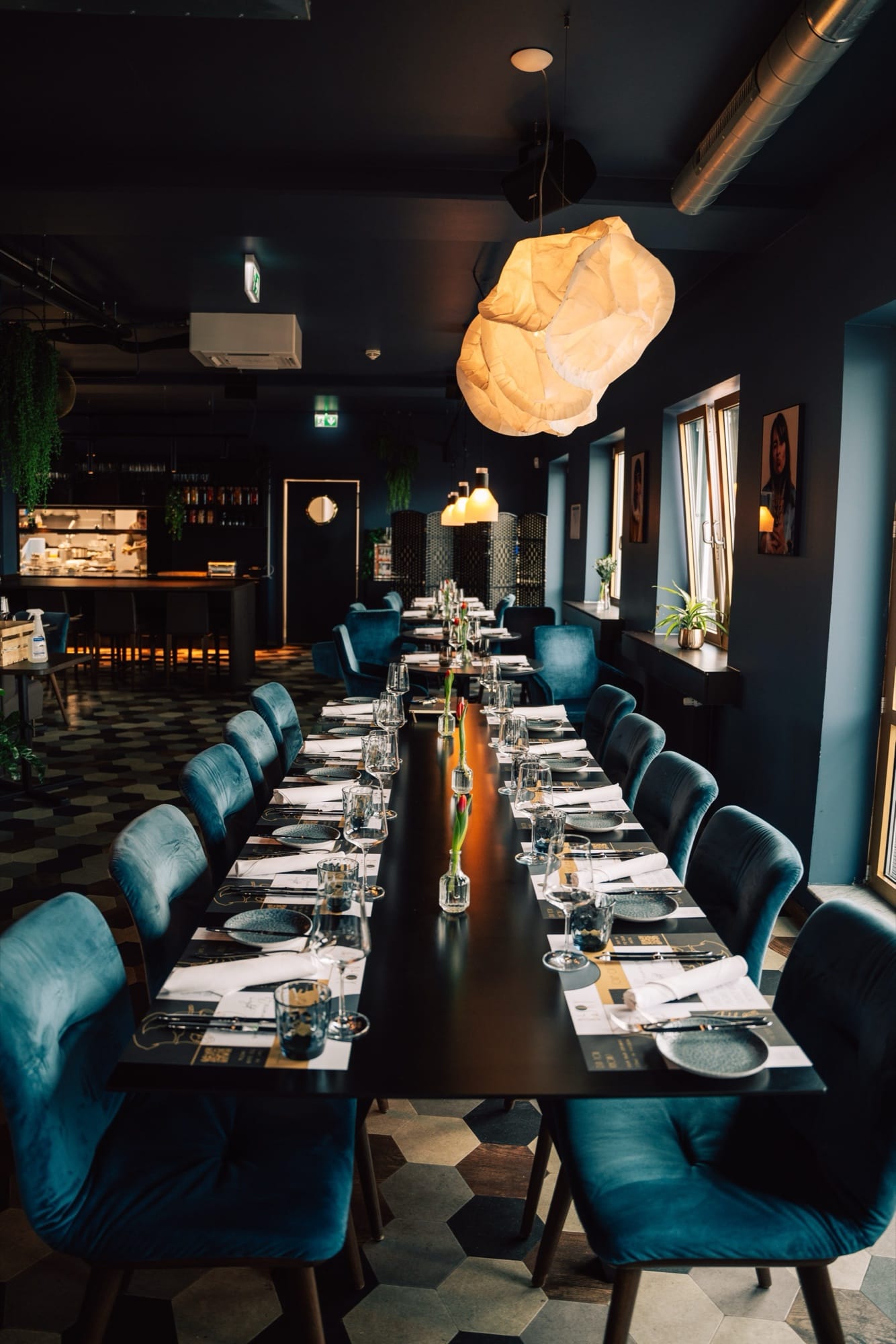
Keep your own name where it is strong. The hotel now carries the brand name, while the rooftop restaurant and bar continue to operate as The Blasky. “This combination is a deliberate choice: we use the strength of an international brand while preserving the individuality that makes our hotel special.”
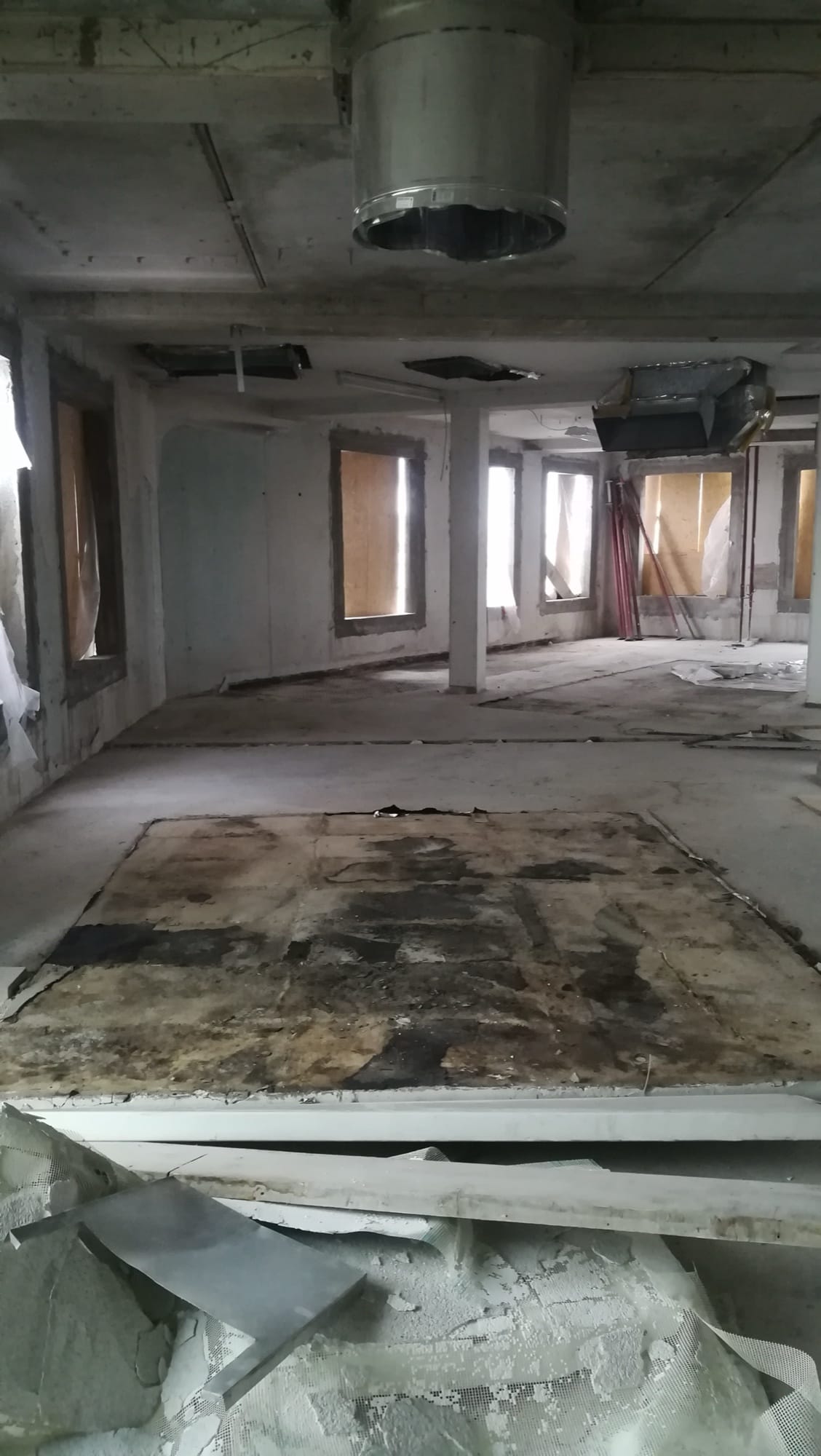
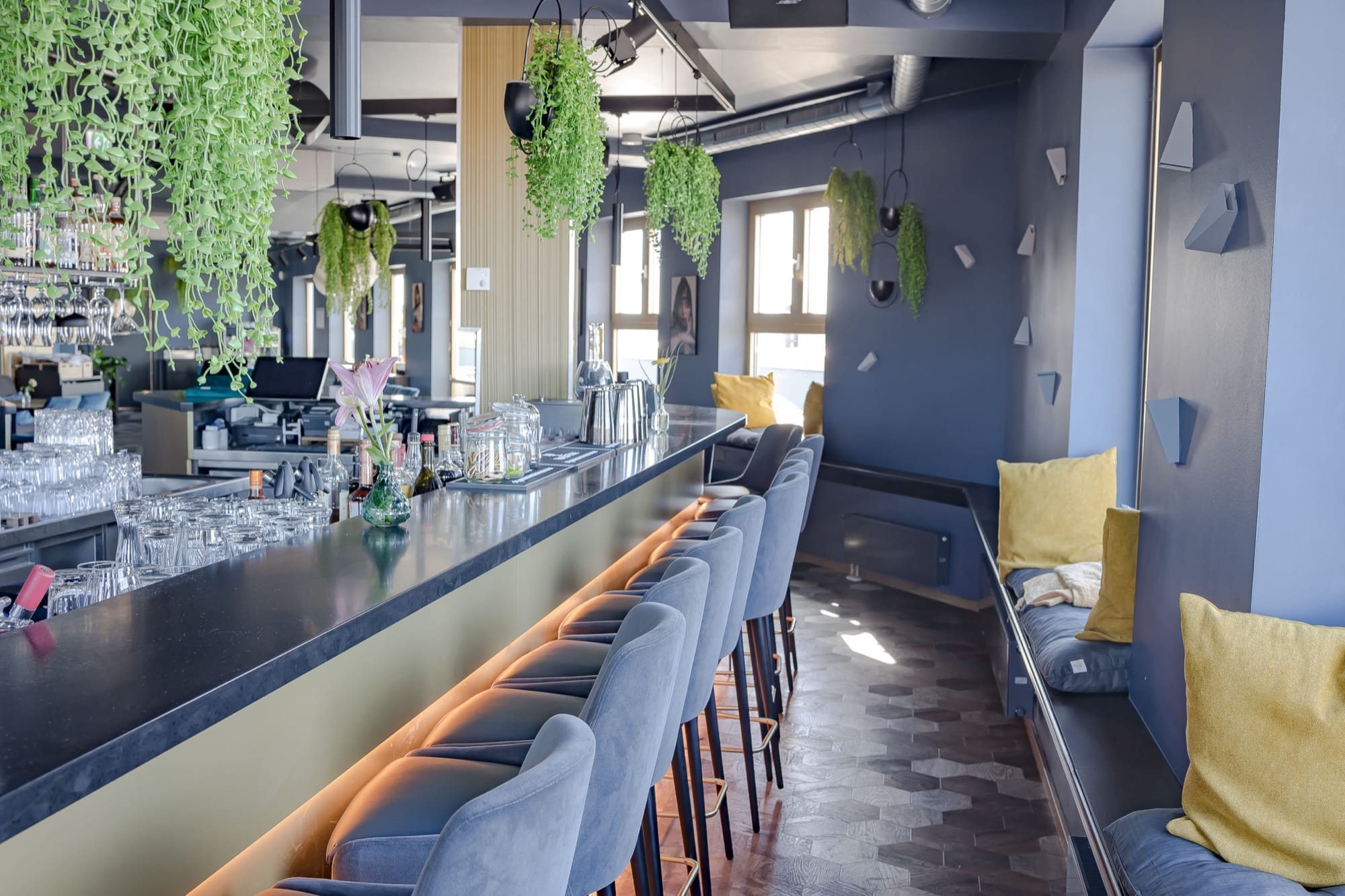
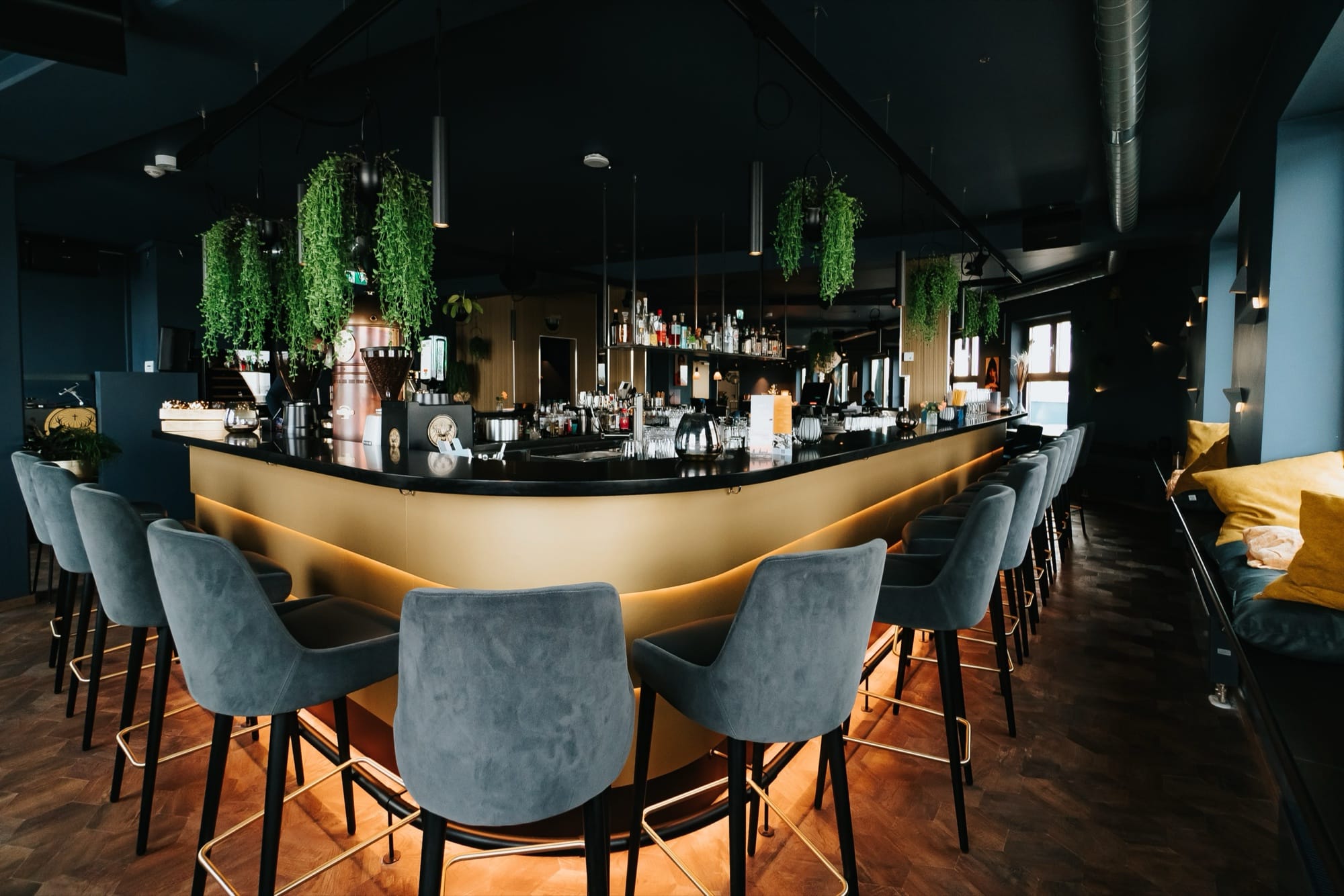
From the 2019 shell to The Blasky restaurant and bar, which keep their name. Photos: Vienna House by Wyndham Frankfurt South
If you make a building’s history this visible, you don’t have to give it up with a new name. As Lichtenberg puts it: “That’s why I don’t see this development as a farewell to the former The Blasky, but as the next step.”
This article is based on an original editorial interview and a trade media report on the hotel’s opening.
-
Tageskarte (2026)
Vienna House by Wyndham debütiert in Frankfurt.
Trade media report, 5 October 2026. Opening of the hotel with 104 rooms, The Blasky restaurant and a rooftop bar; the Alexander Boardroom and its marble table. Original publication in German.


