


Key points
- The Austrian hotel group COOEE alpin is raising up to 2.5 million euros from private investors through a subordinated bond to fund its expansion.
- Investors can start from 500 euros and choose between seven per cent interest in cash and nine per cent in hotel vouchers.
- An earlier crowd financing was repaid ahead of schedule in 2024. The hotel in Lungau became insolvent in 2020 despite occupancy of around 75 per cent.
- Hotels in Kaprun and Bad Goisern are due to open by the end of 2027. The bond carries risks up to a total loss of capital.
Hotels need capital to grow. Traditionally, it comes from banks, investors or the operators' own resources. Austrian hotel group COOEE alpin is taking an additional route: it is inviting private individuals to help finance new properties and offering them the option of receiving interest in hotel vouchers. For entrepreneurs Thomas Schmid and Rainer Schönfelder, the model links business growth with long-term guest loyalty. Behind it lies a company history that includes successful projects, a multimillion-euro insolvency and the lessons learnt from it.
“Our guests know our hotels better than any bank,” says Thomas Schmid. It is a striking remark from a businessman seeking to raise up to €2.5 million to expand his hotel group. Banks, after all, are normally the institutions that scrutinise business models, weigh up risks and decide whether new projects will receive funding. Schmid is also putting his faith in another group: people who have stayed in his hotels and experienced the concept for themselves.
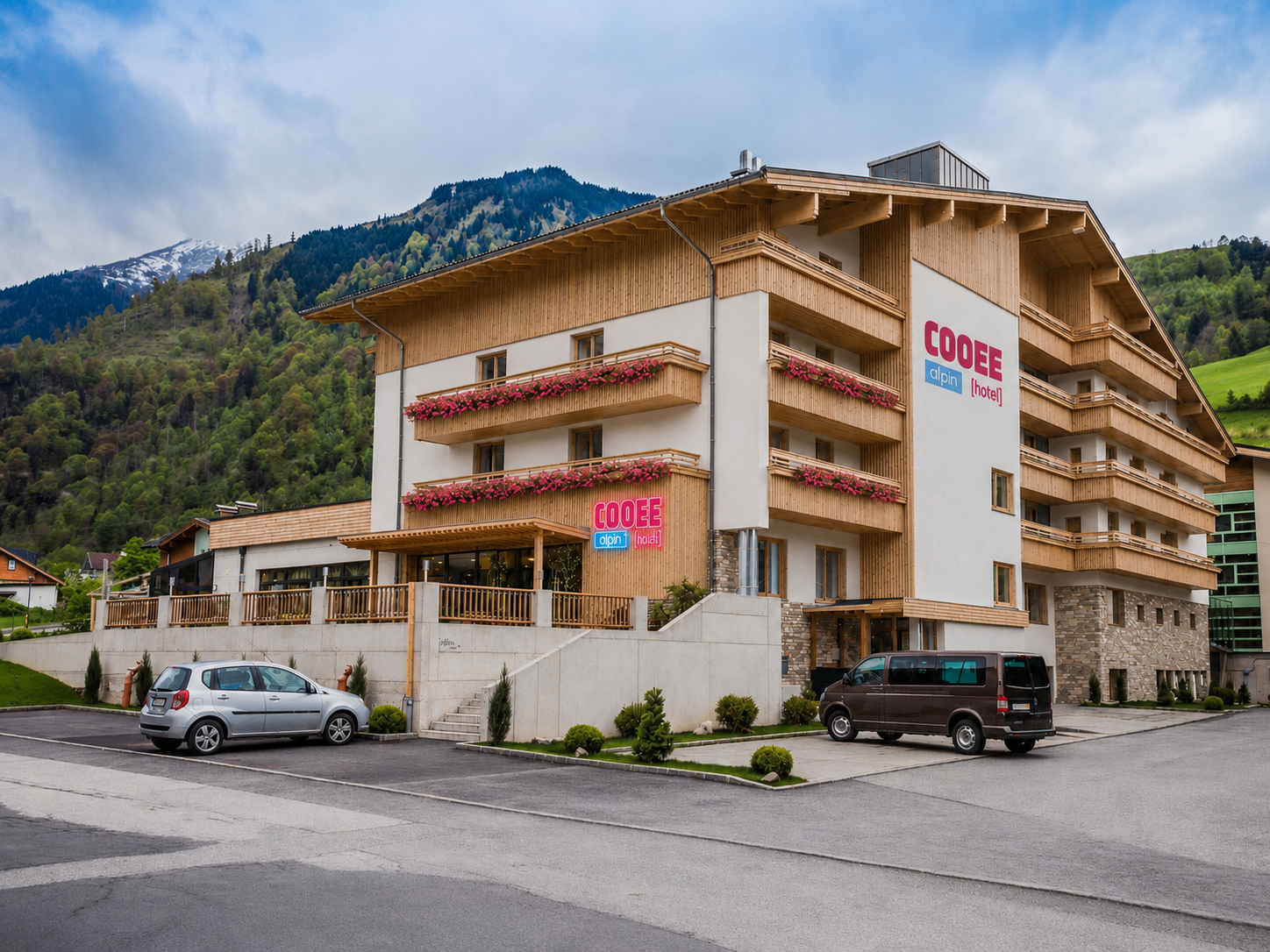
Together with former Austrian ski racer Rainer Schönfelder, Schmid runs the group behind COOEE alpin. Its hotels cater primarily for active travellers, families, hikers and winter-sports enthusiasts looking for straightforward accommodation and good value for money. Rather than elaborate luxury, the brand focuses on practical rooms, appealing locations and a largely standardised operating model. The group currently runs three hotels under the COOEE alpin brand, in Bad Kleinkirchheim, Gosau am Dachstein and St Johann in Tirol, and a fourth property in Kaprun is already operating. By the end of 2027, the refurbished Kaprun hotel and a new build in Bad Goisern are due to open under the COOEE alpin brand.¹
To support this growth, the group is marketing a subordinated bond of up to €2.5 million. Private investors can participate from €500 and choose between annual interest of seven per cent paid in cash or nine per cent paid in hotel vouchers. The capital is intended, among other things, for the two new locations, working capital and marketing. The vouchers can be redeemed at the group's hotels.¹
This creates an unusual link between a financing instrument and hotel marketing. Someone lending the company money may go on to return regularly as a guest and see how the hotels are developing at first hand. The idea is that investors will not merely provide capital but, ideally, maintain a long-term relationship with the business as guests.
From ski racing to hospitality
COOEE alpin's history began well before its current expansion. Former Austrian ski racers Hermann Maier and Rainer Schönfelder originally developed a concept for affordable mountain holidays under the adeo ALPIN name. The proposition was simple: contemporary, practical hotels in attractive Alpine locations, without unnecessary luxury but with plenty of scope for relaxation.²
The first properties opened in St Johann in Tirol and Austria's Lungau region, with another following in Gosau am Dachstein. In summer 2017, the existing adeo ALPIN hotels were brought together under the COOEE alpin brand. From January 2018, DER Touristik took over management of the three properties.² ³ According to the company, operational management of all its hotels now lies entirely with COOEE alpin.
Maier withdrew from his ownership stake in 2018.⁷ The subsequent development of the present-day hotel group has been shaped particularly by Schönfelder and his business partner Thomas Schmid. They have retained the original idea of affordable active holidays while developing a centrally organised group structure and additional locations.
Behind what appears to be a straightforward proposition lies a demanding commercial challenge. Hotels operating in the value-conscious segment need to match location, property size and running costs carefully if their business model is to remain viable. The entrepreneurs have learnt from experience just how difficult this can be.
A financing idea that dates back to 2017
Raising money from private investors is not new territory for COOEE alpin. In 2017, the CONDA platform was used to raise a subordinated loan for the planned hotel in Bad Kleinkirchheim. The campaign raised approximately €1.2 million. The borrower was bkk hotel errichtungs gmbH, a different company from the issuer of the current bond. The hotel itself did not open until June 2021.⁴ ¹
According to the company, the earlier financing was successful. Investors received their agreed payments and their entire principal was repaid. The final repayment was made on 30 June 2024, around three years ahead of schedule.⁵ For Schmid, however, the financial outcome was not the only important lesson. Equally significant was the sense of connection that developed between investors and the business.
“The most important lesson was that private investors look very closely and value open communication, even when things don't go according to plan,” he says in a written interview with eingecheckt®. He adds that many of the investors from that period have remained loyal hotel guests. This supports an idea that was already central to the first campaign: people who help finance a hotel project may develop a different relationship with its brand from those who simply book a holiday.
That can be attractive for a hotel operator. Conventional loyalty schemes typically offer discounts, points or extra services; in this case, the relationship also has a financial dimension. Investors are interested not just in whether their next stay is enjoyable but in how the company as a whole is performing. Such a relationship calls for more than occasional marketing messages. A business that takes money from private lenders also assumes responsibility for clear information and consistent communication.
A hotel with 75 per cent occupancy — and millions in liabilities
COOEE alpin has also experienced what happens when growth fails to go to plan. In June 2020, news emerged of the insolvency of the COOEE alpin Hotel Lungau in Zederhaus. The property had opened in 2016 under the adeo ALPIN name and was one of the brand's three hotels at the time. It was the only hotel in the group's history that could not be continued.¹
What makes the case particularly striking is that Austrian broadcaster ORF reported occupancy of around 75 per cent at the time. Nevertheless, the operation was unable to generate sufficient revenue. Reported liabilities totalled approximately €4.8 million when the insolvency became public. Schönfelder also referred to substantial construction-cost overruns, for which he blamed former project partners. That attribution reflects his account; the editorial team has no independent finding as to responsibility.⁶ ⁷
According to their statements at the time, Schönfelder and Schmid had invested more than €2 million of additional funds since 2016 to keep the hotel operating and service a €4.5 million loan relating to the Alpincenter Zederhaus. Over several years, the owners had tried to absorb the location's financial difficulties.⁶
The insolvency had significant consequences. In addition to the owners' financial exposure, creditors had outstanding claims. The media reports reviewed do not establish what final distribution creditors received in the insolvency proceedings. The hotel's 12 employment relationships had already ended in March 2020 amid coronavirus restrictions. For the municipality of Zederhaus, the closure also meant losing its largest accommodation business.⁷
Schmid speaks openly about the experience today. “We learnt most from what didn't work,” he says. With just 60 rooms, the hotel had been too small for its fixed-cost structure. The location was also relatively difficult to reach. Looking back, he describes the pandemic as the final blow.
Schönfelder had already pointed out in 2020 that the hoped-for additional demand from ski touring had failed to materialise as expected. Despite the number of guests using the property, a substantial proportion of demand came from day visitors and tour groups. This made both pricing and profitable operation more difficult.⁶
The combination of relatively high occupancy and insufficient earnings is what makes this case useful for other hoteliers. A hotel can fill many of its rooms and still struggle financially if achieved rates do not cover staffing, property, energy, financing and other operating costs. Further investment or unexpected cost increases can make matters worse. Several of these pressures came together in Zederhaus.
The experience had practical consequences for the group's current strategy. COOEE alpin says it now pays particular attention to sufficient room numbers, strong year-round demand and good public-transport connections when considering new projects. Working with construction and project partners it already knows has also become more important. In Bad Goisern, it is working with the same partners involved in its hotel at Dachstein.
For Schmid, these choices form part of the business's development. The brand has retained its original positioning but changed the criteria by which it selects new locations. That offers a lesson for other hoteliers: not every commercial problem can be solved through more marketing, higher occupancy or another guest amenity. Sometimes the underlying structure of the operation must be right first.
Two new hotels and a shared head office
The next two locations will put those lessons to the test. In Kaprun near Zell am See, the group has operated the 90-room Hotel Victoriya since December 2025. The existing property is due to be refurbished and reopen under the COOEE alpin Hotel Kaprun | Zell am See name in June 2027. Schmid says this gives the company the benefit of trading experience and actual figures from an operating hotel, rather than relying exclusively on forecasts for an entirely new property.
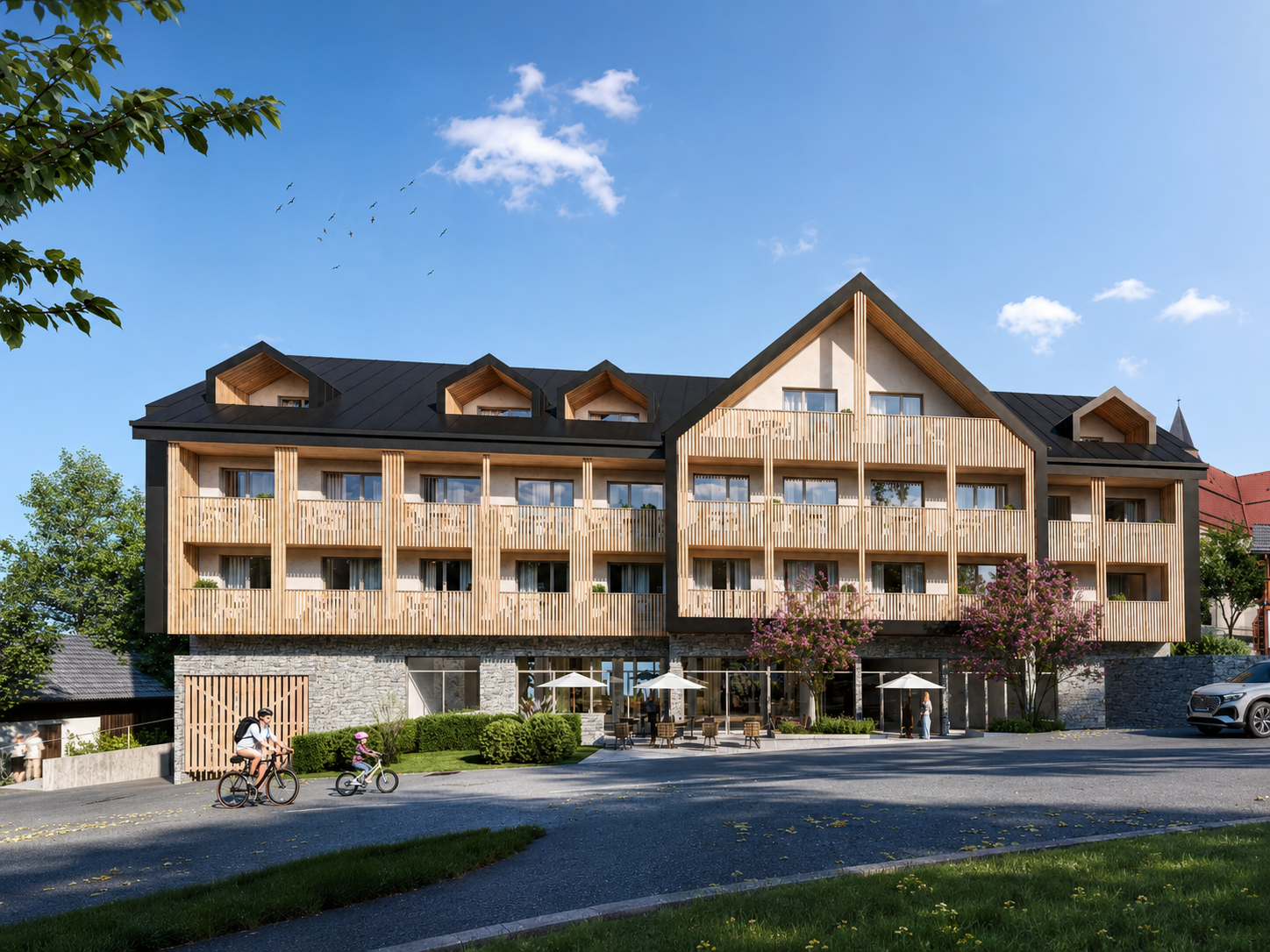
The second project is a new-build hotel in Bad Goisern near Hallstatt, with 78 rooms and a planned opening in December 2027. Both locations are in established tourism regions where summer and winter activities can attract different kinds of guests. The group is deliberately focusing on destinations that should not rely entirely on a single season.¹
A shared operational structure is another part of the growth strategy. According to Schmid, distribution, revenue management, marketing and accounting are managed centrally from Vienna. New properties therefore do not have to build every administrative function from scratch; they can draw on existing systems and established processes. For a group operating several broadly comparable hotels, this creates opportunities to standardise procedures and spread certain costs across locations.
This approach is particularly relevant against the economic backdrop facing the sector. The 2025 Fitness Check, produced by the Austrian Hotel and Tourism Bank (OeHT), Prodinger Tourism Consultancy and Kohl & Partner, examined financial figures from more than 1,000 Austrian holiday hotels. It found that broadly stable occupancy does not automatically translate into strong profitability. Higher staffing and financing costs in particular are weighing on businesses, while operating profit margins remain relatively modest in many segments.⁸
For COOEE alpin, growth therefore means more than adding rooms. Each new property is also intended to make more effective use of the organisation already in place. The underlying idea is relevant to smaller hotel groups too: not every function needs to be recreated within every individual property.
When the interest is spent back at the hotel
Perhaps the most unusual feature of COOEE alpin's model is the hotel voucher. Investors can choose seven per cent annual interest in cash or nine per cent in vouchers. For someone who already stays regularly at the group's hotels, the second option may be appealing. For the operator, it also serves a commercial purpose.
“For us as operators, the value created stays within the business,” Schmid explains. The interest becomes hotel stays, potentially supporting occupancy and direct bookings. Guests redeeming vouchers also frequently buy additional goods and services during their visits, he says. At the same time, investors can return regularly and see for themselves how the hotels are developing.
There is a clear business rationale. With conventional cash interest, payments leave the company and go to lenders. If an investor chooses hotel vouchers, the company provides hotel services instead. Those stays still have costs and may replace revenue that could have been earned from paying guests. Yet the visits, and potentially additional spending, take place within the group's own properties. The arrangement could be particularly useful during quieter periods, provided voucher stays can be incorporated sensibly into capacity planning.
The economics depend on several factors, however. They include when vouchers are redeemed, the variable costs of each stay, and whether a voucher genuinely generates extra business or simply changes the way an existing guest pays. Nine per cent interest in vouchers is therefore neither automatically more profitable for the hotel nor equivalent to a nine per cent cash return for the investor.
For Schmid, there is another benefit that is harder to reduce to a spreadsheet: the relationship between people and the company. An investor who regularly visits a COOEE alpin hotel sees the brand from a different perspective. Over several years, they can follow the development of a property and may feel more personally invested in the group's long-term prospects. That gives the business an opportunity to strengthen the link between its lenders and its guests.
Why hoteliers are exploring additional ways to finance growth
Financing hotel investment has long been a challenge for the sector. New developments, refurbishments, energy-efficiency upgrades and the digitalisation of existing properties often require substantial capital. At the same time, operating costs must be covered and sufficient financial reserves maintained. Small and medium-sized businesses in particular must continually decide which investments make commercial sense and which are actually affordable.
Figures from the Austrian Hotel and Tourism Bank illustrate the scale of investment involved. In 2025, 337 approved funding projects helped enable investment totalling approximately €539 million. Support included subsidised loans, grants and guarantees.⁹ These figures show the continuing importance of established financing tools. Alternative options such as COOEE alpin's bond need not replace conventional bank lending; they can provide another route alongside it.
Capital from private investors is not free, however. The proposed interest rates are financial obligations that the business must be able to sustain. There are also legal requirements, the costs of organising a campaign and the ongoing work of investor relations. Communication about business performance becomes more important when people have put their own money at risk and rightly expect intelligible information about how it is used.
It is also important not to confuse this investment with an ordinary shareholding. Investors in the current COOEE alpin offer are not buying shares in the company. They are purchasing a subordinated bond issued by You Will Like It Hotels GmbH, with repayment of principal scheduled for 30 November 2031. If the issuer encounters severe financial difficulties or becomes insolvent, subordinated claims rank behind those of non-subordinated creditors. Investors could lose all of their capital; neither interest payments nor repayment of principal is guaranteed.¹
That distinction matters in light of the company's history. The insolvency of the former COOEE alpin Hotel Lungau shows that established hotel concepts and experienced entrepreneurs can still have projects that fail. Equally, repayment in full of an earlier financing arrangement does not guarantee the success of a new bond. Experience may help management assess risks and avoid mistakes, but it cannot eliminate those risks entirely.
None of this means that such an instrument cannot be appropriate for some businesses. It does mean that the decision requires serious financial consideration by both the operator and potential investors. An attractive hotel brand or an emotional connection to a property is no substitute for understanding the risks.
Could the approach work for smaller, independent hotels?
For independent and family-run hotels, the question is whether this sort of model can be adapted to a much smaller business. Such properties often lack both multiple locations and a sizeable central management team. Yet some have an asset particularly relevant to COOEE alpin's approach: loyal guests who have developed a strong personal connection to the hotel over many years.
Schmid believes the principle could work. In his view, the essentials are a loyal base of repeat guests, a comprehensible business model backed by credible figures, and a willingness to communicate openly even when circumstances become difficult. The scale of the project must also justify the work involved. Legal preparation, platform costs and ongoing investor support can represent a substantial burden for a smaller operator.
For a single hotel with a specific refurbishment or expansion project, the model could nevertheless be worth examining. Potential applications might include additional rooms, a new wellness area or substantial building improvements, provided the project is commercially viable and legal requirements are met. That does not automatically make crowdfunding a better option than a bank loan. It does, however, offer another way to think about the relationship between a hotel and its guests.
More than a question of financing
When COOEE alpin opens its two new locations next year, it will become clearer whether the experience of its first fundraising campaign can be carried forward into the next phase of growth. The circumstances are different from those in 2017. The group now has several operating hotels, a centralised organisation and experience of both successful projects and failure. Expansion nevertheless brings fresh entrepreneurial risks.
What makes the story of Thomas Schmid and Rainer Schönfelder interesting is therefore not simply their decision to raise money from private investors. It is the connection between a long-term hotel concept, lessons from their own business history and an effort to involve guests more closely in the brand's development.
For other hoteliers, COOEE alpin does not offer a ready-made formula for success, but it does offer food for thought. A loyal base of repeat guests can mean far more than regular bookings and favourable reviews. Under the right conditions, it can become a network that supports and follows the development of a business.
Schmid sums up the idea in a sentence: “No traditional financing instrument can create that kind of closeness.” COOEE alpin's history also illustrates how closely the opportunities of this model sit alongside business risk. The new fundraising draws on existing hotels and an earlier campaign that has been repaid in full. But the story also includes a location where substantial additional investment was followed, ultimately, by insolvency.
Those experiences now shape decisions about location, hotel size and funding. They are what make the approach worth examining for other hoteliers — not because every hotel should ask its guests for capital, but because it reveals both the possibilities and the responsibilities involved.
COOEE alpin Hotels
Check current rates and availability directly with the property.
Visit hotel websiteEditorial note: At the time of publication, the subordinated bond discussed in this article is being offered to the public. This article is provided solely for journalistic information and constitutes neither investment advice nor a recommendation to purchase the bond. The investment involves substantial risks, including the potential loss of all capital invested. eingecheckt® receives no payment for this article. Editorial coverage is independent of the fundraising offer.
This article draws on contemporary reporting, company information, industry studies, financing documentation and original editorial research.
-
CONDA Capital Market (2026)
COOEE alpin subordinated bond issued by You Will Like It Hotels GmbH: properties, expansion, terms and risks. Public investment offer. -
Tophotel (2017)
“adeo ALPIN hotels join COOEE”, 18 July 2017. Earlier brand, Hermann Maier and Rainer Schönfelder. -
fvw | TravelTalk (2017)
“DER Touristik takes over management of Adeo Alpin properties”, 24 November 2017. Management from January 2018. -
CONDA Capital Market – Kampagnenarchiv (2017)
Earlier funding for Bad Kleinkirchheim: approximately €1.2m, a subordinated loan involving bkk hotel errichtungs gmbH. -
COOEE alpin – Unternehmensangaben (2026)
Issuer’s promotional and information site: company statements on early repayment of the 2017 financing on 30 June 2024. -
Leadersnet (2020)
“Rainer Schönfelder’s Lungau hotel files for insolvency”, 15 June 2020. Investments, loan, construction overruns and Schönfelder’s statements at the time. -
ORF Salzburg (2020)
“Schönfelder puts hotel into insolvency”, 17 June 2020. Occupancy, liabilities, employment and Maier’s departure. -
Österreichische Hotelvereinigung (2025)
“2025 Hotel Fitness Check”, published 19 November 2025. Figures from more than 1,000 holiday hotels. -
Bundesministerium für Wirtschaft, Energie und Tourismus (2026)
Tourism investment funding figures, 27 January 2026: 337 approvals; €539m in investment enabled.


