


Key points
- Ilona Perrot spent twelve years at Atout France, France’s national tourism agency. In 2026 she founded the agency imp·ress PR & Consulting in Vienna.
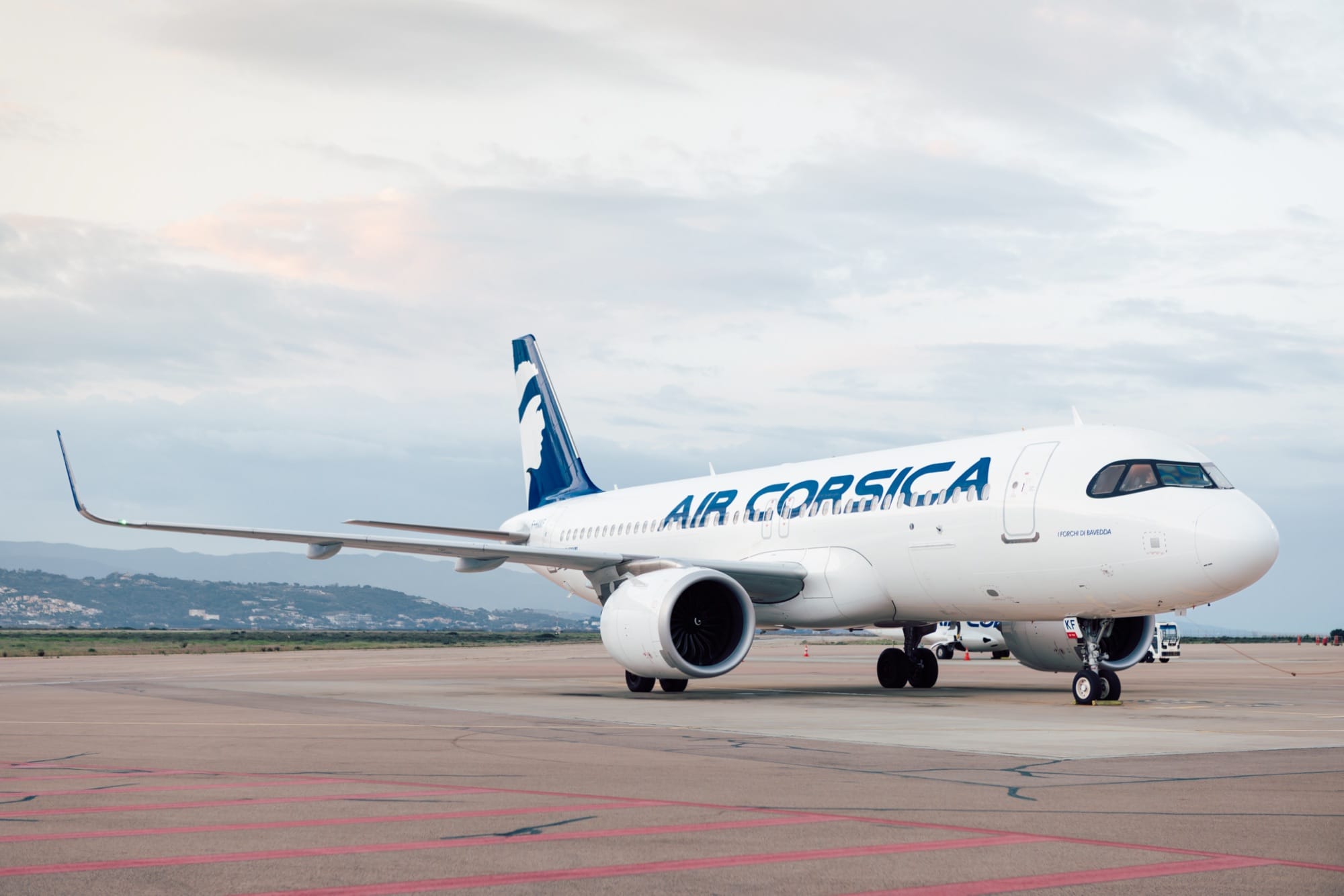
- As Country Manager, she represents Air Corsica in Germany and Austria. Since 2026 the airline has flown direct from Munich and Vienna to Corsica.
- She advises small hotels to focus on the guests who suit them and to work with tourism organisations on press trips and fam trips.
- In her view, personal encounters matter more now that images and texts can be generated by artificial intelligence.
For twelve years, Ilona Perrot promoted France as a travel destination, for the most part as press officer at Atout France’s Vienna office. Today she runs her own agency there. What has impressed her most recently, though, was a chance encounter with an 82-year-old hotelier – a story about what guests really remember.
A dinner that took an unexpected turn
It was only meant to be dinner. Ilona Perrot was in Munich on business and had decided to eat alone at a pizzeria around the corner from her hotel. Three gentlemen were sitting at the next table. At some point one of them, a man of 82, came over and sat down with her. They got talking, the two other men joined them, and an ordinary meal out turned into an evening Ilona Perrot is unlikely to forget any time soon.
It eventually emerged that the older gentleman was no ordinary diner. He owned the very hotel Ilona Perrot was staying in. The two other men were members of his staff: his chef and a 20-year-old who has been working at the hotel for a few months alongside his degree in business informatics. The chance acquaintance even ended with a small tour of the lesser-known corners of the building. “A really jolly encounter,” she says.
What makes this remarkable is that nobody had arranged it. There was no press appointment, no invitation to view the hotel and no PR agency preparing a special evening behind the scenes. Ilona Perrot was not there as a journalist or business partner. She was simply a guest who wanted something to eat.
The next morning she left the hotel with a remarkably clear conviction: she would book this place again.
Anyone working in hotel marketing might now ask what the hotel did particularly well that evening. The answer may surprise some marketing managers. The decisive factor was clearly not a carefully planned campaign, but a host taking time for another person.
And Ilona Perrot, of all people, knows exactly what professional tourism marketing can achieve.
Twelve years promoting France
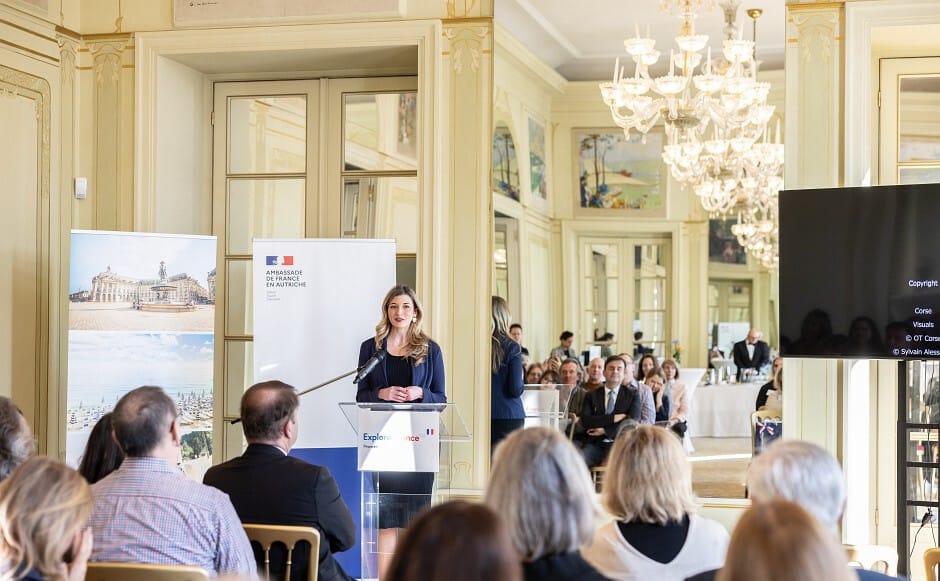
For twelve years, Ilona Perrot worked for Atout France, the country’s national tourism agency. For more than ten of those years she was press officer for destination France at the Vienna office.¹ It is a team effort that is not about promoting a single hotel or a particular region, but an entire country with all its landscapes, traditions, cities and travel experiences.
Born in France and holding dual citizenship, she had previously studied EU politics and international relations in Strasbourg. Her career took her to the Council of Europe, the Styrian regional parliament and the Austrian Ministry of Social Affairs, among other places.¹ Her later work for Atout France brought together an international outlook and her personal connection to France.
During those years her home country was repeatedly at the centre of global attention. Handling the media side of the Paris 2024 Olympic Games, right from the early preparations, was as much part of her job as the communication surrounding the devastating fire at Notre-Dame and the cathedral’s subsequent restoration. That period, she says, was particularly emotional for her. The images went around the world, and Ilona Perrot was part of the communication around them.
“It was a tremendous honour and a daily joy to represent my country in my second home,” she recalls.
There is a concrete reason why she now works for her own agency rather than for the whole of France. When Atout France began a sweeping restructuring of its international network in 2026, the Vienna office was affected, along with three other locations. For Ilona Perrot, it marked a professional turning point. She decided fairly quickly not to give up the work closest to her heart, but to carry it on independently.
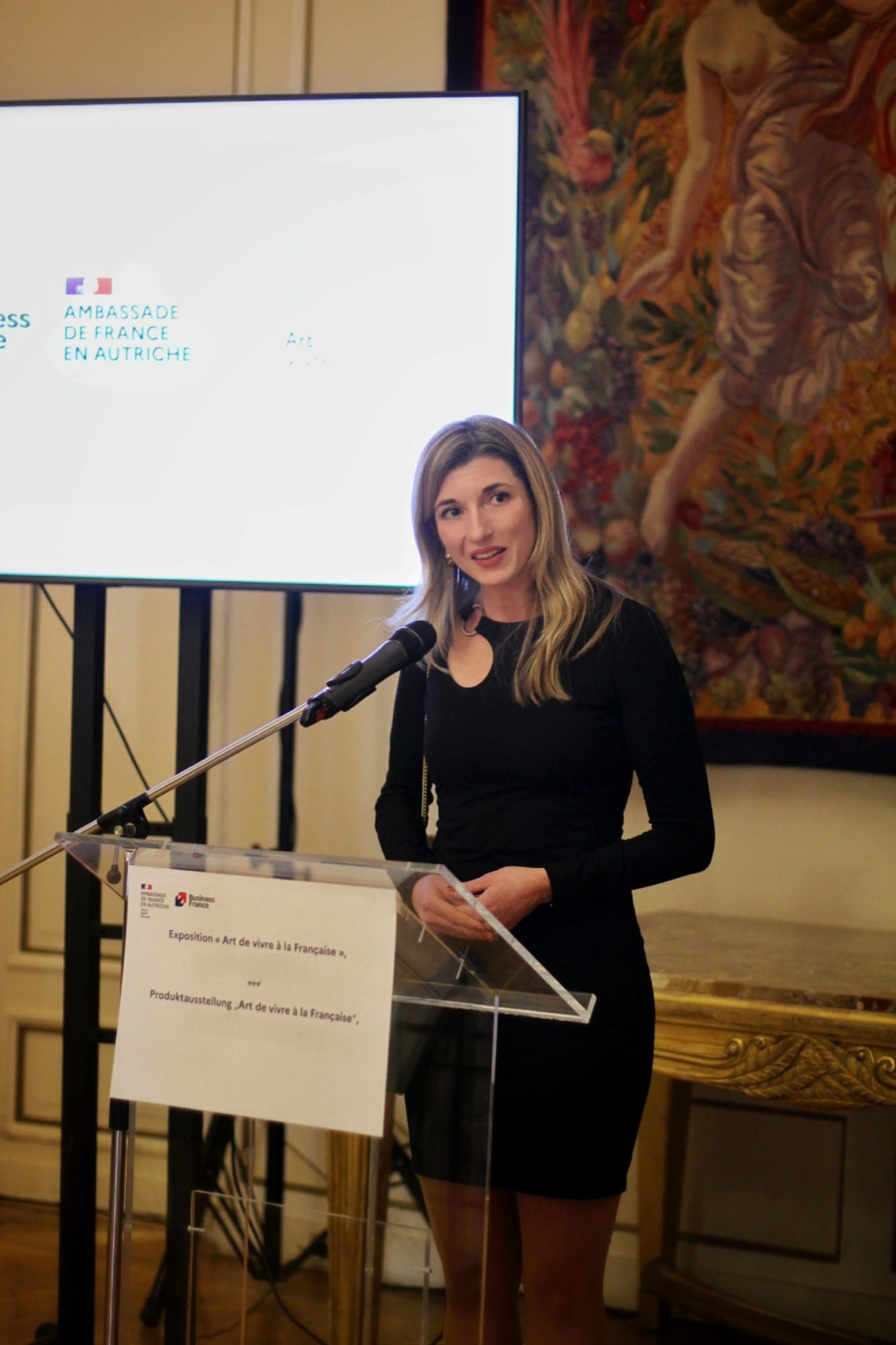
In Vienna she founded imp·ress PR & Consulting, an agency for international tourism and lifestyle brands. Her first partner was not long in coming: Air Corsica, an airline she had already worked with for around a year and a half. Today she represents the airline as Country Manager for Germany and Austria.¹
Whereas she used to communicate the diversity of an entire country, she now concentrates on a small number of partners and can devote herself fully to each of them. Her understanding of successful tourism marketing has changed little in the process.
Even the most beautiful places need a reason to visit
At first glance, promoting France looks easy. Paris, the Côte d’Azur, Provence, the Alps – few destinations can draw on such a wealth of famous images and stories. Yet in her twelve years Ilona Perrot learned that even world-famous destinations cannot simply rely on visitors turning up.
“Being well known is not in itself a reason to travel,” she says. A beautiful beach, a famous landmark or an impressive view may spark interest. But the actual decision to travel often depends on what people can experience in a place. Tasting wine with the winemaker, discovering local plants and wildlife on a hike, or spending an evening with locals – these are experiences people remember long after the holiday is over.
Then there is something very practical: a concrete occasion and an easy way to get there. “Only when longing and accessibility come together does a wish become a booking.”
It is an interesting thought for the hotel industry. After all, hotels put considerable effort into how they present themselves. Rooms are professionally photographed, websites redesigned, new packages created and social media channels kept busy. Competition for attention is fierce. Smaller properties in particular face the question of how to hold their own against big brands and hotels with far larger marketing budgets.
Big campaigns cannot be copied on a small budget, Ilona Perrot says. But there is something else hotels can borrow from them: the focus on a specific target group. Successful international campaigns do not try to say everything at once either. They concentrate on a single message and convey it consistently.
“A small hotel doesn’t need to appeal to everyone, but to the guests who are right for it.”
That sounds obvious at first. In day-to-day hotel life, however, it is a challenge. Anyone hoping to attract as many guests as possible can easily end up advertising every conceivable advantage of the property at once. Yet the distinctive personality of a small hotel could be far more convincing than trying to suit every taste.
Corsica and four new flight connections
Ilona Perrot’s new role for Air Corsica shows how much lies behind successful tourism marketing. The French Mediterranean island of Corsica is known for its striking landscapes, its distinctive culture and its cuisine. Mountains of more than 2,700 metres, small villages and crystal-blue sea are often surprisingly close together. The island hardly lacks appeal for travellers.
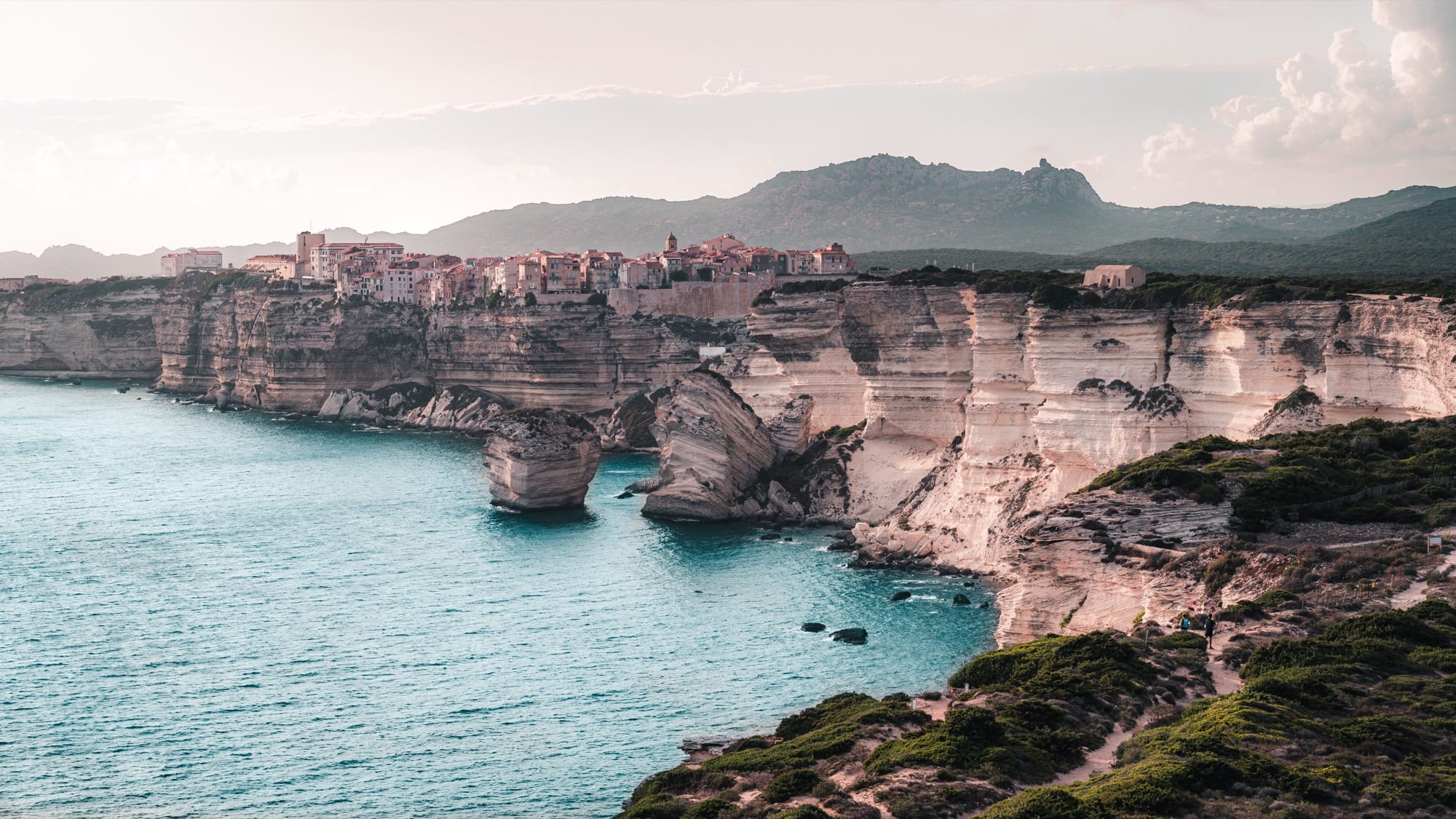
Yet until recently there was a very practical obstacle: the south of the island in particular was difficult to reach from Germany and Austria. That changed in 2026 with new seasonal direct flights from Munich to Ajaccio and Calvi and from Vienna to Ajaccio and Bastia.
In Ilona Perrot’s view, this opens up new opportunities for hotels on the island. Germany and Austria are among Corsica’s most important international source markets, and tour operators in particular are showing noticeable interest in new packages. Tours, walking holidays and activity breaks could bring in new groups of guests.
She is clear, however, that a flight connection alone does not guarantee success. Airlines, tour operators, tourism organisations and hotels have to work together for better access to turn into new bookings.
There is a lesson here for smaller hotels, too. They do not necessarily have to handle their marketing alone. Working with regional tourism organisations, tour operators or other businesses can make them part of a bigger story that reaches far beyond their own property.
For Corsica, Ilona Perrot explicitly hopes for gentle development. The island should keep its special character and not become a mass-tourism destination. Instead, she sees opportunities for hotels with character that match the expectations of travellers who love nature and the outdoors.
An evening with the host family lasts longer than an emailed press kit
Ilona Perrot has seen time and again over her career how much potential smaller hotels leave untapped when it comes to working with tourism organisations. National and regional tourist boards regularly organise press trips and so-called fam trips, on which tour operator and travel agency staff get to know a destination in person. For these, they look for hotels and other local partners.
Many hoteliers underestimate the opportunities this creates, she believes. A hotel that opens its doors to such trips can reach not only journalists but also people who later put together travel packages and recommend hotels to their customers.
What counts is less the rooms than what can be told about a place. “A hotel is rarely included in a programme because of its rooms, but because it offers a hook that people like to pass on.”
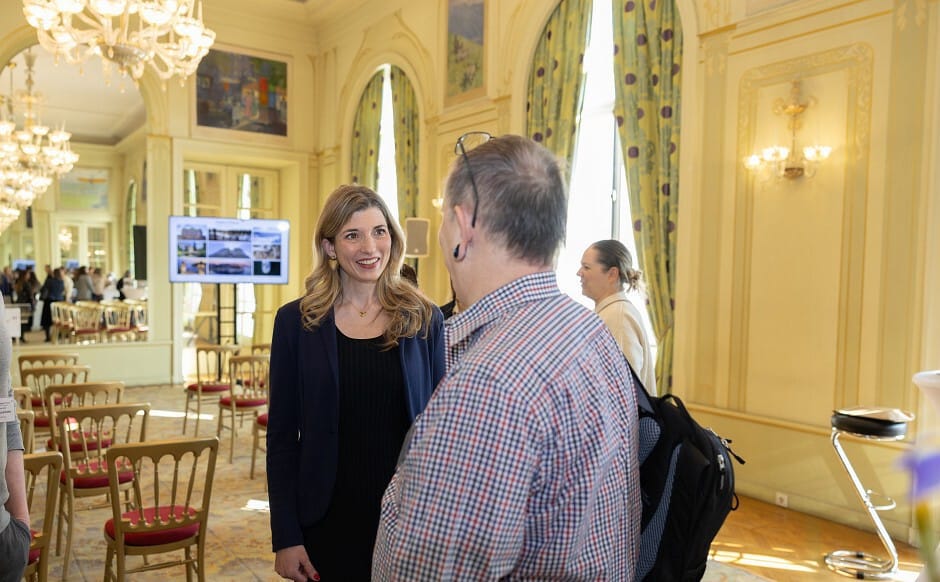
“A journalist who has spent an evening at the table with the host family writes differently from someone who has only been handed a press kit,” Ilona Perrot explains. A press kit is ideally still needed, she adds, but one that is simply sent out tends to vanish in the meanders of people’s inboxes.
That captures quite precisely why personal stories can be so effective in hotel communication. A hotel room can be photographed. The amenities can be listed and the location marked on a map. It is much harder to convey the atmosphere that develops when guests meet a host who talks about the hotel, the family or the history of the building.
That does not mean every hotelier now has to dine personally with their guests. What matters is that a hotel has something of its own to tell and that people can actually experience that story. Family-run hotels in particular often have such features without seeing them as anything special. What is everyday life for the owners can be the very reason a guest later remembers that particular hotel.
Real encounters in the age of artificial intelligence
Tourism communication is now grappling with another development. Professional-looking images and texts can be generated in no time with the help of artificial intelligence. For marketing departments this brings new possibilities, but also a growing volume of content competing for the attention of potential guests.
Ilona Perrot believes this makes precisely those things more important that cannot simply be produced at will: personal attention, hospitality and real encounters. “That is exactly why the genuine becomes the true luxury, because an encounter cannot be generated,” she says.
Perhaps that also explains why the encounter in Munich has stayed with her so vividly. For Ilona Perrot, it became one of those stories she now looks for in her work with tourism brands: an encounter centred not on an advertising promise, but on a person.
And while her work now involves winning new guests for the Mediterranean island of Corsica, among other things, she experienced first-hand in Munich how surprisingly little it sometimes takes to make a guest want to come back.
This article draws on an original written interview and a press release on the founding of the agency.
-
leisure communications (2026)
Ilona Perrot gründet imp-ress PR & Consulting in Wien (Ilona Perrot founds imp-ress PR & Consulting in Vienna)
Press release, October 2026. Founding of the agency, representation of Air Corsica in Germany and Austria, Ilona Perrot’s career. Original publication in German.


