


Key points
- Maintain business listings: Google, Bing and Apple offer free ways to manage hotel information.
- Make the hotel website informative: Clear descriptions of facilities, location and services help search systems understand the property.
- Check technical accessibility: Search engines and relevant AI crawlers need access to public website content.
- Look beyond your own website: Guest reviews, tourism directories and editorial coverage provide additional sources of information.
When travellers ask ChatGPT or Google to recommend a hotel, traditional search rankings are no longer the only factor shaping what they discover. Business listings, guest reviews, directories and hotel websites can all provide information for AI-generated answers. Much of this digital groundwork can be handled by hotels themselves, without additional software or a marketing budget. Here are ten practical steps worth taking.
A small hotel in the Black Forest might be an excellent choice for families who enjoy hiking. Yet when someone asks an AI assistant to recommend accommodation matching those requirements, the property might not be mentioned at all. One important factor is whether relevant, reliable information about the hotel is publicly available and accessible to the systems generating the answer.
Ask ChatGPT where a hotel should establish a free online presence and familiar names appear: Google Business Profile, Bing Places, Apple and Tripadvisor. In an editorial test conducted on 26 November 2026, the answer also highlighted structured website data and access for search crawlers. This was a snapshot rather than a definitive ranking, but it illustrates how many different information sources may matter.
Google explains that the established principles of search engine optimisation remain relevant to AI Overviews and AI Mode. There is no separate application process for appearing in these AI-powered features.¹ Our glossary provides more background on what AI visibility means for hotels.
Most of the following measures are straightforward to implement. None can guarantee that a property will appear in ChatGPT, Gemini or Google’s AI-generated recommendations.
1. Google Business Profile: Keep essential hotel information up to date
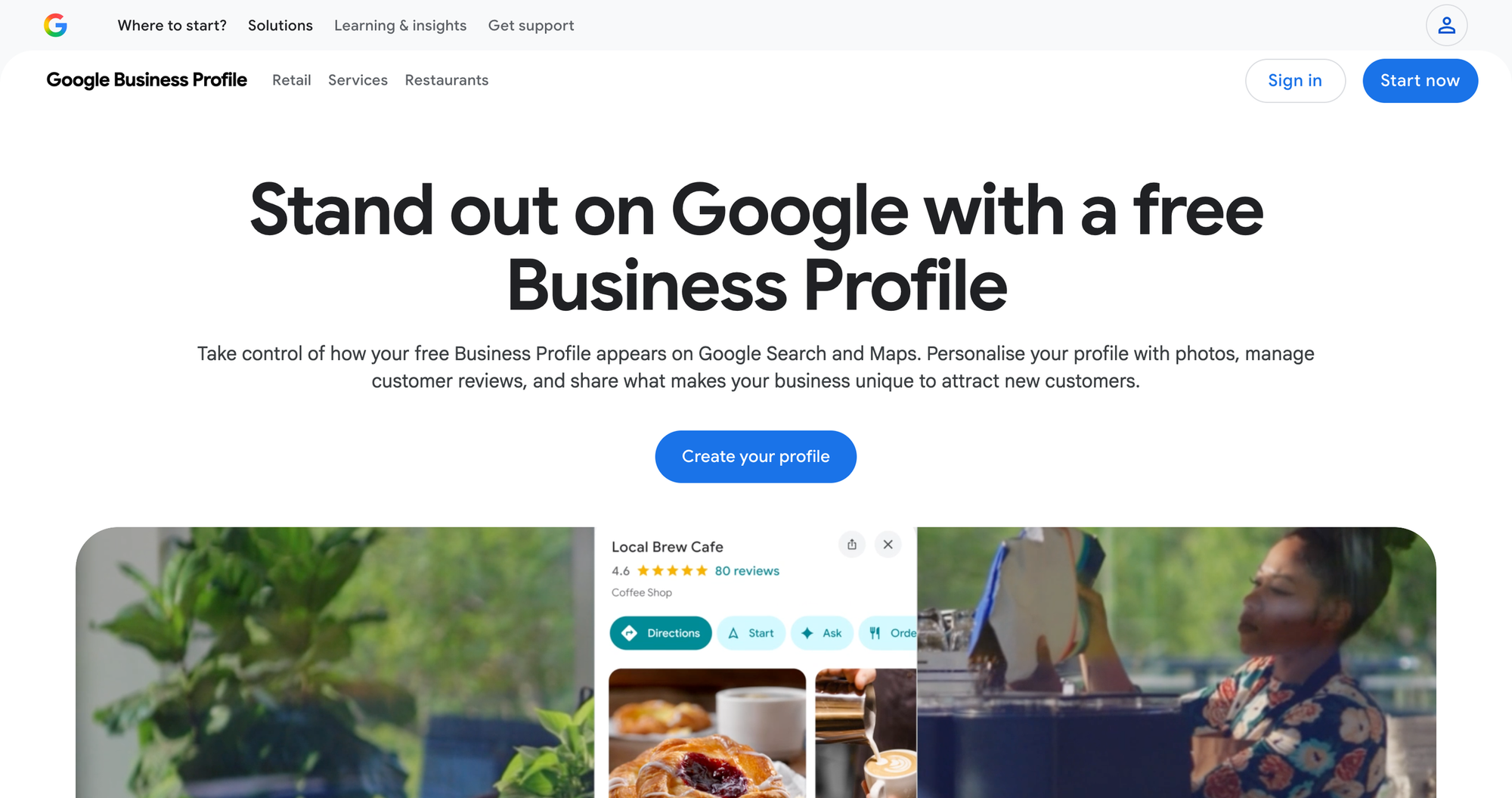
Google Business Profile is one of the most useful places to start. It allows hotels to manage information displayed through Google Search and Google Maps, including details guests frequently look for, such as breakfast, parking, Wi-Fi, pet policies and accessibility.
Google provides specific settings for hotel services and amenities. Verified hotel operators can edit many of these attributes, although not everything displayed publicly is directly controlled by the property.²
What to do: Search for the hotel on Google and claim or verify the existing profile. Check the address, telephone number and website, complete the available hotel attributes and upload current photographs showing rooms, shared facilities and the exterior.
Responding professionally to guest reviews is another worthwhile habit. These replies are visible to prospective guests and demonstrate how the hotel handles feedback.
2. Bing Places: A free listing within Microsoft’s search ecosystem
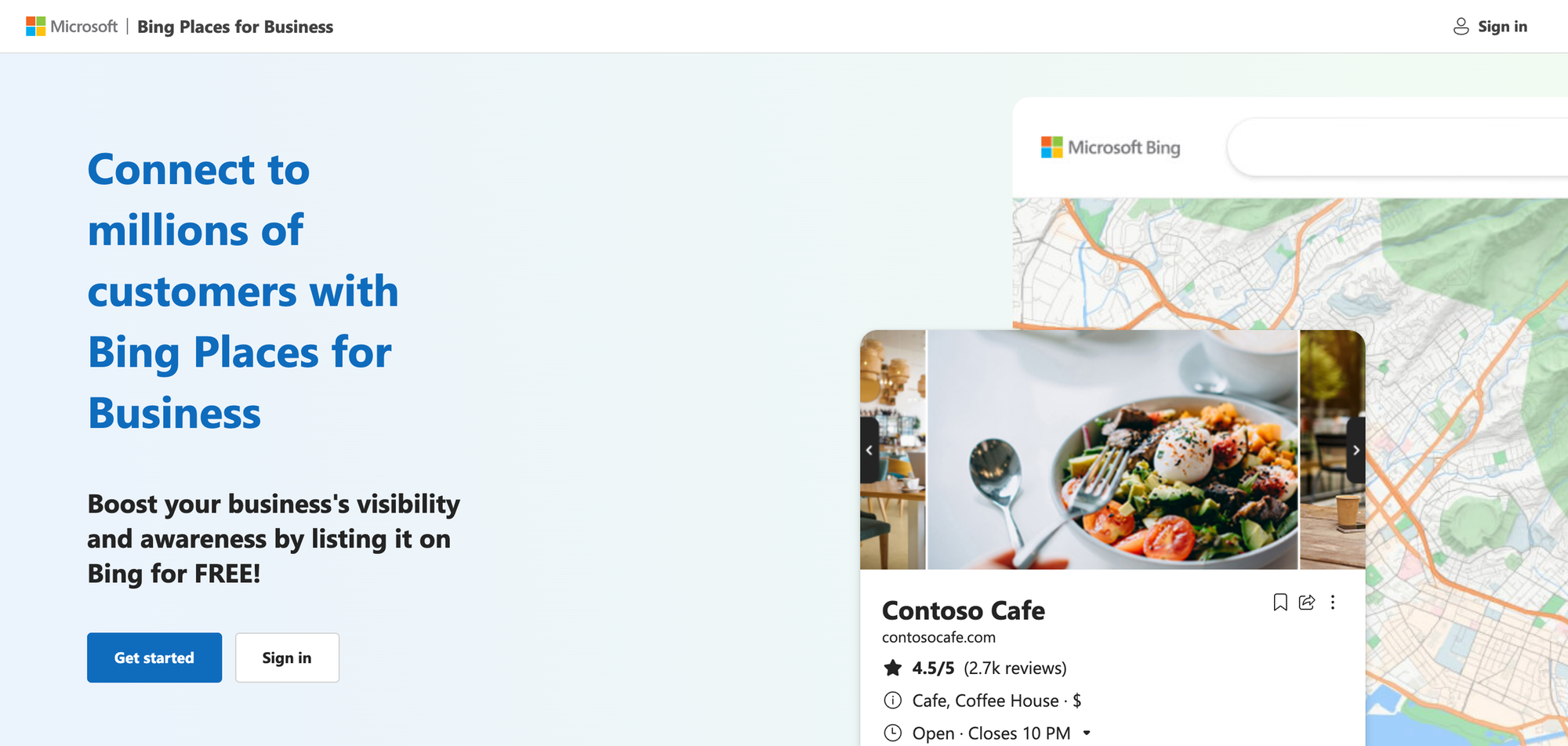
Bing Places for Business receives less attention than Google’s equivalent, particularly among smaller independent hotels. Nevertheless, Microsoft provides a free platform for managing business information displayed in Bing Search and Bing Maps.
The service was substantially redesigned in 2025, including improvements to importing existing business details from Google.³
Bing also has a role in Microsoft’s AI services. According to Microsoft’s documentation, Microsoft 365 Copilot can retrieve information through the Bing search service when web search is enabled.⁴ This does not mean that creating a Bing Places listing automatically secures a mention in Copilot or ChatGPT.
What to do: Visit Bing Places for Business, check whether the hotel already has a listing, claim or create it and complete the required information. Existing details may be imported from Google, but the final result should still be checked manually.
3. Apple Business: Make sure the hotel is correctly represented on Apple Maps
For iPhone users, Apple Maps and Siri are familiar ways to search for businesses and locations. Hotels therefore have good reason to check how their property appears within Apple’s ecosystem.
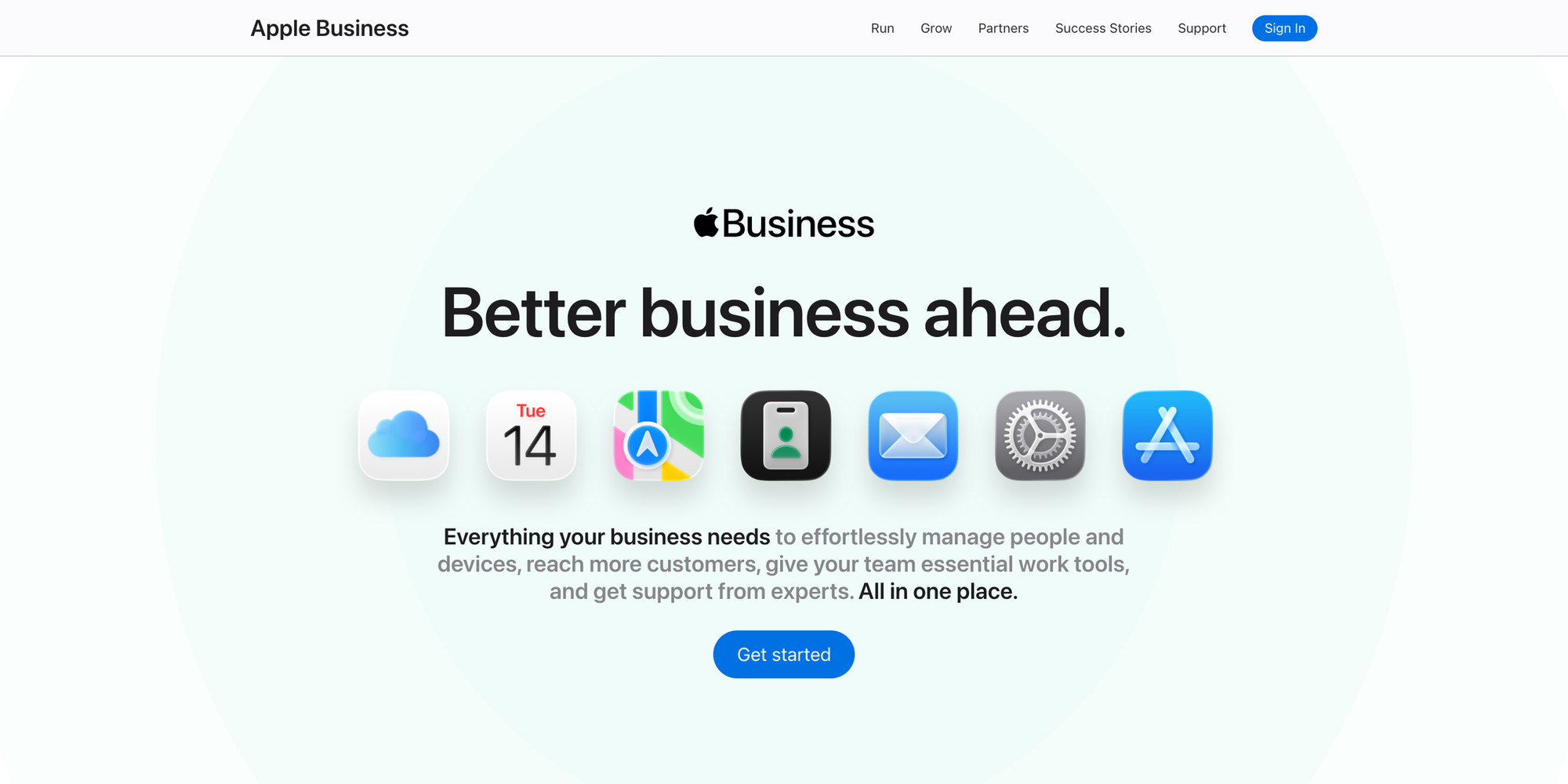
Apple now manages business location listings through Apple Business, which incorporates the former Apple Business Connect functionality. Hotels can claim locations, manage business information and improve their presentation with photographs and other details. Verification may be required.⁵
Start by searching for the property in Apple Maps. If a listing exists, check the location and contact details. Then use Apple Business to manage or claim the entry.
For hotels with several buildings or separate entrances, the map marker deserves particular attention. Guests following navigation instructions should arrive at the reception entrance rather than an inaccessible side of the building.
4. The hotel website: Answer practical questions clearly
Hotel websites often devote considerable attention to atmosphere and emotional appeal. They may describe peaceful surroundings and memorable experiences while leaving visitors searching for simple details about parking charges, breakfast times or whether dogs are welcome.
These practical facts are important. Google recommends making relevant information accessible in text form and ensuring that website content is easy to discover.¹
Hotel operators should review their websites from the perspective of someone unfamiliar with the property. Are arrival instructions, parking arrangements, breakfast hours and check-in times clearly explained? Is it obvious which rooms are suitable for families, whether accessible facilities are available and what the hotel offers for hiking holidays or business meetings?
A concise frequently asked questions section can resolve many of these uncertainties. It is also worth ensuring that the property’s name, address and telephone number are consistent across the website and external listings.
The objective is not to repeat keywords as frequently as possible. It is to provide accurate answers in language that guests and search systems can understand.
5. Structured data: Help search engines identify hotel information
Beyond the text visible to guests, websites can provide machine-readable information known as structured data. This uses a standard vocabulary to describe what particular information represents.
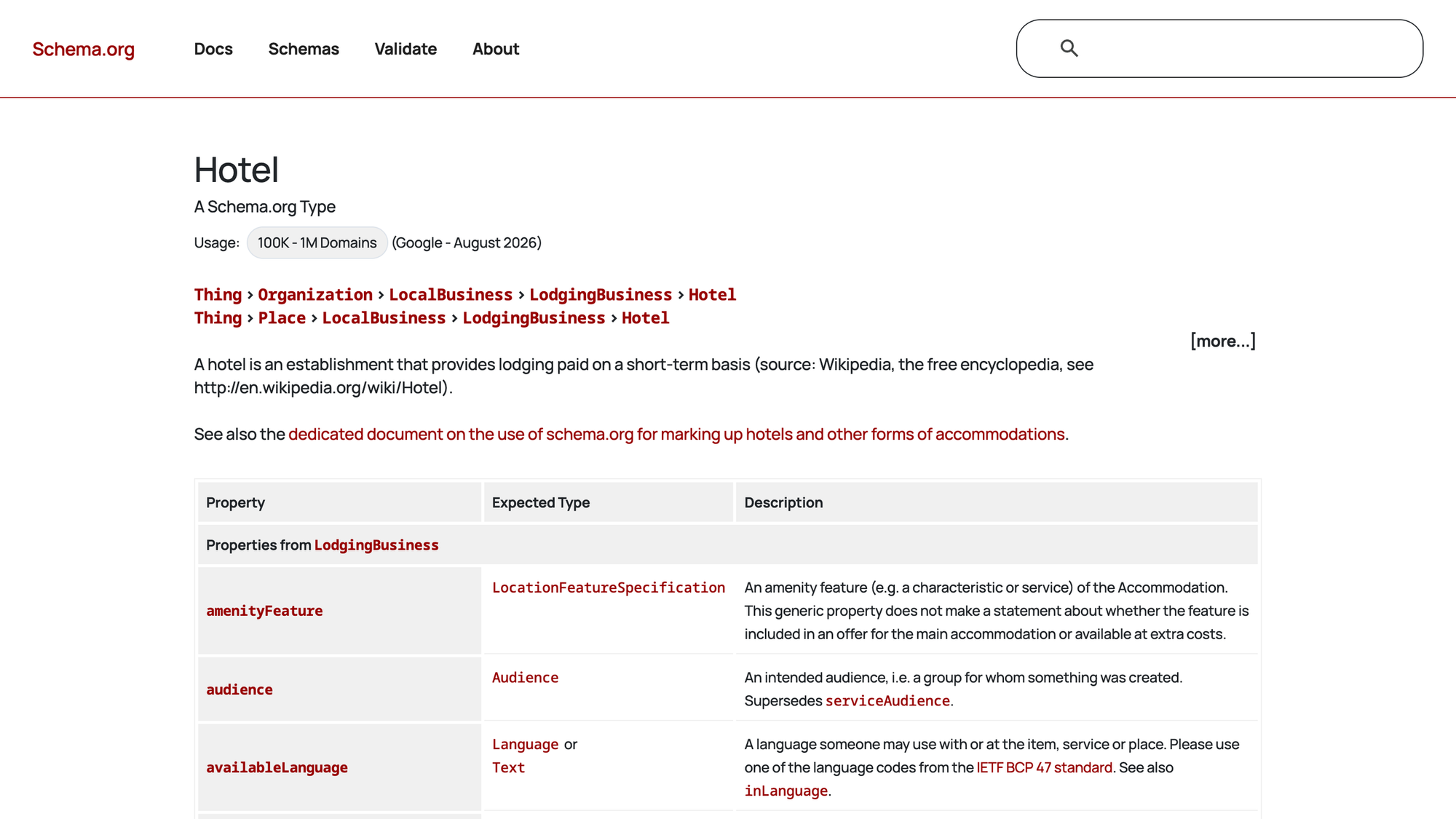
For accommodation businesses, Schema.org includes the Hotel type, which builds upon LodgingBusiness. Relevant properties include the address, check-in and check-out times, pet policies, amenities and official hotel star classifications.⁶
These details are commonly added through JSON-LD, a structured format embedded in website code. Hotels using a content management system should first establish whether appropriate structured data is already present.
Existing information can then be checked, missing properties added and the result tested using Google’s free structured-data tools.⁷ The information in the code must accurately reflect the hotel and its publicly visible content.
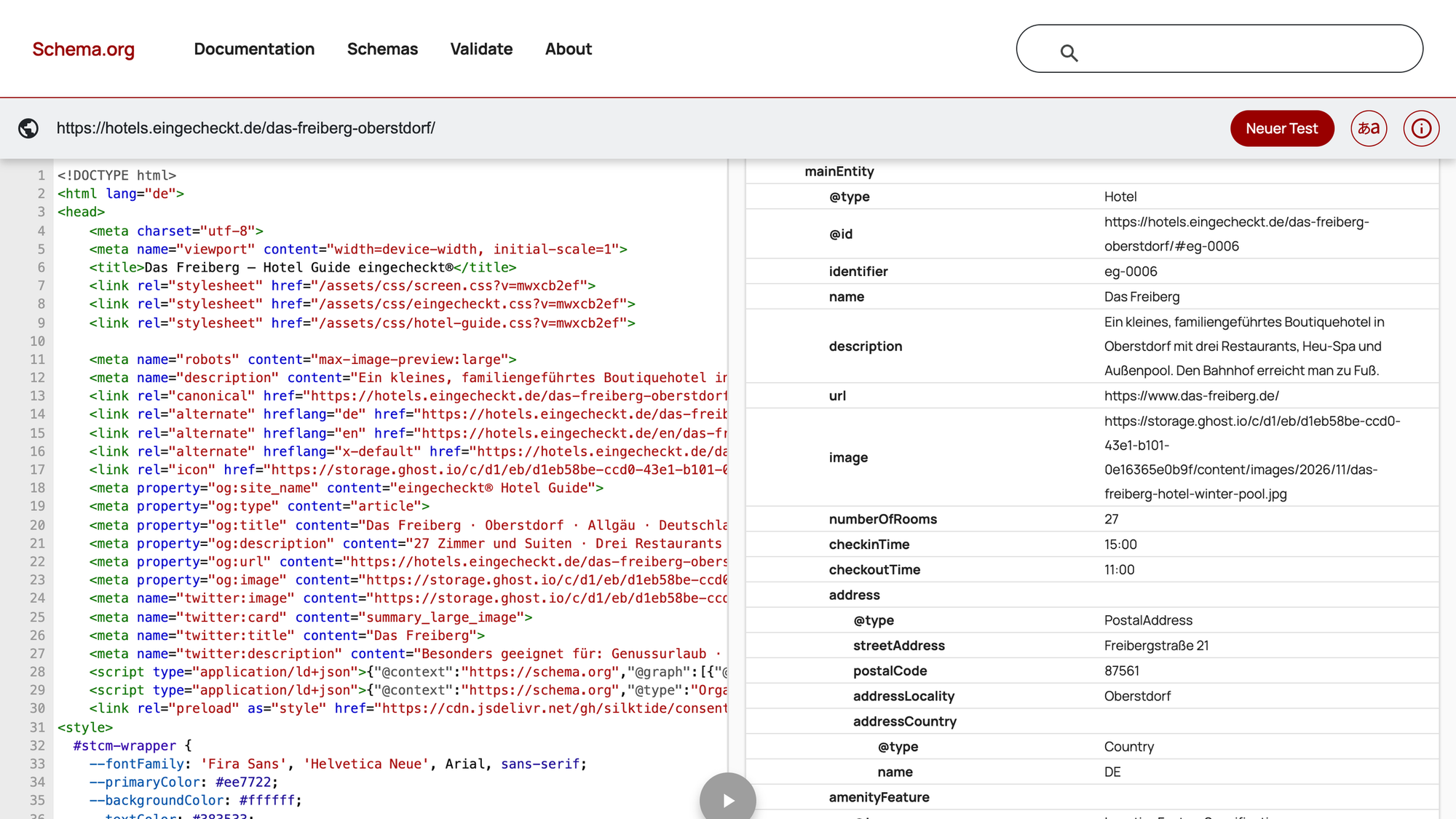
An official hotel classification should not, for example, be confused with an average guest review score.
Structured data is useful, but it does not provide privileged access to AI recommendations. Our glossary explains how this fits into the broader concept of Generative Engine Optimisation (GEO).
6. AI crawlers: Can ChatGPT access the hotel’s website?
Search systems need to be able to retrieve website content before they can process it. They use automated programmes called crawlers to discover and read publicly accessible pages.
A file known as robots.txt, normally available at hotelwebsite.com/robots.txt, can contain instructions for these crawlers.
OpenAI distinguishes between OAI-SearchBot, which is used for ChatGPT search, and GPTBot, which may collect material for training generative AI models. These controls are independent. A website can allow search crawling while separately restricting the training crawler.⁸
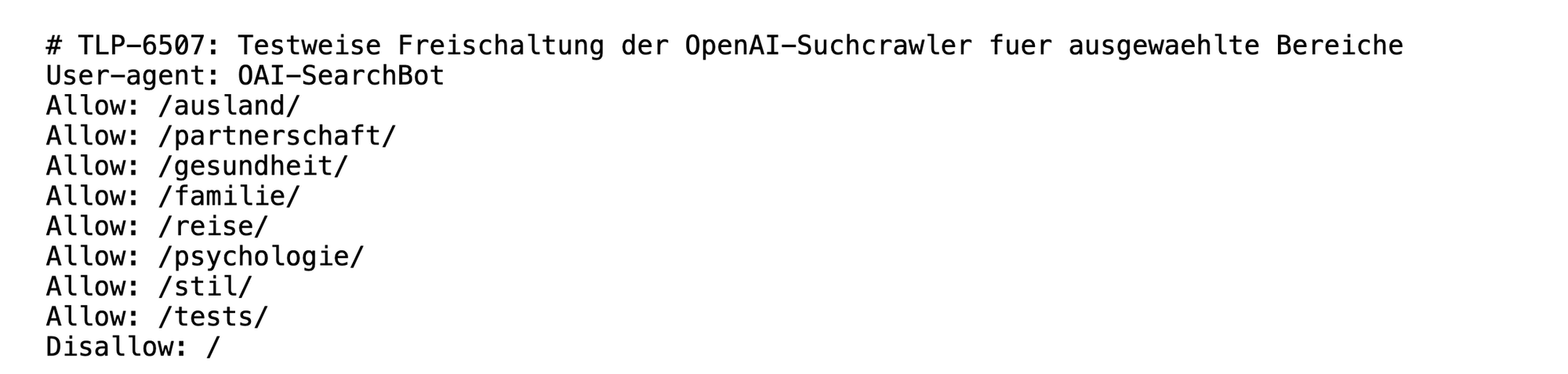
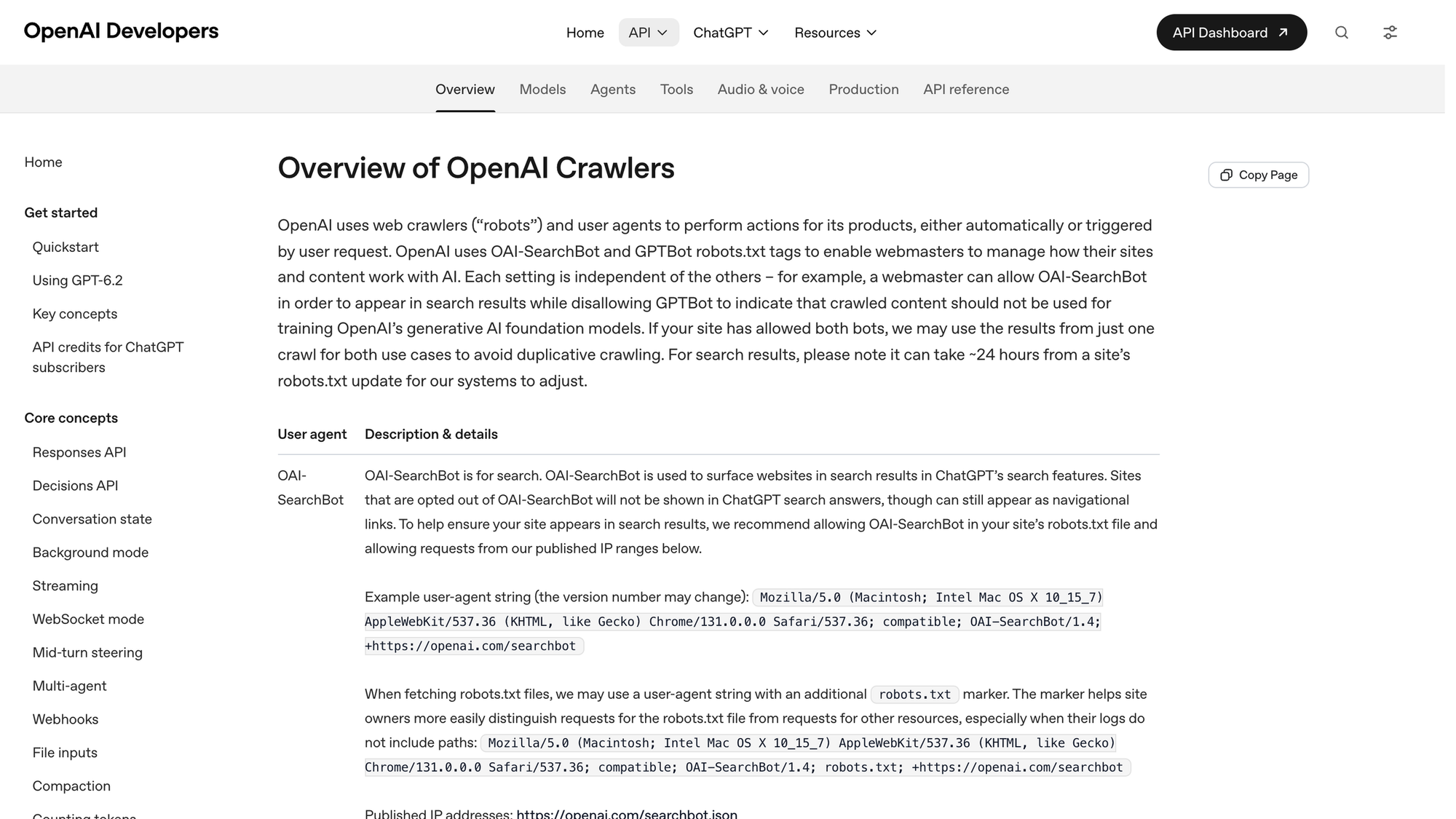
Hotels should also ensure that Bingbot is not inadvertently blocked if they want their pages to appear in Bing. Microsoft identifies restrictive crawling settings as a possible cause of missing search results.⁹
What to do: Open the website’s robots.txt file, check for restrictions affecting relevant search crawlers and ask the website administrator to correct unintended blocks. Firewalls and security services should also allow legitimate crawler requests. Important information should remain accessible without a login.
Another frequently discussed option is llms.txt, a proposed file intended to provide AI systems with an organised overview of website content. Google does not require such a file for inclusion in its AI search features.¹ Our llms.txt glossary entry explains the concept in more detail.
7. Guest reviews: What visitors say about the property
Reviews provide perspectives that a hotel’s own marketing copy cannot replace. They describe how guests experience the beds, breakfast, cleanliness, service and other aspects of their stay.
Google confirms that it uses AI to analyse reviews and generate summaries highlighting common opinions and practical observations.¹⁰ Consequently, the content of individual reviews can matter alongside the overall rating.
A sensible approach is to invite departing guests to share their genuine experiences, monitor incoming feedback and respond thoughtfully when appropriate. Repeated complaints can also identify operational issues that deserve attention.
Buying reviews or offering rewards in exchange for favourable feedback is not a legitimate shortcut. Google explicitly prohibits manipulated engagement and may impose restrictions on business profiles.¹¹
8. Tripadvisor, tourism directories and regional hospitality networks
Not every useful information source belongs to a major technology company. Local tourism organisations, regional accommodation directories and collaborative mapping projects can also help establish an accurate online representation of a hotel.
Tripadvisor is a practical starting point. Hotels can claim existing listings for free, add information and photographs, and respond to reviews through the platform’s business tools.¹²
Next, check the destination’s tourism organisation, local visitor information services and relevant hospitality networks. Industry association directories may also be useful where the hotel is already eligible to participate.
On OpenStreetMap, a freely editable mapping project, hotels can be represented as accommodation facilities. Checking the property’s position, name and address helps ensure the map contains accurate information.¹³
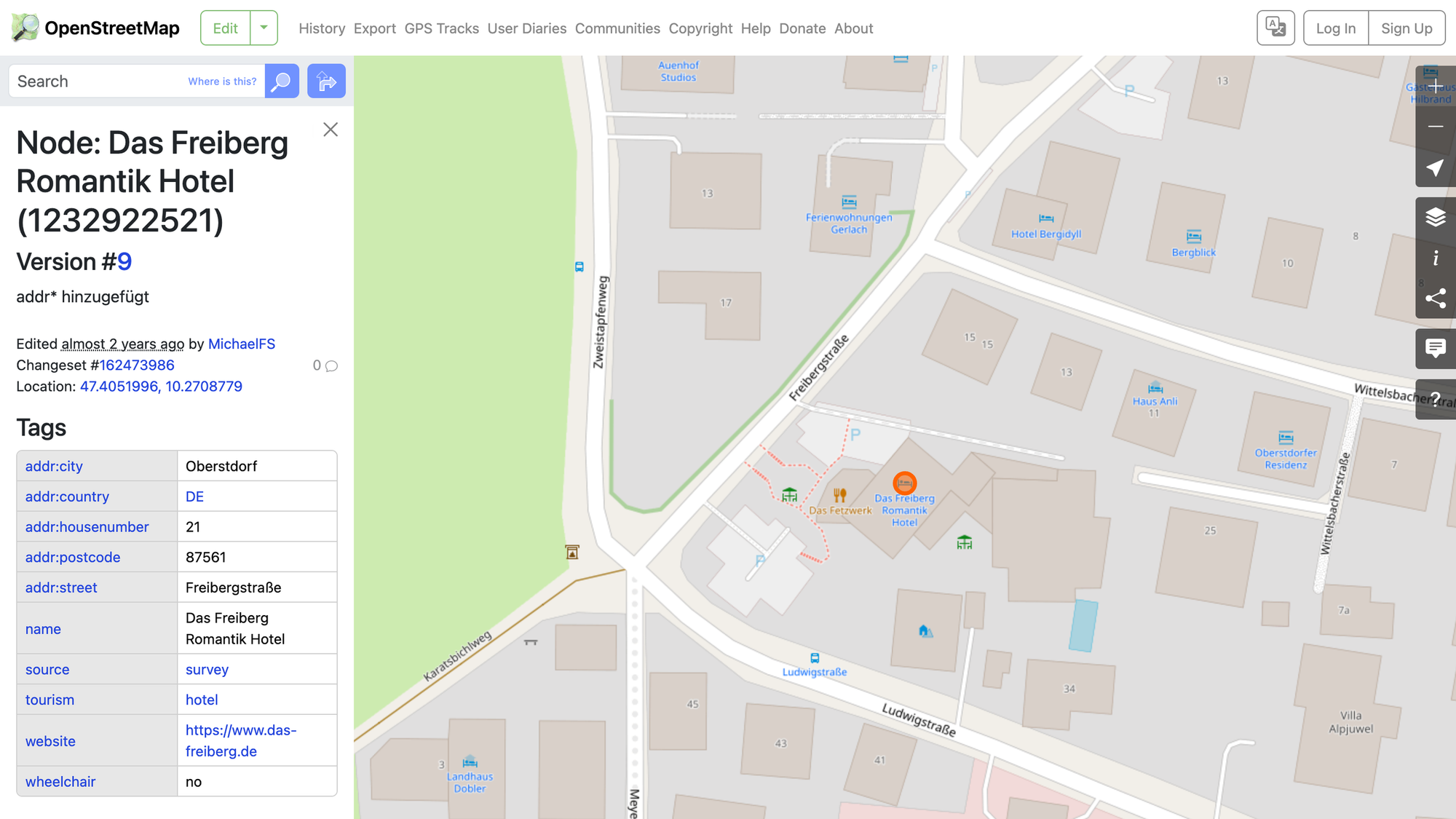
Another free directory is the eingecheckt® Hotel Guide, which lists hotels worldwide and presents them with source information in German and English.
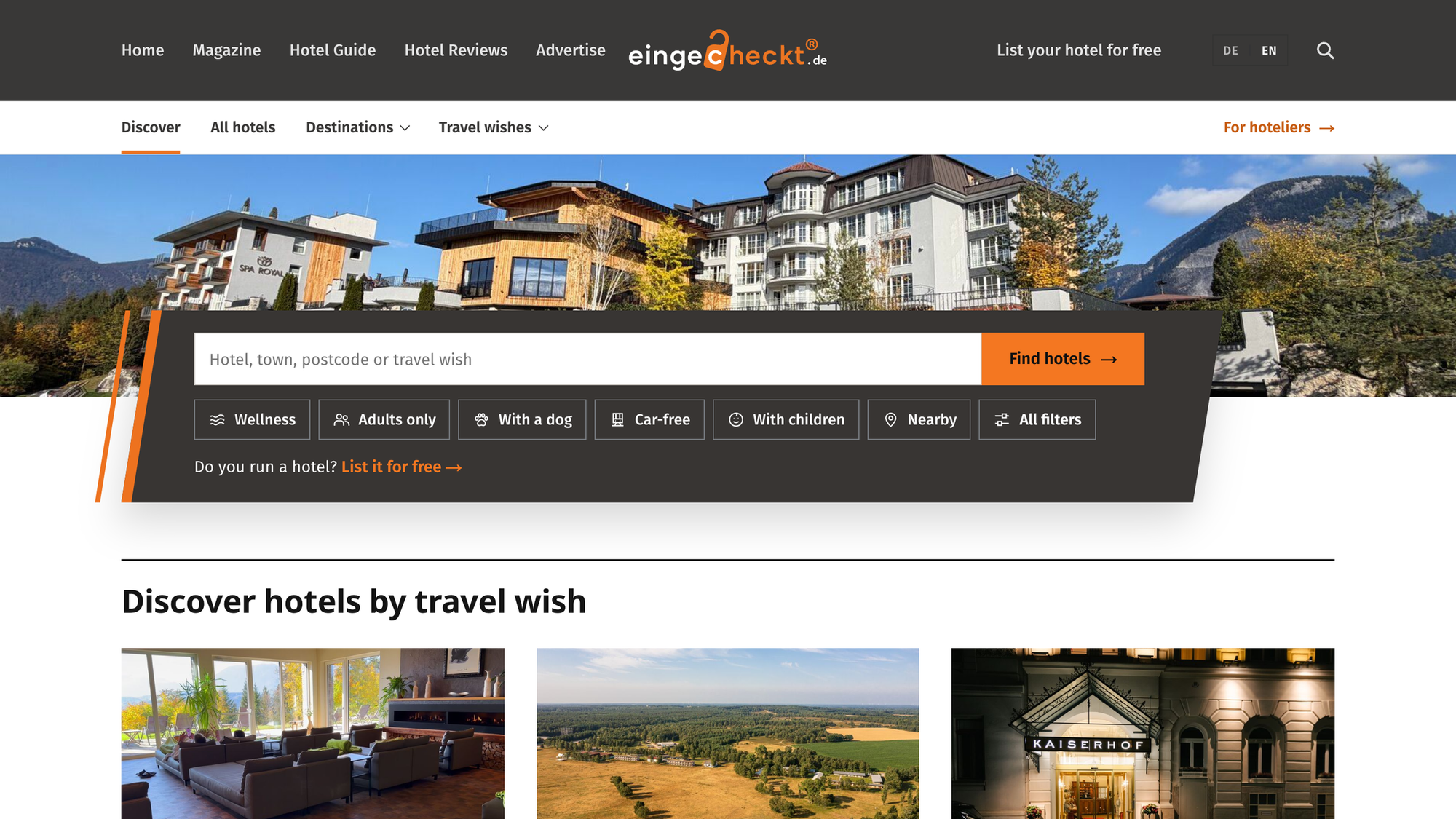
List your hotel in the eingecheckt® Hotel Guide for free
Complete information with sources, in German and English, readable for search engines and AI assistants – plus a direct link to your website, with no commission and no affiliate links. A complete profile can contribute to visibility, but we cannot guarantee it.
List your hotel for freeThe most useful approach is to maintain a manageable selection of reliable listings rather than create numerous incomplete profiles. Participation conditions should always be checked, as not every directory service is free.
9. Trade publications and local journalism: Independent sources of information
A hotel can describe its own strengths in considerable detail. An independent editorial article provides a different perspective and may offer additional publicly accessible information for search systems.
This does not necessarily require an extensive public relations campaign. A new staff training initiative, a family business changing generations, an unusual renovation decision or a regional partnership may provide a worthwhile story.
Hoteliers can approach local newspapers or hospitality publications with specific subjects and make themselves available for questions. Journalists need meaningful information rather than generic promotional material.
Editorial coverage is never a guaranteed route into an AI-generated recommendation, but it can create independent documentation of developments that would otherwise be described only by the hotel.
For a broader perspective, see our article examining how hospitality experts assess AI visibility, ChatGPT and Google.
10. Test visibility regularly: What do AI systems actually say?
Once the foundations are in place, it makes sense to review how the property appears in relevant searches. No specialist analysis platform is required for an initial check.
Every month, hotel operators can ask the same three questions in ChatGPT with web search enabled and in Google. Suitable examples might be: “Which family-friendly hotels are available in this region?”, “Which nearby hotels offer parking and an early breakfast?” and “Where should I stay for a weekend of hiking?”
The questions should reflect the hotel’s genuine positioning. Record whether the property appears, what the answer says about it and which sources are linked.
Results may differ depending on wording, search conditions and timing. They are snapshots, not definitive performance measurements. Their greatest immediate value lies in identifying inaccurate information that can be corrected.
- Claim and complete the Google Business Profile
- Verify the hotel's Bing Places listing
- Check the location in Apple Business
- Improve practical information and FAQs on the website
- Review structured hotel data
- Confirm that relevant search crawlers can access public content
- Monitor and respond appropriately to genuine guest reviews
- Update Tripadvisor and relevant regional directories
- Offer worthwhile stories to suitable editorial publications
- Document three comparable AI search queries every month
Conclusion: Improving a hotel's online discoverability does not always begin with a new marketing campaign. Often, the first improvements involve familiar information: an accurate address, clear descriptions, current photographs and accessible answers to common guest questions. Keeping these foundations reliable gives search systems a better opportunity to find and represent the property accurately.
Official documentation and support pages, accessed on 26 November 2026.
-
Google Search Central (n.d.)
AI features and your website
Website, accessed 26 November 2026. AI features in Google Search, no additional requirements. -
Google Business Profile Help (n.d.)
Manage your hotel’s details
Website, accessed 26 November 2026. Hotel attributes in the Business Profile. -
Microsoft Bing (2025)
Introducing the New Bing Places for Business
Blog post, October 2025. New Bing Places, import from Google. -
Microsoft Learn (n.d.)
Manage web search in Microsoft 365 Copilot
Website, accessed 26 November 2026. Copilot retrieves information via Bing when web search is enabled. -
Apple Support (n.d.)
Add a location in Apple Business
Website, accessed 26 November 2026; see also Apple Newsroom, March 2026: Introducing Apple Business. Locations in Apple Business, successor to Apple Business Connect. -
Schema.org (n.d.)
Hotel
Website, accessed 26 November 2026. Properties for accommodation businesses. -
Google Search Central (n.d.)
Local Business structured data
Website, accessed 26 November 2026. Structured data and testing tools. -
OpenAI (n.d.)
Overview of OpenAI Crawlers
Website, accessed 26 November 2026. OAI-SearchBot and GPTBot, controlled independently. -
Bing Webmaster Blog (2012)
Indexing issues? Let’s examine the most common problem
Blog post, September 2012. robots.txt blocks as a common cause of missing indexing. -
Google Local Listings Help (n.d.)
How Google sources and uses information in local listings
Website, accessed 26 November 2026. AI review summaries. -
Google Business Profile Help (n.d.)
Tips to get more reviews
Website, accessed 26 November 2026. Incentives for reviews are prohibited. -
Tripadvisor for Business (n.d.)
Claim your free business listing
Website, accessed 26 November 2026. Free listing for accommodation. -
OpenStreetMap Wiki (n.d.)
Key:tourism
Website, accessed 26 November 2026. Tagging hotels and accommodation.


