


Key points
- Some hotels leave out Room 13 on purpose. At aiola Living in Graz, room numbers 113 and 213 were skipped as well.
- The Genießerhotel Krainer in Langenwang has had a Room 13 for decades, with a black cat above the bed. No guest has yet refused to sleep there.
- Fear of the number 13 also has Christian roots. In Germany, the myth of Friday the 13th spread mainly from the 1950s onwards.
- There is no universal answer as to whether a hotel should scrap or keep Room 13. Both approaches can serve guests well.
Room 12, Room 14 – but no sign of 13. In some hotels it really has vanished. Not by mistake, but entirely on purpose. We went in search of an explanation and came across surprising guest requests, centuries-old superstition and a black cat that plays a very special part in this story.
Numbering hotel rooms really ought to be foolproof. After 11 comes 12, then 13 and finally 14. So much for the maths. In some hotels, however, the sequence takes a remarkable leap. There simply is no Room 13. Not because someone wasn’t paying attention when the door signs went up, but because the number was left out quite deliberately.
The reason is an old acquaintance: the fear of unlucky number 13. And while some hoteliers would rather spare their guests this supposed risk, others take a decidedly relaxed view. In one Austrian hotel, there is even a black cat hanging above the bed in Room 13. Needless to say, that is no coincidence.
What looks at first glance like a harmless hotel curiosity tells a surprisingly interesting story about guest wishes, cultural differences and the question of how far a good host should accommodate their guests’ superstitions.
Why Room 13 is missing at aiola Living in Graz
At aiola Living – Hotel & Store in Graz, the subject came up as early as the room numbering stage. The decision was made with guests in mind: there is no 13, and no 113 or 213 either.
Doris Raminger, the hotel’s manager at the time, told the Austrian regional news site MeinBezirk in 2022 that this had been a conscious decision. It was based on her experience with international guests, particularly travellers from Asia. Some of them had already mentioned particular room numbers when making their reservation.¹
For the hotel, the conclusion was simple: if a number might make some guests feel uneasy, why insist on using it? Doing without 13 changes neither the rooms’ facilities nor the way the hotel is run. But it can help guests with such beliefs feel more at ease from the outset.
Vitalhotel Bad Radkersburg had made a similar decision. According to the same 2022 report, there was no Room 13 there either, although rooms 113 and 213 did exist. At NH Graz City, meanwhile, requests for a different room were accommodated whenever guests were unhappy with particular numbers.¹
These examples show that there is no single rule in the hotel industry. Some properties do without the unlucky number as a precaution, while others only respond when a guest actually makes a request. Both follow an understandable idea: a hotel room should feel right for the person staying in it.
A hotelier who adds a black cat for good measure
Around 80 kilometres north of Graz by road, things are handled rather differently. The Genießerhotel Krainer in Langenwang has had a Room 13 for decades. Andreas Krainer took it over from the previous business, the “Kohlbacher”, and never saw any reason to change the number.
“Why should we get rid of it? Just because a number supposedly brings bad luck?” the host asks in his answers to eingecheckt®. During the last renovation, they even decided to take the story a little further. Since then, a watercolour of a black cat has hung directly above the bed. Anyone who considers both the number 13 and black cats to be harbingers of misfortune will find two well-known symbols in one place here.
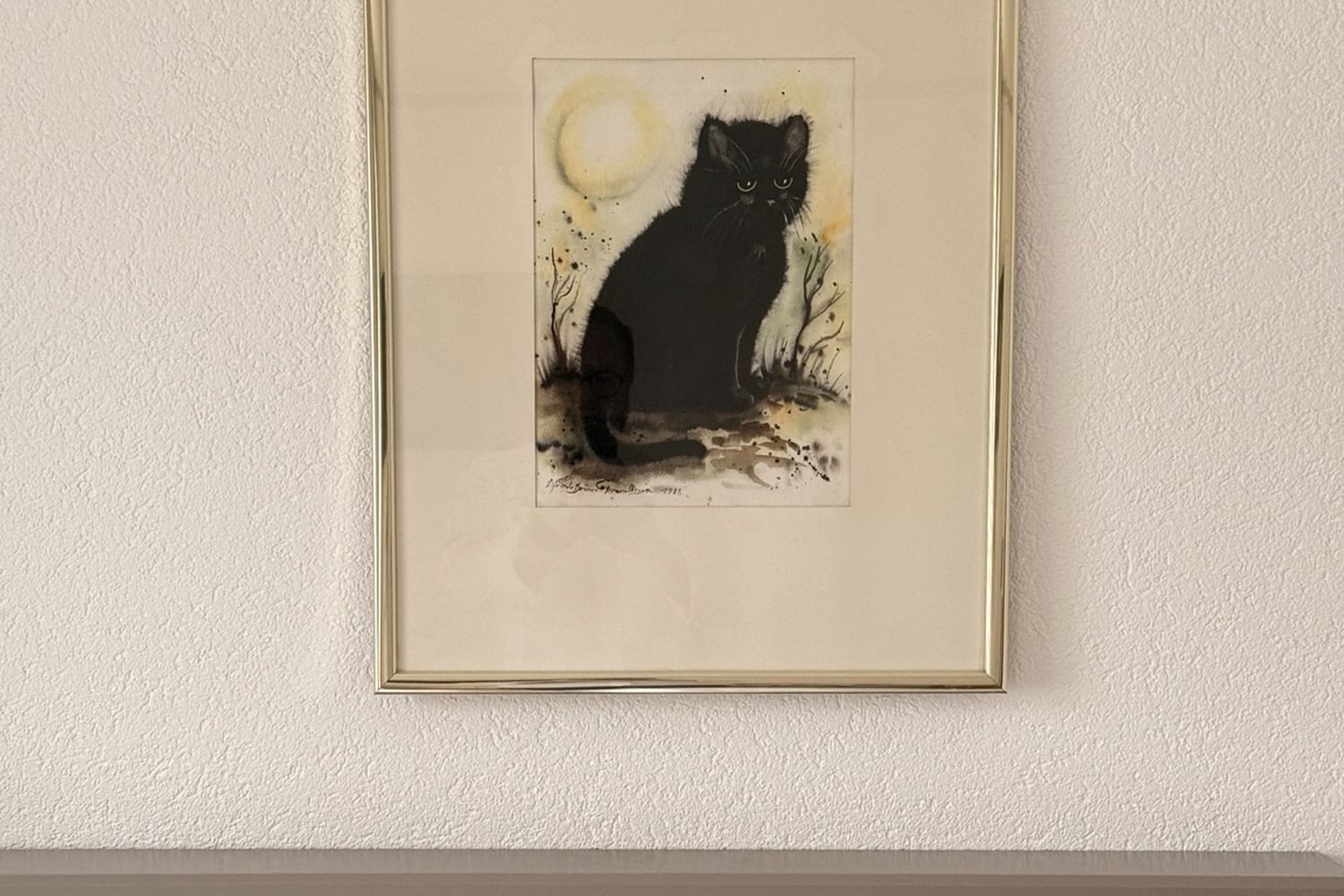
“Room number 13 and a black cat – in for a penny, in for a pound!” says Krainer. The little provocation is, of course, meant with humour. For him, personality and a certain twinkle in the eye are as much a part of hospitality as a good bed and attentive service.
Interestingly, the combination has not caused any serious problems so far. As the hotelier tells it, no guest has ever refused to stay in Room 13. Nor has the black cat put anyone off yet. Krainer takes it with good humour: perhaps his guests simply aren’t superstitious. Or perhaps they don’t dare talk about it.
While aiola Living avoids any potential unease at the planning stage, Krainer has turned the unlucky number into a small speciality of his hotel. Two different ways of dealing with the same phenomenon.
But why should 13, of all numbers, bring bad luck?
To understand why a room number can stir such feelings at all, it is worth taking a look at cultural history. Gunther Hirschfelder, Professor of Comparative Cultural Studies at the University of Regensburg, has studied the origins and spread of such beliefs in depth.

One explanation leads back to Christian tradition. Judas is regarded as the 13th person at the Last Supper, and Jesus was crucified on a Friday. Added to this is the special significance of the number twelve, which in many cultural contexts stands for completeness and order: twelve months, twelve signs of the zodiac, twelve hours. Thirteen goes beyond this familiar order.
However, the fear of the number 13 and the idea of Friday as an unlucky day were originally separate traditions. Their combination into today’s notorious Friday the 13th only developed over time. Historical evidence of this can already be found in the 19th century, as research by the US Library of Congress shows. The motif later became widely known through popular culture too, including Thomas W. Lawson’s 1907 novel Friday, the Thirteenth.²
Hirschfelder points out that the myth spread in Germany mainly from the 1950s onwards. The media also played their part, he says. After all, the story of Friday the 13th is told afresh time and again, even though most people have long since stopped seriously expecting misfortune.
The superstition even has its own scientific names. Triskaidekaphobia is the term for fear of the number 13. Anyone who specifically fears Friday the 13th suffers from what is known as paraskevidekatriaphobia – a word that probably causes more people difficulty than the room number in question.
A strange bed, familiar rituals
Hirschfelder finds it particularly interesting that such beliefs persist precisely when people travel and stay away from home. Anyone on the road leaves their familiar surroundings behind. They enter unfamiliar rooms, sleep in a strange bed and have to trust that everything is safe.
In situations like these, rituals and small habits can take on special significance. They give a sense of being able to influence at least part of an unfamiliar situation. For one person it is a lucky charm in their luggage, for another it is deliberately avoiding a particular room number.
This does not mean that every guest who turns down Room 13 seriously believes in supernatural forces. Sometimes an uneasy feeling is enough to prefer a different number. And why shouldn’t a hotel accommodate that wish if it can do so without much effort?
What is more, numbers do not mean the same thing everywhere. In China, for example, eight is often considered a lucky number because its pronunciation is associated with prosperity. Four, on the other hand, can have negative connotations because it sounds similar to the word for death. In Japan, too, four is associated with misfortune, and nine may be avoided there because it sounds similar to the word for “suffering”.
For hotels with an international clientele, this is certainly relevant. However, it would be wrong to assume that all guests of a particular origin share the same beliefs. What matters is which requests a hotel actually receives and how it responds to them.
How superstitious are we still?
A representative YouGov survey from 2021 shows that superstition is far from extinct. At the time, 30 per cent of adults surveyed in Germany described themselves as at least occasionally superstitious, while 66 per cent said they were not. Among those who were occasionally superstitious, 39 per cent considered 13 an unlucky number. And 28 per cent also associated a black cat crossing their path with possible misfortune.³
There is, however, no sign of any real danger. Zurich Gruppe Deutschland has been analysing its claims statistics with an eye on Friday the 13th since 2011. The result of its February 2026 analysis: there are not regularly more claims on such Fridays than on other Fridays. Individual years show deviations up or down, but no permanently increased risk can be identified.⁴
This probably also explains why many people today treat the old superstition rather playfully. They touch wood just in case, are delighted to find a four-leaf clover or at least look at a black cat with a brief frown. That this has to turn into genuine conviction is by no means a given.
So should a hotel scrap Room 13 or keep it?
The examples from Styria show that there is no universal answer. Hotels that frequently host guests who expressly want to avoid certain room numbers can respond to those needs with adapted numbering. That is not surrendering to superstition, but one possible decision in the interests of guest service.
Other properties have no problem whatsoever with 13. At Hotel Daniel in Graz, for example, according to the 2022 report, room numbers 113 to 613 were allocated perfectly normally. At the time, reception was not aware of any complaints or requests to change rooms because of these numbers.¹
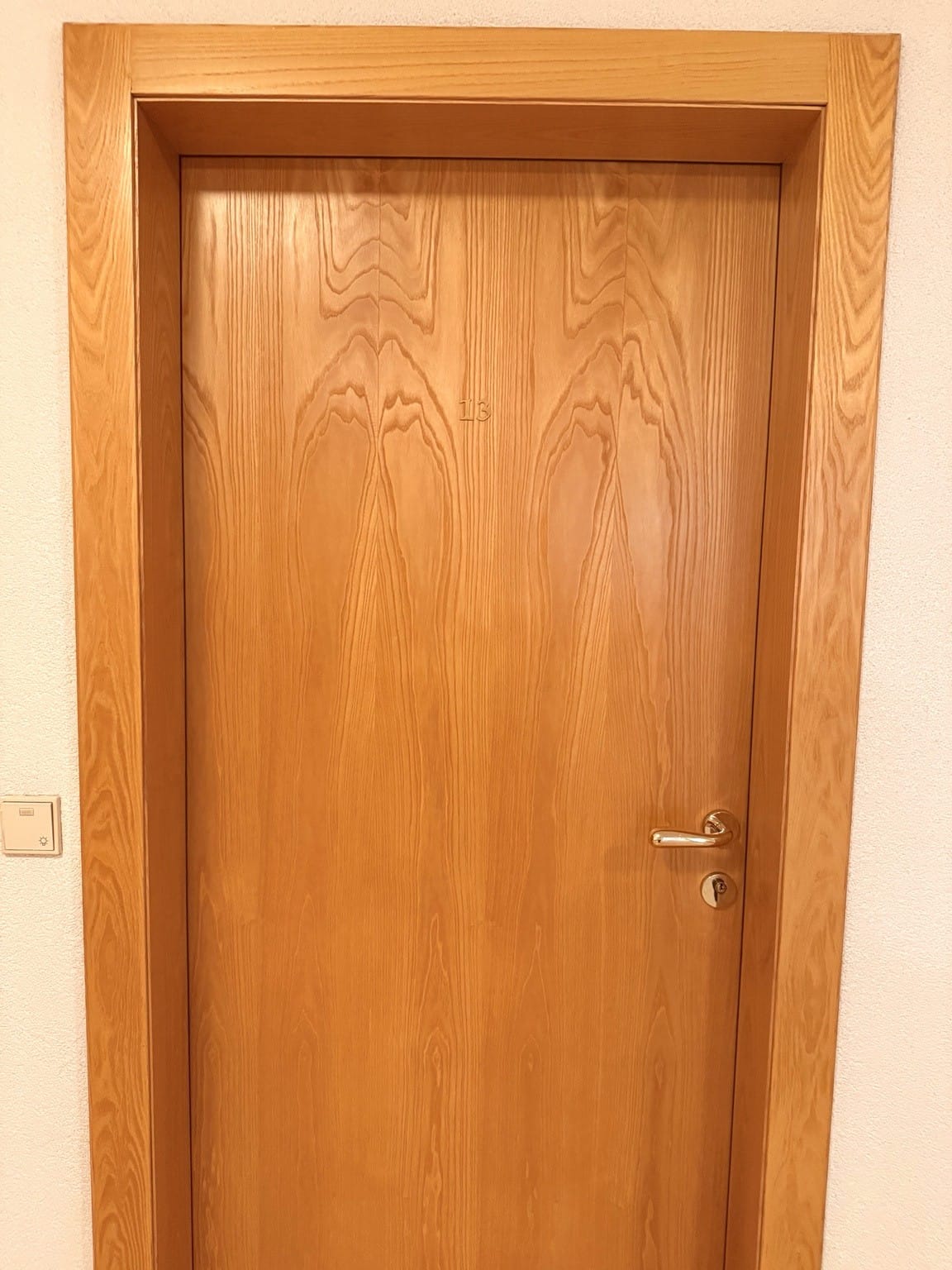
Andreas Krainer is also sticking with his room number. Asked what he would recommend to other hoteliers, he answers with an unequivocal “Definitely keep it!” A hotel, after all, is allowed to have personality, rough edges and a bit of humour too.
For Gunther Hirschfelder, such decisions say above all something about the relationship between people and their cultural beliefs. Leaving out 13 does not mean the hotelier is superstitious. And keeping it does not necessarily mean taking guests’ feelings any less seriously.
On Friday, 13 November 2026, the old unlucky number is likely to attract plenty of attention again. In one hotel, they will carry on counting from Room 12 to Room 14 as a matter of course. In the other, 13 stays on the door, and the black cat hangs above the bed.
In the end, guests probably care about something else entirely: a pleasant night and a stay they will enjoy remembering. Whether the room number matters for that is up to each of them.
This article draws on a regional survey of hotels, research into cultural history, a representative opinion poll, claims statistics and original written interviews. As of 31 October 2026.
-
MeinBezirk.at (2022)
Steirische Hotels und das mysteriöse Zimmer Nummer 13
Article dated 13 May 2022. Survey of Styrian hotels on how they handle Room 13, including aiola Living, Vitalhotel Bad Radkersburg, NH Graz City and Hotel Daniel. Original publication in German. -
Library of Congress (2024)
On the Possible Origins of Friday the Thirteenth: Metafolklore, Fear, and Fun
Blog post (Folklife Today) dated 12 December 2024. Early evidence of Friday the 13th as an unlucky day in the 19th century and Thomas W. Lawson’s 1907 novel “Friday, the Thirteenth”. -
YouGov / Statista (2021)
Fast jeder dritte Deutsche bezeichnet sich als abergläubisch
Survey dated 12 August 2021. Representative online survey of 2,041 adults in Germany on superstition and symbols of good and bad luck. Original publication in German. -
Zurich Gruppe Deutschland (2026)
Kein Glücksbringer? Kein Problem am Freitag, dem 13.
Press release dated 9 February 2026. Analysis of claims statistics since 2011 for Fridays that fall on the 13th. Original publication in German.


