


Key points
- Lodge Reinsehlen, until recently Hotelcamp Reinsehlen, lies near Schneverdingen in the Lüneburg Heath.
- The former military site is now a protected area of around 178 hectares with the largest continuous area of dry sandy grassland in Lower Saxony.
- A meta-analysis of 80 studies found small positive effects on average of nature experiences on working memory and attentional control.
- Director Helko Riedinger calls the new name a logical further development. More than 25 per cent of guests are individual travellers.
Sometimes you don’t need faraway countries to find a sense of freedom. In the Lüneburg Heath there is a place where the horizon seems almost boundless. This is a story about wanderlust on your own doorstep, an unusual past and the art of simply being there.
Two chairs stand in the golden grass. They are set slightly apart, as if someone had placed them for a conversation that hasn’t begun yet. Behind them stretches a landscape that seems to have no end. Single birches stand forlorn on the plain, and somewhere on the horizon a dark forest begins. No sea, no mountains, no spectacular sight. And yet there is something about this view that stirs a strange longing.
Perhaps it recalls the great plains of North America, the wide landscapes of Scandinavia or those moments on a journey when you suddenly stop because, for an instant, the world seems bigger than your own thoughts. Yet this place is in northern Germany, in the Lüneburg Heath, only a few kilometres from Schneverdingen. It is called Reinsehlen, and it has a quality that has become rare: here, your gaze can simply keep travelling.
Sandy grassland instead of purple heather
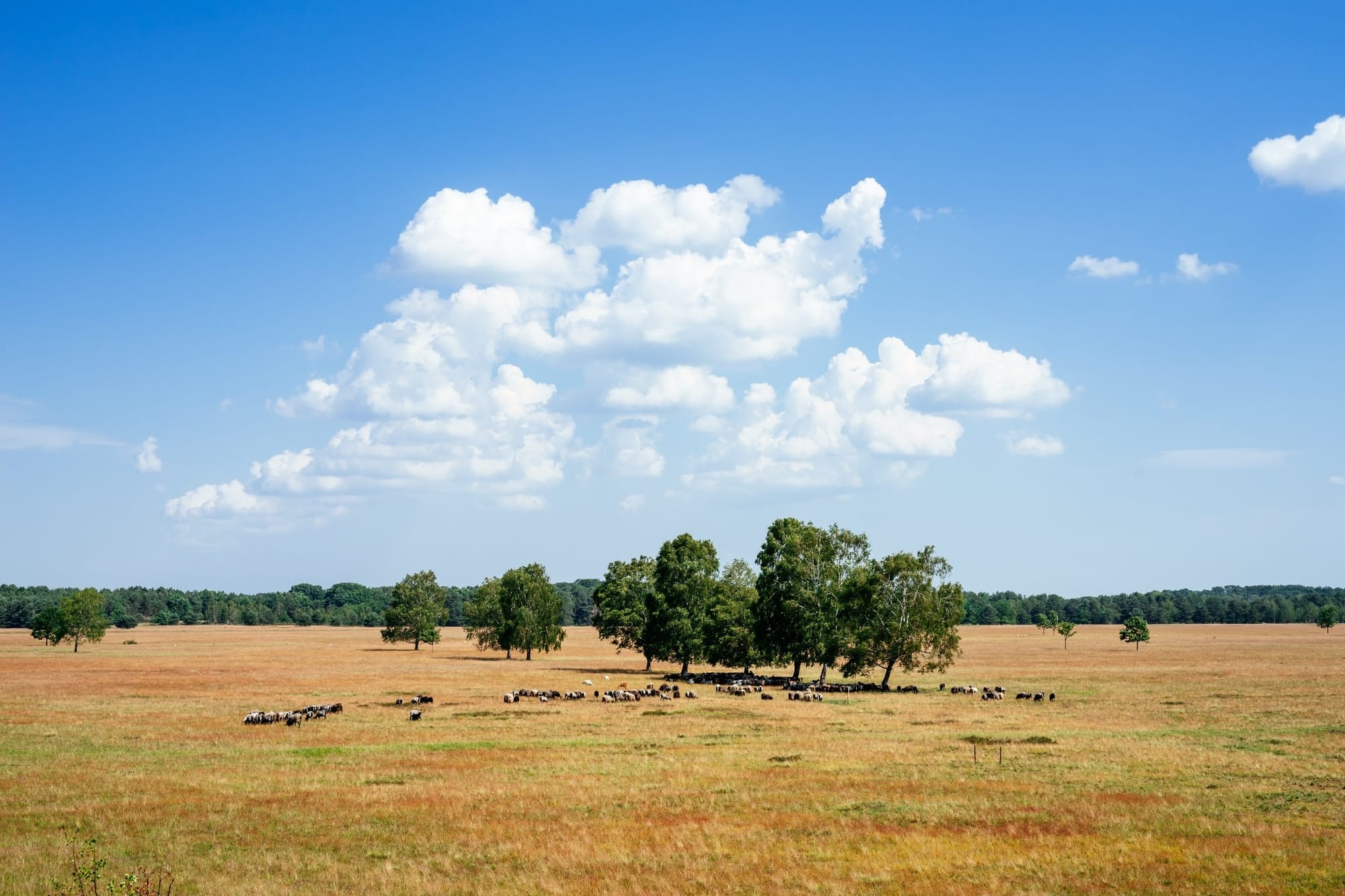
If you know the Lüneburg Heath, you probably think first of heathland in purple bloom, juniper bushes and romantic carriage rides. Reinsehlen shows a different side of this landscape. This is the realm of dry sandy grassland, known in German as Sandmagerrasen: a wide, in places almost treeless plain whose colours change with the seasons. In summer the dry grasses shimmer yellow and gold, in autumn they take on warm shades of brown. On frosty winter mornings the clusters of trees turn into silvery-white silhouettes.
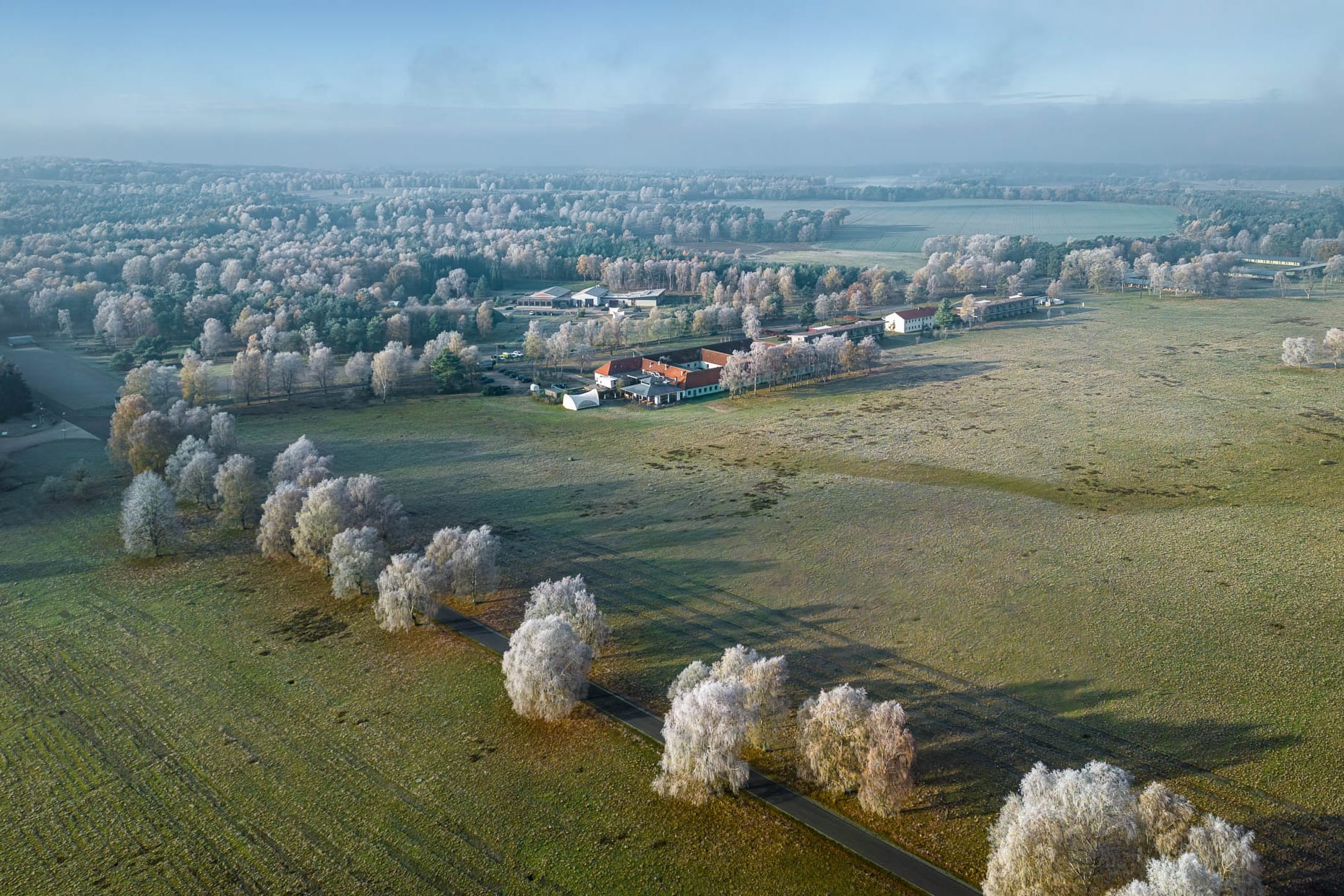
What looks at first glance like a simple meadow is an ecologically exceptional habitat. The protected EU Habitats Directive site “Sandmagerrasen Camp Reinsehlen” covers around 178 hectares and contains the largest continuous area of dry sandy grassland in Lower Saxony. Specialised plants grow on the nutrient-poor soils, including rare species such as common moonwort. Sheep grazing helps to preserve parts of this open landscape.¹
The appeal also lies in the small things. Out here you may spot Heidschnucken sheep among the grasses, watch the clouds drift by or see the shadow of a single birch move slowly across the ground. The landscape doesn’t push itself forward. It only reveals its charm when you give it time.
Where silence reigns today, tanks once rolled
Peaceful as Reinsehlen seems today, its history tells of a completely different world. A military airfield was built here in the late 1930s. After the Second World War the site was used, among other things, as a refugee camp, and British forces later took over the area.² For decades, military exercises were part of everyday life in this region.
Military use did not end until 1994. The site was then renaturalised and given new uses.¹ Some of the former military buildings now even serve as offices and a conference venue for the Alfred Toepfer Academy for Nature Conservation.³
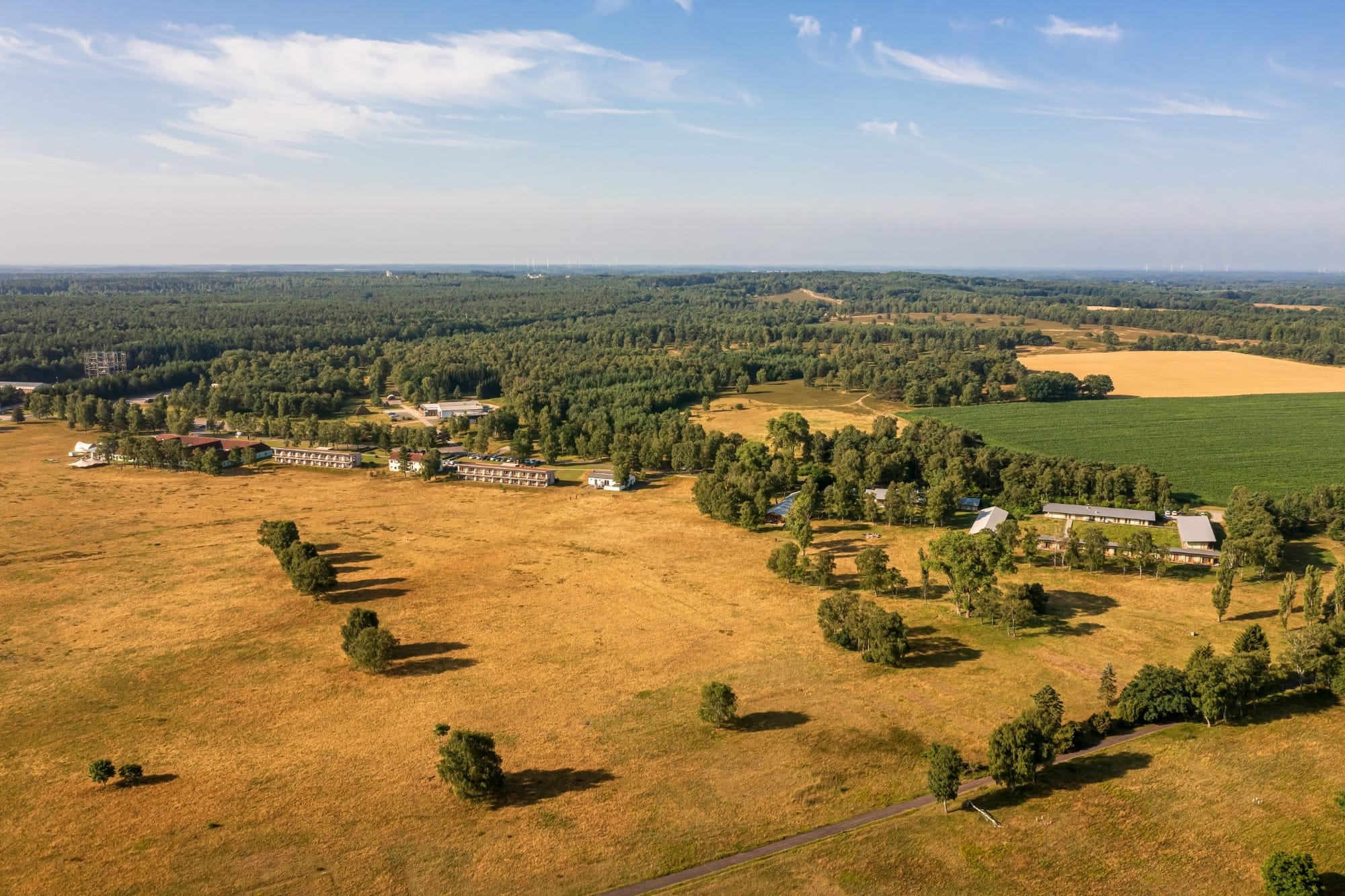
This part of the story changes how you see the plain. Its present form is not untouched nature but the result of human intervention and a long process of change. Where vehicles once put a strain on the soil, valuable habitats have taken hold. The place has not simply come to rest; it has been fundamentally transformed.
Why gazing into the distance is good for our thoughts
Some landscapes keep us busy, others let our thoughts drift. A lively market square demands attention, an unfamiliar railway station demands orientation. On an open stretch of heath, by contrast, your eyes can follow the movement of the clouds without it becoming a task.
Environmental psychology has been looking at this difference for decades. Rachel and Stephen Kaplan developed what is known as attention restoration theory, according to which natural surroundings can give our concentration, so heavily taxed in everyday life, a chance to recover.⁴ The gentle movement of leaves, shifting light or passing clouds arouse interest without demanding constant conscious effort.
A meta-analysis published in the Journal of Environmental Psychology in 2025 examined the results of 80 studies on nature experiences and cognitive performance. On average it found small positive effects, particularly on working memory and attentional control. However, the results varied and do not prove that a wide horizon alone brings about recovery.⁵
And yet the research describes something many people know from their own experience. After hours in front of screens, between appointments and news, a walk through a quiet landscape can open up a quite different way of perceiving things. You start seeing things again that don’t have to serve any purpose. A flock of birds in the sky, the texture of tree bark, the colours of a late afternoon.
Perhaps that is one reason why such places stir wanderlust even though you have long since arrived.
A hotel that lives from its surroundings
In the middle of this landscape lies Lodge Reinsehlen. The property, known until recently as Hotelcamp Reinsehlen, has a new name and is developing its concept further. Its location is to move more firmly into the foreground: nature, conscious time out and a stay whose daily rhythm isn’t set by the most extensive possible programme of activities.⁶
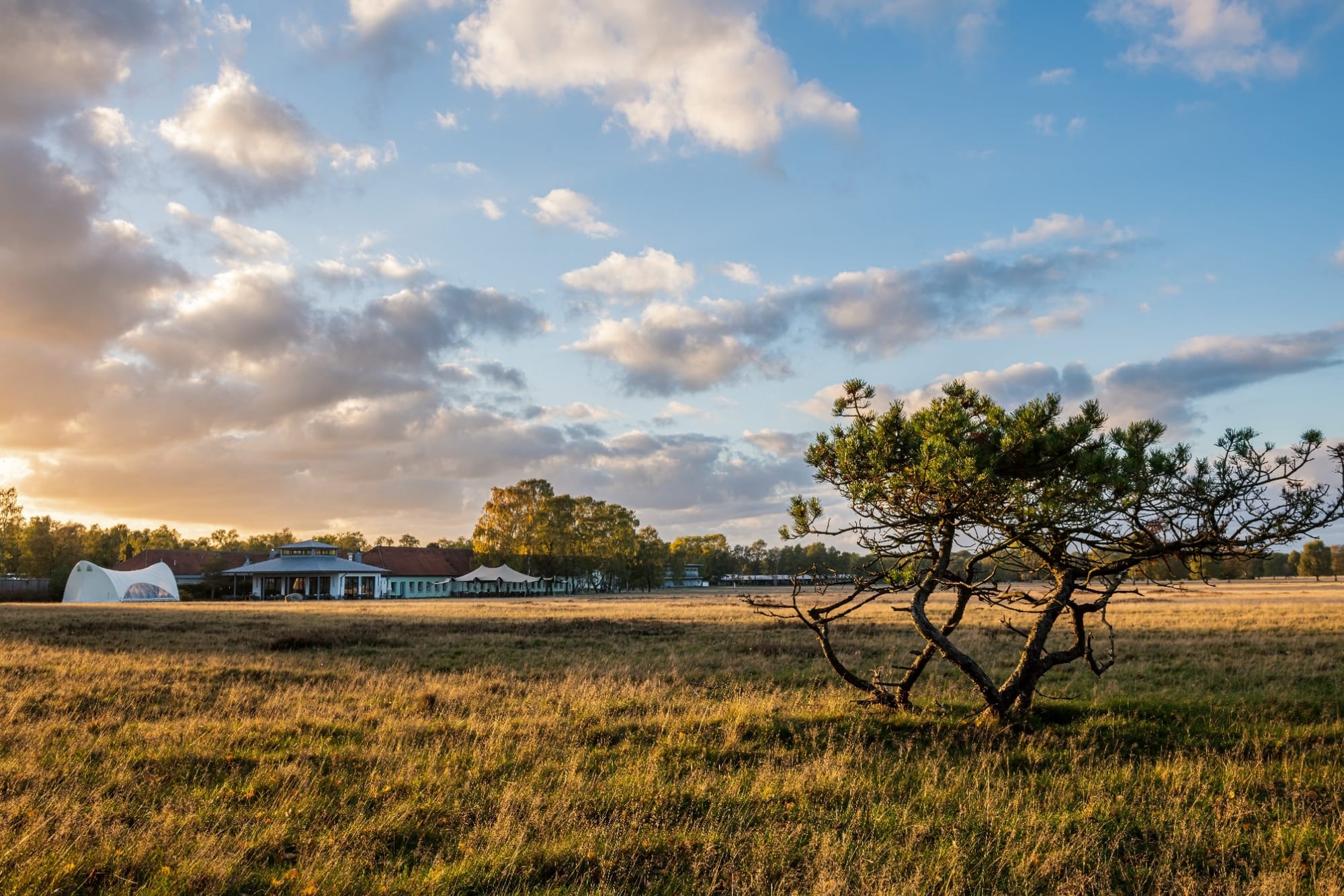
What is interesting about this development is less the new hotel name than the idea behind it. While many hotels try to stand out with ever more elaborate spa landscapes, leisure offerings and staging, Reinsehlen has something that can neither be built nor replicated at will: its location.
“Many guests tell us that after a short time here they pay attention to their surroundings in a different way,” says Anna-Katharina Brunhilde Becker, head of reception at Lodge Reinsehlen. “Suddenly it’s no longer appointments or the smartphone that take centre stage, but the view across the landscape, a Heidschnucke sheep in the distance or the changing light over the heath.”⁶
Not every special stay has to rely on extraordinary attractions. Sometimes a hotel’s greatest strength lies in giving its surroundings enough room.
From Hotelcamp to Lodge
“We were looking for a name that suits our direction, our development and our hotel better than Hotelcamp Reinsehlen,” says director Helko Riedinger. “In our view, the architecture and the location fit the new name well. But our guests also inspired us with their feedback.” A great many regular guests feel that the new name suits the experience at the hotel better.
It is not the first change for the property. Around 2006, growing demand for weddings and conferences brought 24 more rooms and a small spa area, and the restaurant was modernised. In 2016 and 2017 the hotel positioned itself more firmly as a nature hotel and added new event spaces, a new kitchen, another restaurant room with a terrace and 40 “MehrBlick” rooms with views of nature, among other things. “The step we have taken now is more of a logical further development and less of a complete repositioning,” he says.
Today the lodge has 91 rooms, each with its own entrance and a terrace or balcony.⁷ The redesigned lobby picks up on the surroundings with natural materials and warm colours.⁶ The view, the large open fireplace and the bar have been given a new setting. “It was important to us to combine a modern, fresh and timeless design with a cosy atmosphere,” he says.
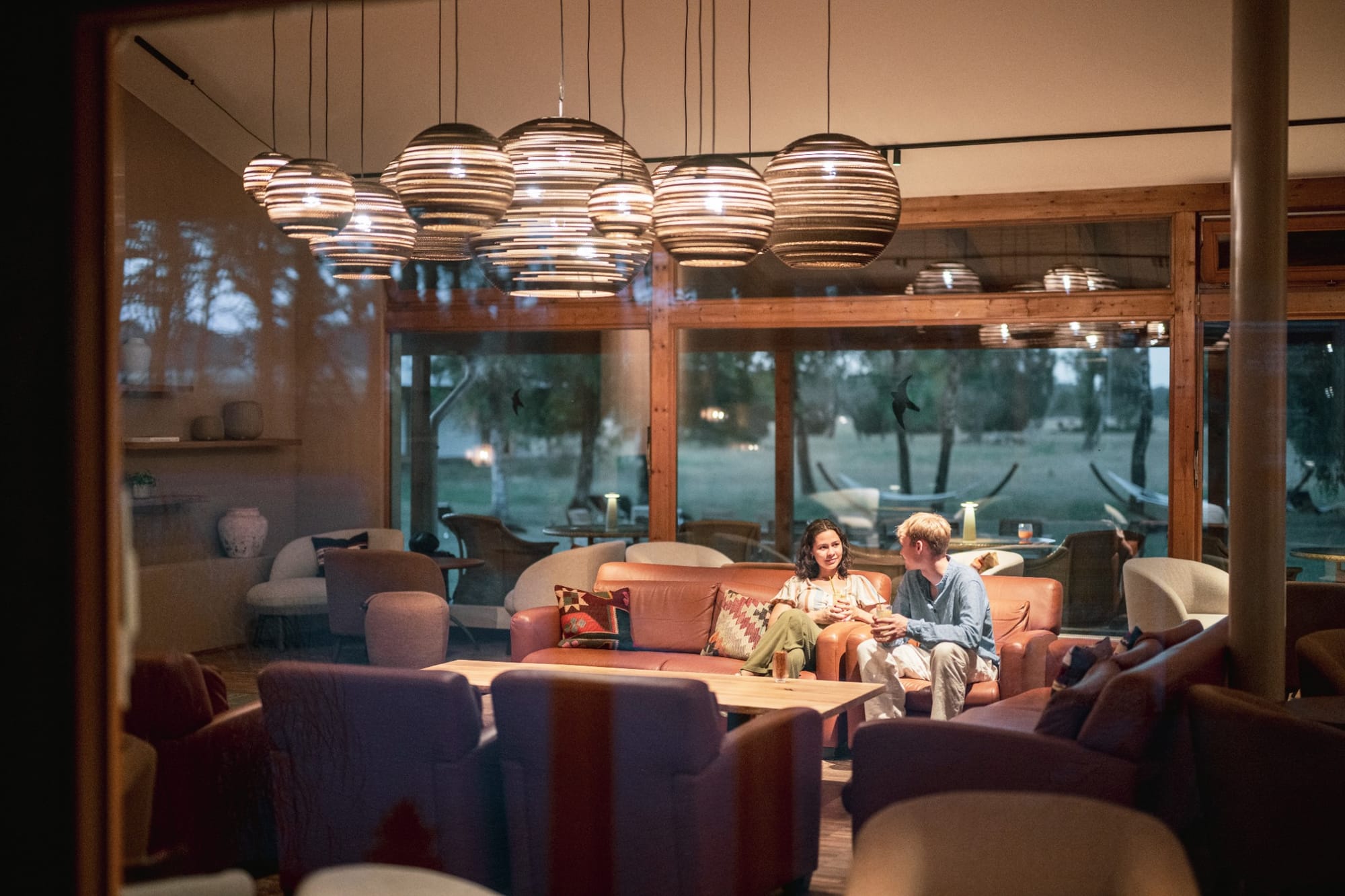
Regular yoga sessions and hammocks are already in place, and more retreats and outdoor seating areas are planned. Walks start right at the hotel, and the packages tellingly bear names such as “Atempause” (breathing space) and “Winterstille” (winter stillness).⁶
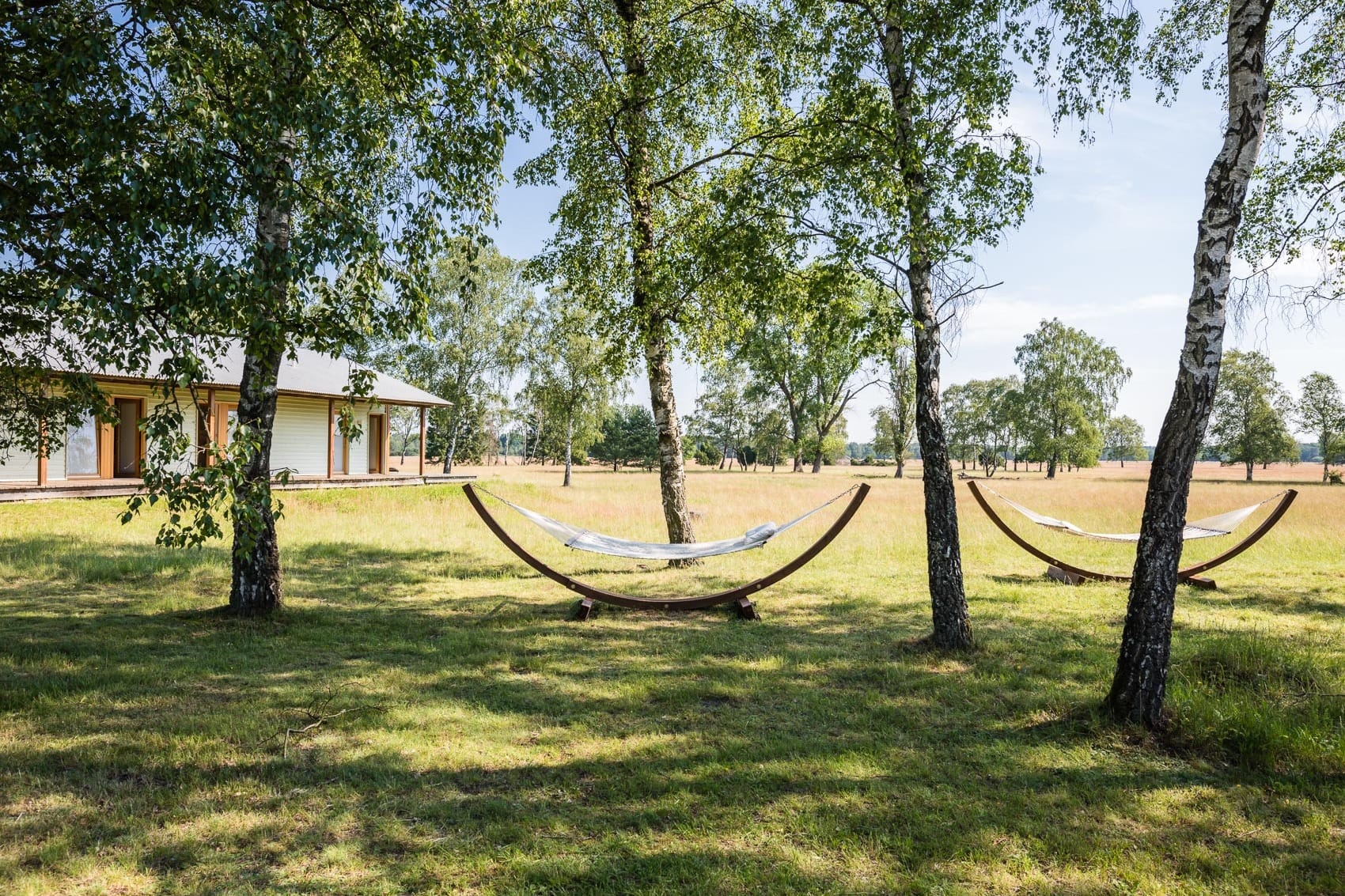
The hotel is aimed at guests looking for deceleration, comfort and inspiration who value regional food and wellbeing. More than 25 per cent of guests are already individual travellers treating themselves to a short break. Conferences also remain part of the business.⁶ Rooms and event spaces are spread across a site of a good 20 hectares. “We have endless space and there are few points of overlap between our target groups,” the director says.
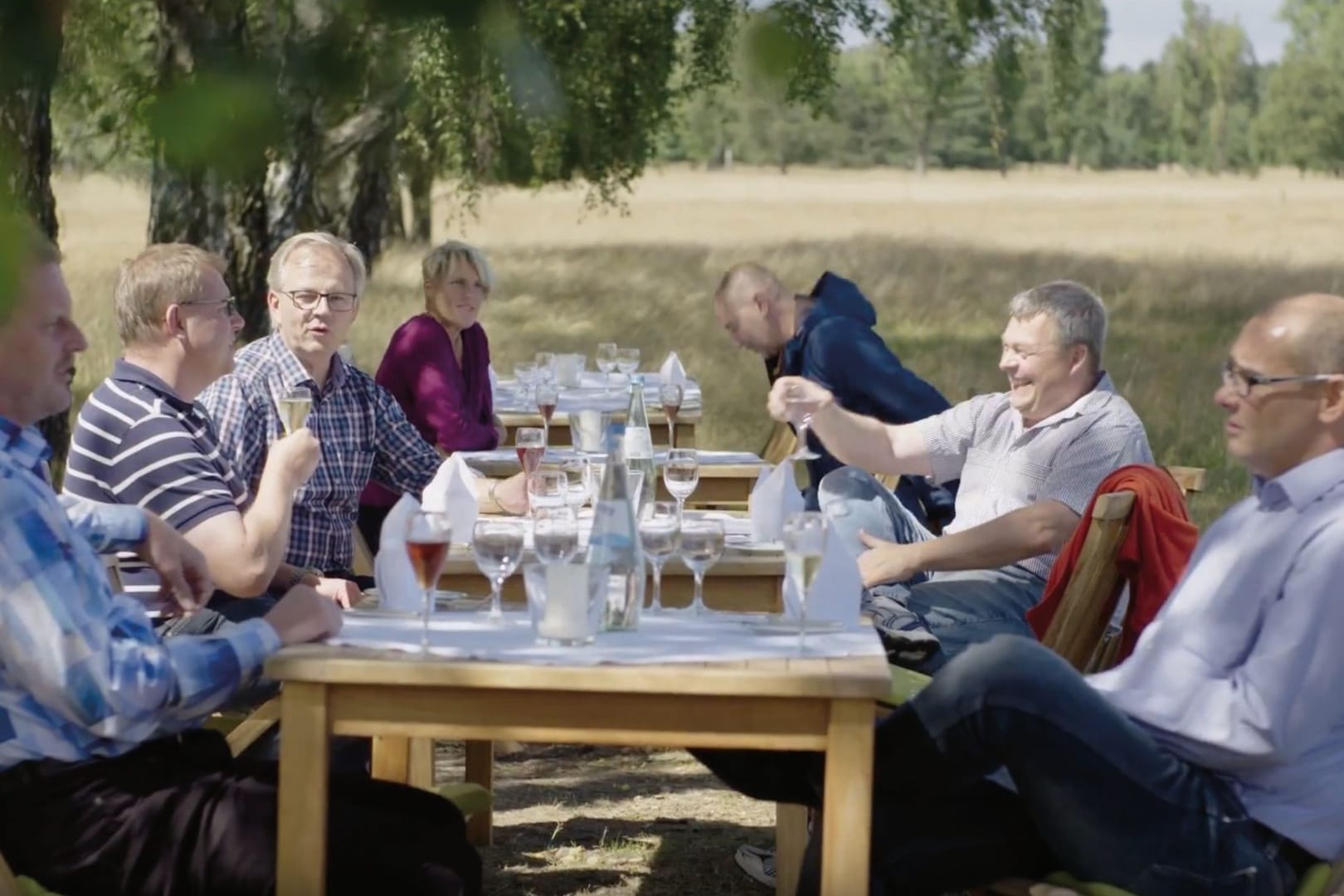
The hotel’s regional partners include shepherd Schmidt and the Heins farm right in Reinsehlen, the Völker apiary, the Meyer country butchery, the Grevenhof trout farm and the Bosselmann distillery. In the rooms, guests find the “Heideblüte” tea blend from Heide-Kräuter in Eimke.⁶

The team helped to shape the change. Staff were informed and consulted for many months in advance, and in March 2026 an event with the entire team focused on the rebranding and further development. Working groups then came up with new ideas, which were also put into practice.
On foot through the open landscape
Paths around Reinsehlen lead through a landscape that is best explored on foot. The nearby Osterheide and the hiking region around the Heidschnuckenweg trail offer plenty of scope for longer distances.⁶ If you’d rather go without sporting ambition, a short walk will do just as well. The open spaces around the camp in particular invite you to forget your own pace.
“Especially outside the heather bloom, when calm sets in, I personally find the heath landscape particularly attractive,” says Helko Riedinger. “Right by the hotel grounds, the expanse and the play of colours of the huge grassland still fascinate me again and again, even after all these years.” His personal tip for an outing nearby is the Pietzmoor bog near Schneverdingen.
This seemingly boundless landscape also deserves consideration. The grassland is a protected habitat, home among others to ground-nesting birds.³ The marked paths are therefore more than just a way of finding your bearings. They make it possible to experience nature without unnecessarily disturbing its sensitive areas.²
If you associate wanderlust with long distances, you may always be looking for the next unknown place. For another coast, a new country or a view even more impressive than the last. Reinsehlen offers a quiet alternative to this idea. Here the adventure lies less in covering kilometres than in the chance to suddenly see a familiar world with different eyes.
And then there are those two chairs in the grass again. Nothing about them shows that aircraft once took off from this site and military vehicles moved across it. They simply stand there, under a big sky, with room for two people and perhaps a long conversation.
Or for that wonderful silence that only arises between people who have nothing to explain to each other.
Lodge Reinsehlen
Check current rates and availability directly with the property.
Visit hotel websiteThis article draws on a written interview, press materials, natural history publications, historical information and scientific research.
-
Lower Saxony Water Management, Coastal Defence and Nature Conservation Agency (NLWKN)
FFH-Gebiet 157: Sandmagerrasen Camp Reinsehlen
Site description. Protected area, size, habitats and renaturalisation. Original publication in German. -
Lüneburg Heath Nature Park
Magerrasen Camp Reinsehlen
Site profile. History, landscape and conservation rules. Original publication in German. -
Alfred Toepfer Academy for Nature Conservation
Der Tagungsort Camp Reinsehlen
Site description. Military history, civilian reuse and grassland. Original publication in German. -
Kaplan (1995)
The restorative benefits of nature: Toward an integrative framework
Journal of Environmental Psychology, 15(3), 169–182. Foundational article on attention restoration theory. -
Bell et al. (2025)
The relationship between nature exposures and attention restoration, as moderated by exposure duration: A systematic review and meta-analysis
Journal of Environmental Psychology, 104, 102632. Meta-analysis of 80 studies. -
LODGE REINSEHLEN (2026)
Ein Ort im Wandel: Hotelcamp Reinsehlen wird Lodge Reinsehlen
Press release of 5 October 2026 and press release “Die Wirkung der Weite” of 4 November 2026 (sent directly to the editorial team). Repositioning, landscape and guest perception. Original publications in German; quotation translated by the eingecheckt® editorial team. -
LODGE REINSEHLEN
Unsere Zimmer
Hotel website. Number of rooms and facilities. Original publication in German.


