


Key points
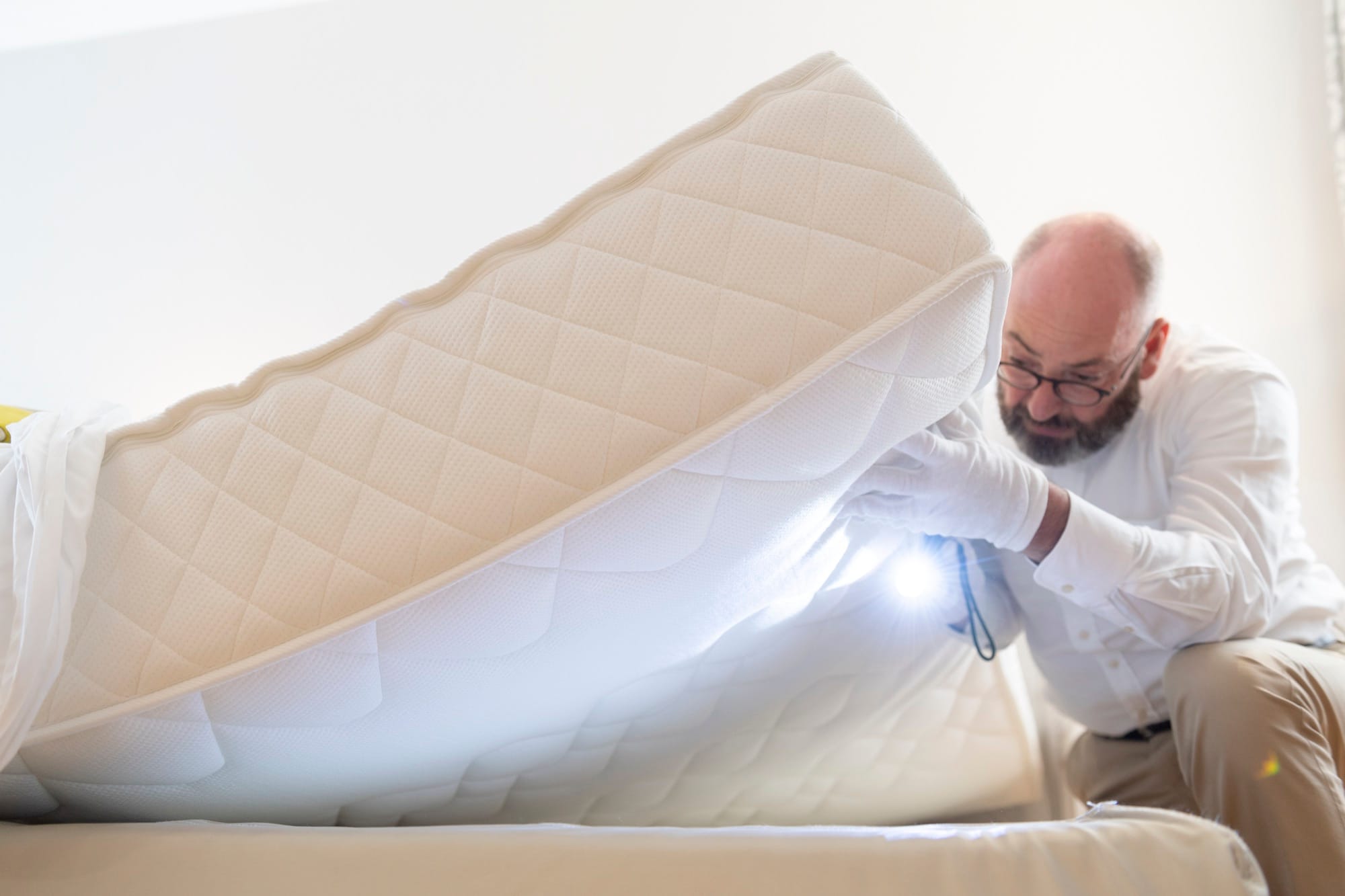
- Jens Rosenbaum has been testing hotels for ten years. He assesses room, bed, bathroom, hygiene and service, and measures hygiene technically.
- The benchmark is a hotel’s own promise to its guests. A very good budget or mid-range hotel can therefore in principle score better than a luxury hotel.
- Rosenbaum sees the bed as the biggest problem area, even in the luxury segment. Design and service are visible, the quality of a bed is not.
- He advises hoteliers to ask three questions: Have they understood sleep, do their beds meet guests’ needs, and what needs to change?
Room, bathroom, service – and then the bed. For Jens Rosenbaum, that is precisely where one of the biggest weaknesses in the hotel industry lies. The hotel tester does not rely on his personal impression alone: he works with fixed criteria and measures hygiene technically. Yet his most important message to hoteliers is surprisingly simple: anyone who sells overnight stays should take a closer look at how their guests actually sleep.
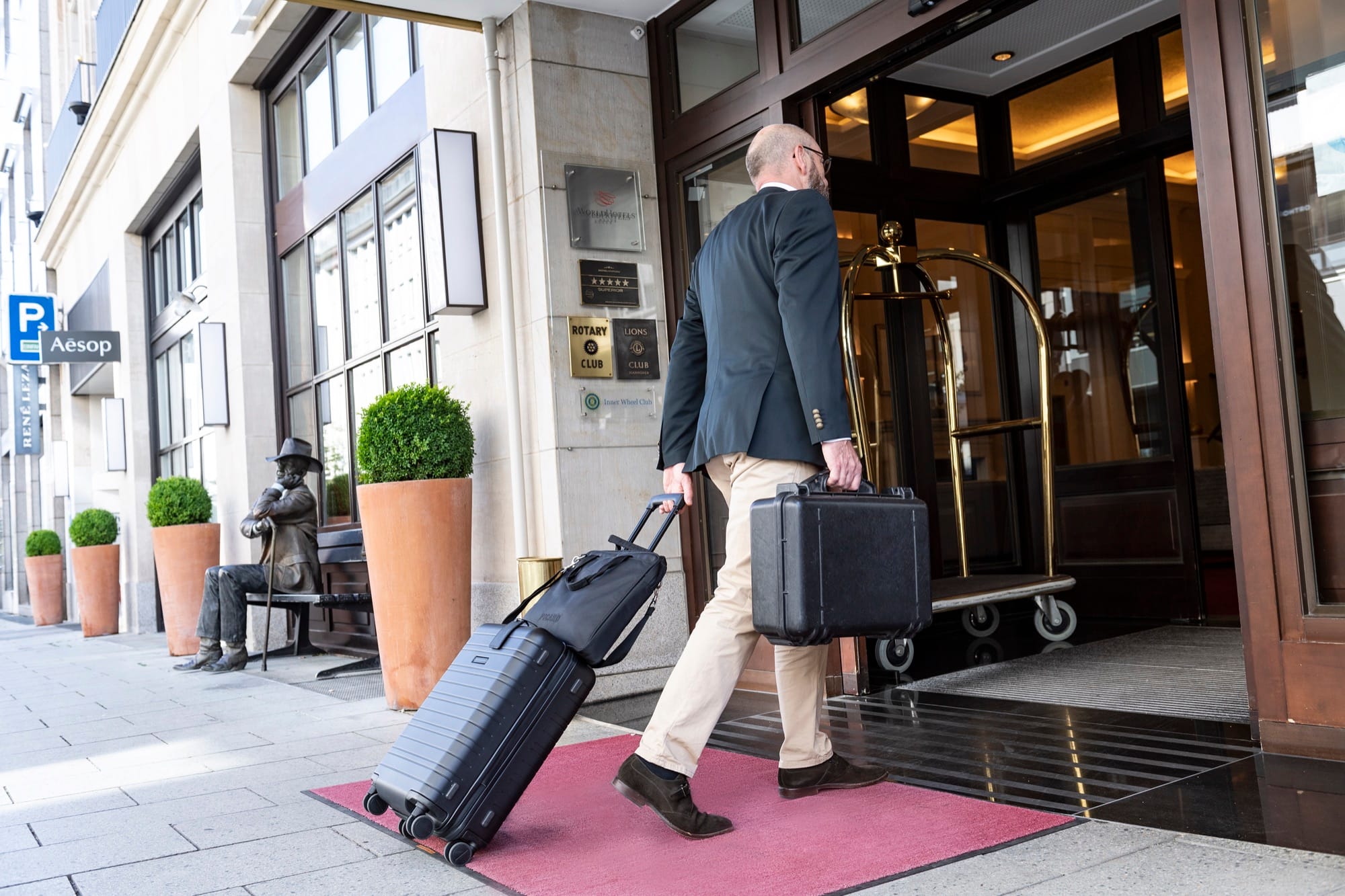
When Jens Rosenbaum assesses a hotel, the impression of a nicely furnished room is not enough for him. His tests focus on five areas: room, bed, bathroom, hygiene and service. Above all, three questions are decisive, he tells eingecheckt®: Does the hotel keep its own promise? Does the bed provide the basic conditions for a good night’s sleep? And does hygiene at least reach the level that can be expected in the market?
This approach makes an important difference compared with an assessment in which luxury is automatically equated with quality. Asked whether a very good budget or mid-range hotel could score better than a luxury hotel under his method, Rosenbaum answers briefly: “In principle, yes.” A hotel is therefore not judged solely by how much it offers, but by whether it delivers what it promises its guests.
Look first, then measure
Rosenbaum has been working on beds and sleep for many years. The journalist and publisher is behind Schlafen Spezial, which has been providing information on sleep, beds and mattresses since 2015¹; his unannounced hotel tests have also been documented in trade media for years.² He also works as a consultant for industry, retail and the hotel sector.
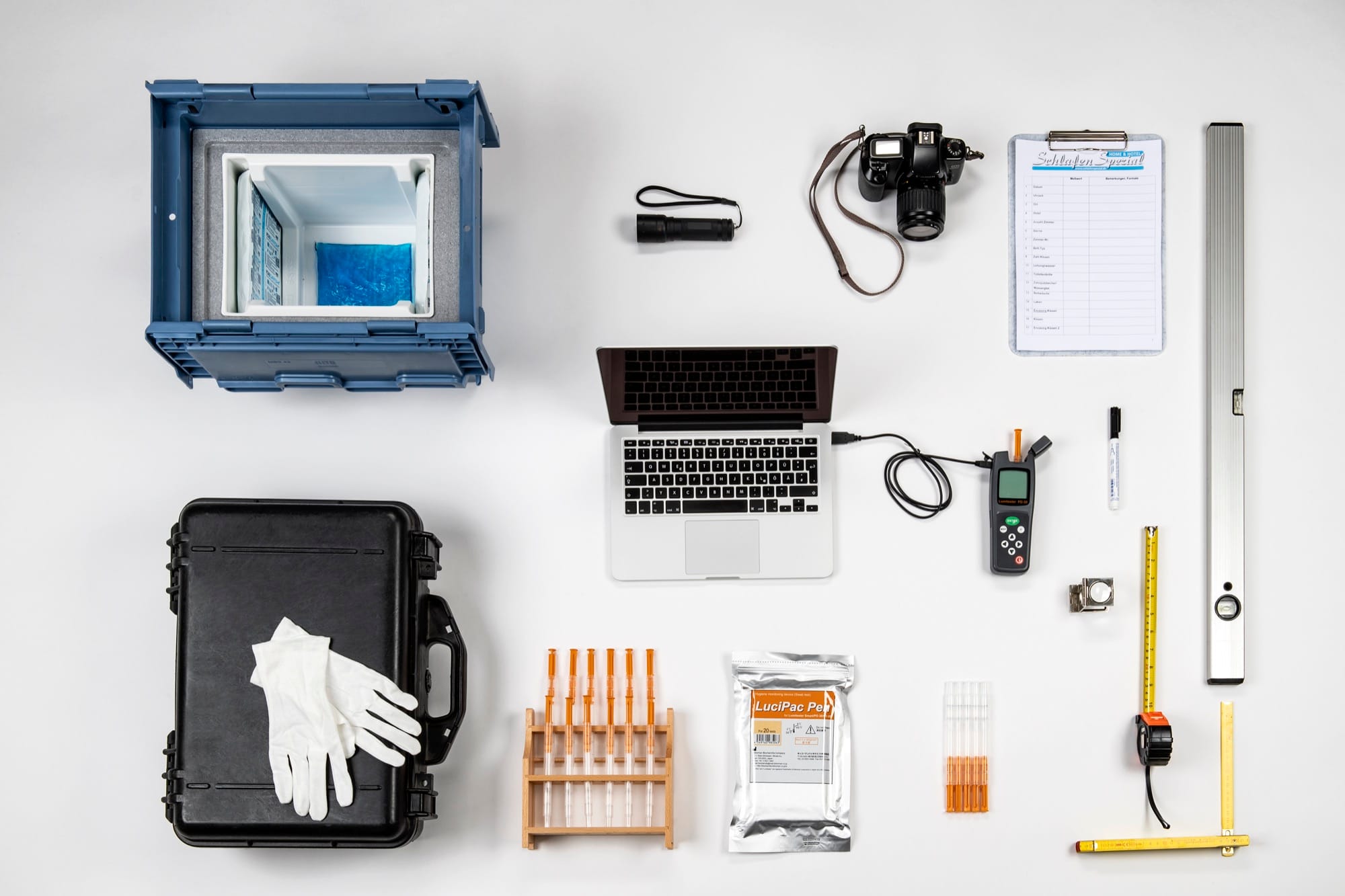
He tries to keep personal perception as separate as possible from the actual assessment. Room size, furnishings and condition can be checked; with the bed, he looks at its construction, materials and equipment. With service, it is about whether questions are answered, requested services are provided and complaints are handled appropriately. Of course, a subjective impression always remains, says Rosenbaum. “But the yardstick is the hard criteria.”
This approach becomes particularly clear when it comes to hygiene. Here, Rosenbaum does not rely on his eyes alone. A study on bed hygiene published by Schlafen Spezial already used ATP-based swab measurements in 2018 and 2019. A Lumitester was used at the time; the items examined included bed linen, pillows, duvets, mattresses, protective covers, toppers and bed bases. The study initially covered 32 hotels and itself explicitly described its results as preliminary.³
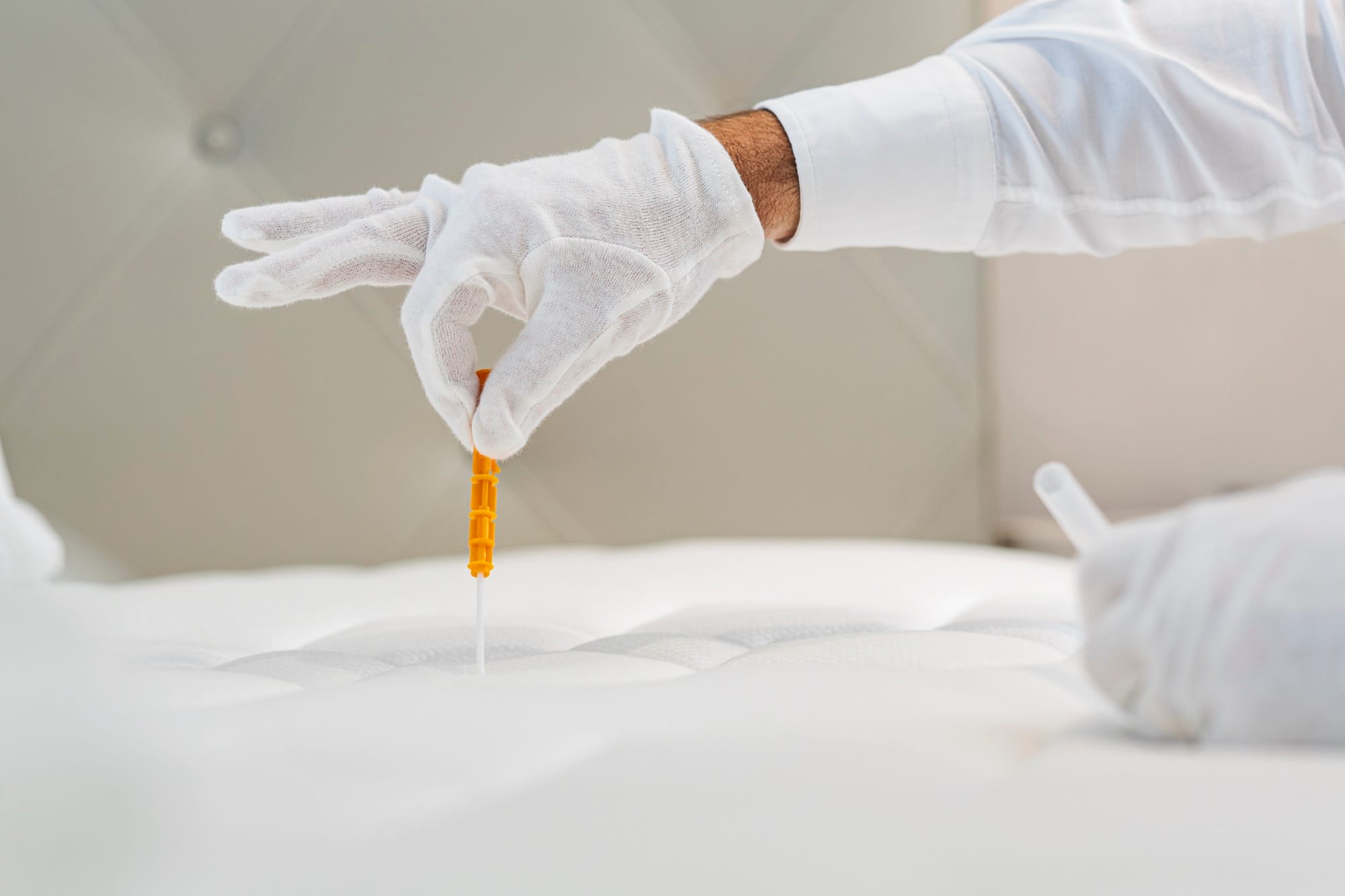
This is an important part of how Rosenbaum works: a first impression may suggest something, but it should not anticipate the result. After ten years as a hotel tester, he says, he has developed a feel for “where you stand”. Even so, the full procedure has to be applied to every hotel so that the results are based on the same assessment method.
The bed as a blind spot
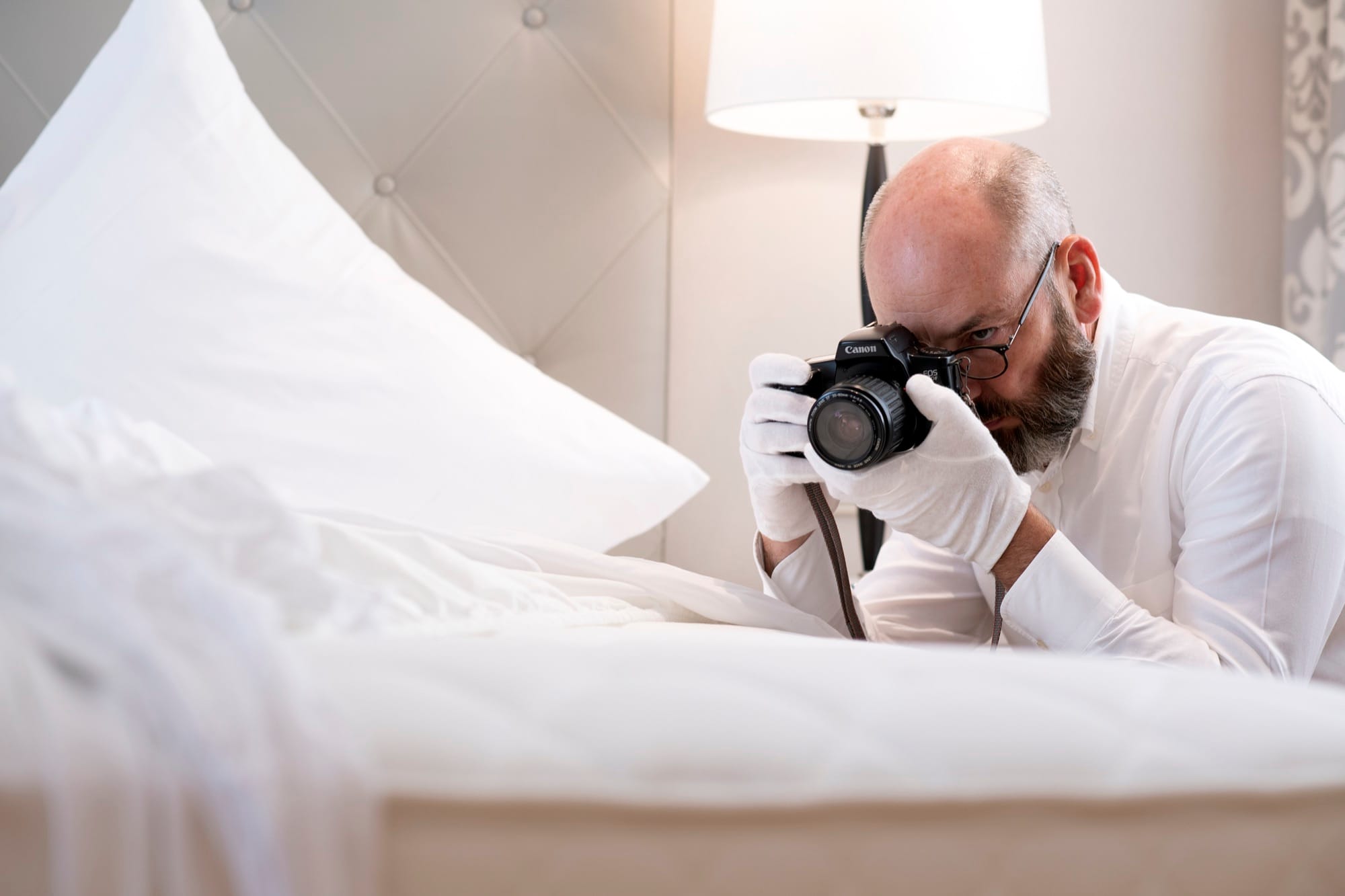
Ask Rosenbaum about the problems he encounters most often, and he does not have to think for long. “The bed is the biggest problem area. Even in the luxury segment.” This is precisely where hotels sometimes cut costs or understand hygiene too superficially, he says, even though the bed is the central piece of equipment in any accommodation business.
His explanation has less to do with technology than with human perception. Design can be photographed, a lobby can be staged and service can be observed. The quality of a bed reveals itself in a far less spectacular way. Rosenbaum puts it like this: “People only believe what they see, and at night, when they sleep, their eyes are closed.”
Independent research also shows that a hotel guest’s sleep quality is anything but a minor matter. A study of 609 frequent business and leisure travellers found links between poorer sleep and, among other things, uncomfortable pillows, unpleasant bed linen and noise from air conditioning or heating. At the same time, sleep satisfaction proved to be a strong predictor of overall satisfaction with the hotel.⁴
Suddenly, a detail such as a humming ventilation system takes on a different meaning. It does not have to trigger a spectacular complaint to make a stay worse.
What a hotel can actually influence for a good night’s sleep
Rosenbaum distinguishes between factors the hotelier can influence and the guest themselves. Nobody can guarantee that everyone will sleep perfectly in an unfamiliar bed. Sleep is individual and also depends on habits, daily routine and personal well-being. But a hotel can shape the conditions.
For Rosenbaum, the room starts with things that quickly sound obvious: no unpleasant smells, as little technical noise as possible, effective blackout and no unnecessary light sources at night. That darkness and quiet really are part of a good sleeping environment is also in line with the recommendations of sleep medicine; the WHO in particular points out the importance of night-time noise for sleep disturbance.⁵
When it comes to the bed itself, Rosenbaum takes a closer look. A small selection of pillows with different support heights and firmness levels can help to meet the needs of different guests. For mattresses, he prefers medium firmness with enough give in the shoulder and hip area, together with a matching bed base. Breathable bedding is also important to him, as is a hygiene concept that does not end with freshly washed bed linen.
- Quiet: Are ventilation, air conditioning and other technical equipment really quiet at night?
- Darkness: Can the room be properly darkened, and are there any distracting standby or indicator lights?
- Smell: Is the room neutral, or can cleaning products, textiles or other odours still be noticed?
- Pillows: Are there different firmness levels and support heights for different sleeping habits?
- Mattress and bed base: Do both work as a system, allowing shoulders and hips to sink in sufficiently?
- Bed climate: Are bedding and protective covers permeable enough to air and moisture to avoid unnecessary sweating?
- Hygiene: Are there clear cleaning and care intervals for every part of the bed – not just the visible bed linen?
Bed hygiene is now gaining official importance
The current hotel classification shows that Rosenbaum is not alone in his focus. The Hotelstars Union has revised its criteria catalogue for 2025 to 2030, explicitly adding recommendations on mattress cleaning. In total, the European classification now comprises 239 criteria.⁶
The DEHOGA Akademie, the training academy of the German Hotel and Restaurant Association, now also offers its own self-study course on bed hygiene. Notably, Rosenbaum himself was involved in preparing it: the academy names him as an expert from Schlafen Spezial HOME & HOTEL who restructured the content didactically. Topics include the importance of cleanliness for guest reviews, health and sustainability, the cleaning requirements and the hotel bed categories of the classification.⁷
His own Hotel-Betten-Check goes considerably further. The currently publicly available tool comprises 130 questions on pillows, mattresses, bed bases and duvets. It covers not only the equipment, but also organisation and care. The appearance of the bed is deliberately not assessed.⁸
That is an essential part of his approach: an elaborately designed headboard says little about how well the guest sleeps in the bed.
Three questions instead of the next big investment
For hoteliers, this does not necessarily mean replacing every bed at great expense. Rosenbaum first recommends something much simpler. Anyone who wants to improve the quality of an overnight stay should ask themselves three questions: Have I really understood the subject of sleep? Do the existing beds sufficiently meet guests’ needs? And what would have to change to create a truly adequate basis for a good night’s sleep?
That sounds less spectacular than a new spa, a designer lobby or digital room controls. But for an accommodation business, it touches the core of what it does. A guest may praise the finest breakfast and find the service excellent – yet they still spend a considerable part of their stay with their eyes closed.
So on the next walk through your own rooms, it may be worth not looking at the decoration first. Instead, switch off the air conditioning, turn out the light, pick up a pillow and lie down on the mattress.
Because that is where the actual overnight stay begins.
This article draws on original editorial sources, publications by Schlafen Spezial and independent professional and scientific sources.
-
Schlafen Spezial (2026)
Schlafen Spezial – Bett und Schlaf
Website of the trade publication. Self-description, information on sleep, beds and mattresses since 2015. Original publication in German. -
Tageskarte (2025)
Schlafexperte Jens Rosenbaum auf Undercover-Tour: Feinschmecker thematisiert das Hotelbett
Article (labelled as advertisement), 23 January 2025. Unannounced hotel tests focusing on sleep comfort and hygiene. Original publication in German. -
Schlafen Spezial (2019)
Wie sauber sind Hotel-Betten?
Study by Jens Rosenbaum, 20 May 2019. ATP hygiene measurements with a Lumitester in 32 hotels, survey period June 2018 to June 2019, preliminary results. Original publication in German. -
Robbins, Grandner, Knowlden, Severt (2021)
Examining key hotel attributes for guest sleep and overall satisfaction
Journal article in Tourism and Hospitality Research. Survey of 609 travellers on hotel attributes, sleep and overall satisfaction. -
WHO Europe (2011)
Noise
Fact sheet. Noise as a cause of sleep disturbance. -
Hotelstars Union (2024)
Neue Kriterien der Hotelklassifizierung
Press release, 24 April 2024. Criteria catalogue 2025–2030 with 239 criteria and recommendations on mattress cleaning. Original publication in German. -
DEHOGA Akademie (2026)
Selbstlernkurs Bettenhygiene
Course description. Course content on bed hygiene, didactically structured by Jens Rosenbaum. Original publication in German. -
Hotel-Betten-Check (2026)
Erklärung
Website of the analysis tool. 130 questions on pillows, mattresses, bed bases and duvets; appearance is not assessed. Original publication in German.


