


Key points
- Over nine months, Hilton Frankfurt Airport in THE SQUAIRE developed the STELLAIRE event concept with Encore. At its heart is the atrium beneath a 25-metre-high glass roof.
- The first example is a weatherproof Christmas market for companies. Teams of five or more can book, and exclusive evenings are available for 80 people or more.
- The hotel wants to offer regular clients more and attract new audiences, such as associations holding events for around 1,000 participants.
- Thomas Langenstedt advises smaller hotels to rethink existing spaces with staff and suppliers and to involve the authorities early.
A Christmas market beneath a 25-metre-high glass roof, corporate celebrations for small teams and events designed to reach entirely new audiences: Hilton Frankfurt Airport is developing STELLAIRE, an event concept that goes beyond conventional meeting-room hire. Thomas Langenstedt, Director of Sales at the hotel and the neighbouring Hilton Garden Inn Frankfurt Airport, explains how the idea emerged and what other hoteliers can learn from it.
For many companies, a visit to a Christmas market is part of the annual festive celebrations. Colleagues meet for mulled wine, enjoy food together and reflect on the year. The experience is somewhat less appealing when rain, freezing temperatures and icy winds arrive. That was what Thomas Langenstedt had in mind when he began considering how the hotel’s large atrium could be used for a new event offering.
His idea was to recreate the atmosphere of a Christmas market beneath the weatherproof glass roof. Rather than simply decorating a conventional function room, the hotel would turn an existing space into a different kind of venue. The offer is aimed at corporate clients.
For him, the Christmas market is only one part of a much broader strategy. Over nine months, the hotel worked with event technology specialist Encore to develop a concept called STELLAIRE, designed to expand its corporate events business.
When a meeting room is no longer enough
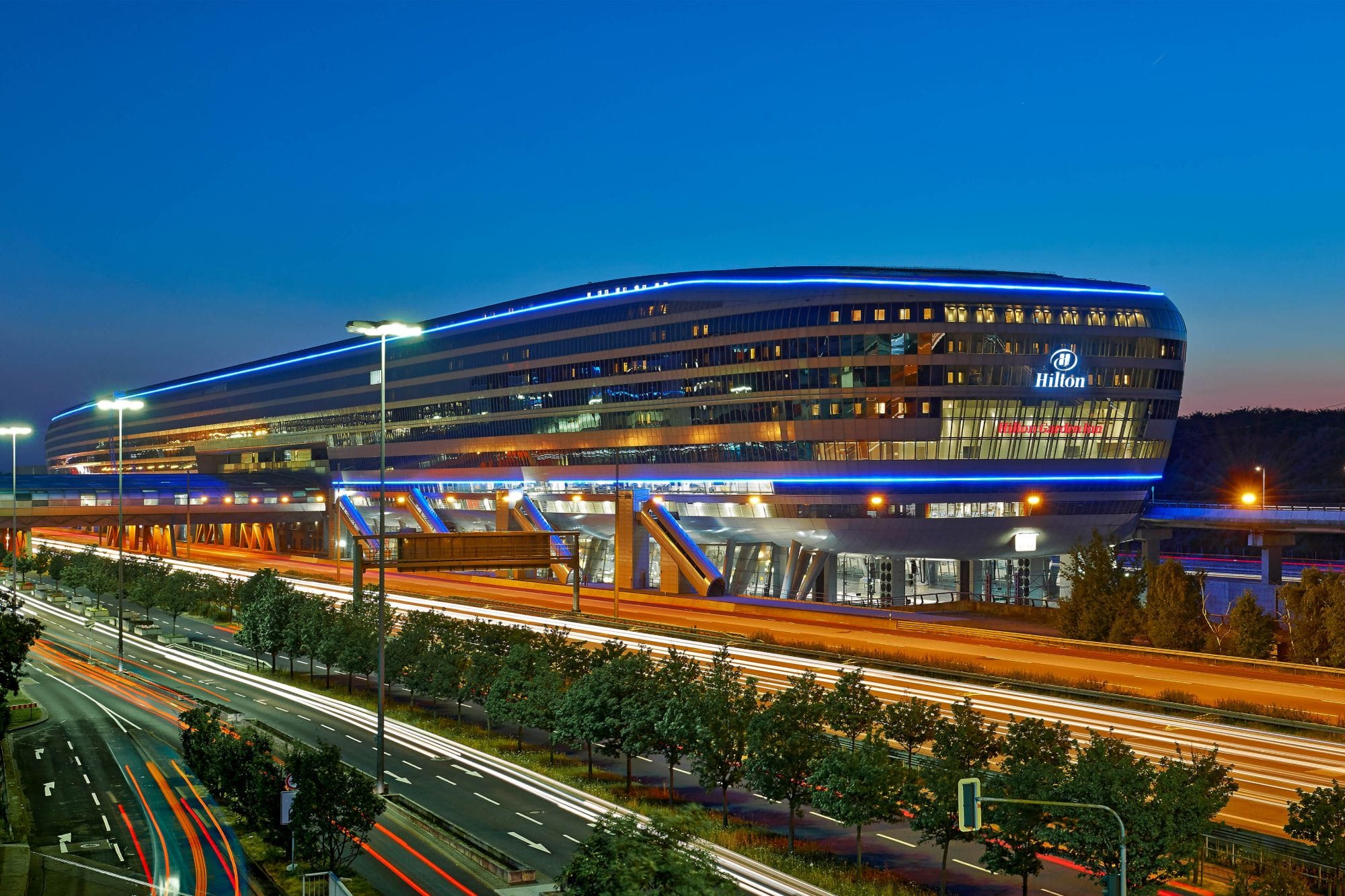
Both Hilton properties are located within THE SQUAIRE, the large building complex at Frankfurt Airport. The hotels opened in December 2011. The building stands directly above the airport’s long-distance railway station and is connected to Terminal 1 by a pedestrian bridge. The A3 and A5 motorways are also accessible via the nearby Frankfurter Kreuz interchange.¹ ²
This location is particularly convenient for international business travellers, but it also provides opportunities for events bringing together participants from different cities and countries. The hotel had repeatedly faced the same challenge: companies wanted to meet during the day, stage a larger exhibition alongside the conference and host a dinner in the evening. Ideally, the exhibition and dinner would not take place in the room where the conference had already been held.
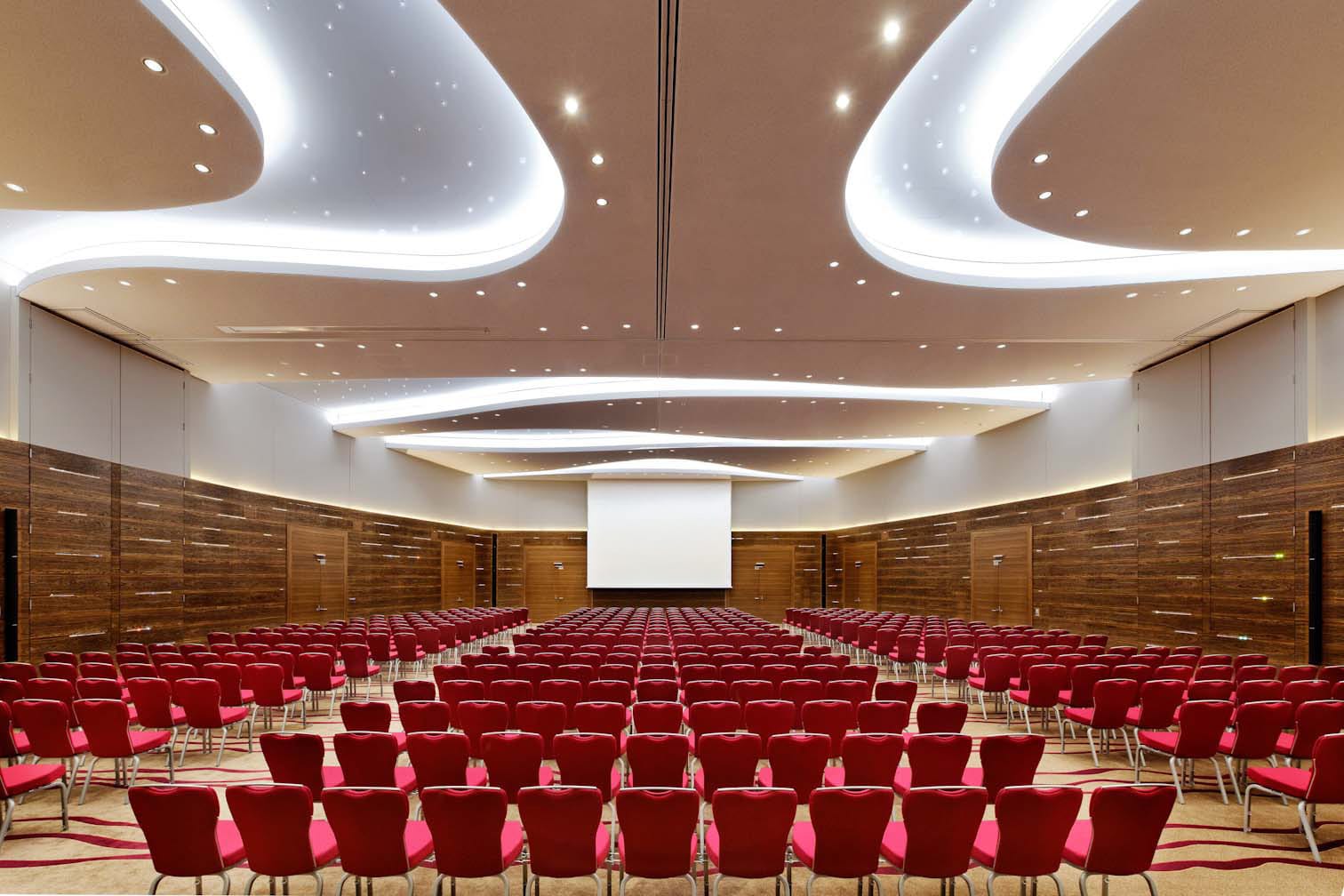
The hotel therefore needed another event setting, preferably without requiring guests to travel across Frankfurt. The hotel also sees a gap in the local market for events involving 400 to 2,000 people, particularly for organisers looking for an alternative to the Messe Frankfurt exhibition grounds. That assessment helped shape the development of STELLAIRE.
The starting point was not simply to create another meeting room, but to explore how existing hotel spaces could serve a wider range of events.
Nine months spent rethinking an existing space
One of the property’s most striking architectural features is its light-filled atrium. The expansive glass surfaces, generous walkways and open layout give the hotel its distinctive character. For guests, it is an impressive lobby. Thomas Langenstedt also sees it as a potential event venue.
“Where else can you hold meetings, exhibitions or dinners beneath a 25-metre-high glass roof?” he asks.
STELLAIRE is designed to accommodate conferences, product presentations, corporate functions and other event formats in this setting. The concept combines flexible spatial arrangements with event technology that allows for different types of staging and presentation. Encore contributes its experience in audiovisual technology, production planning and the delivery of complex events.³
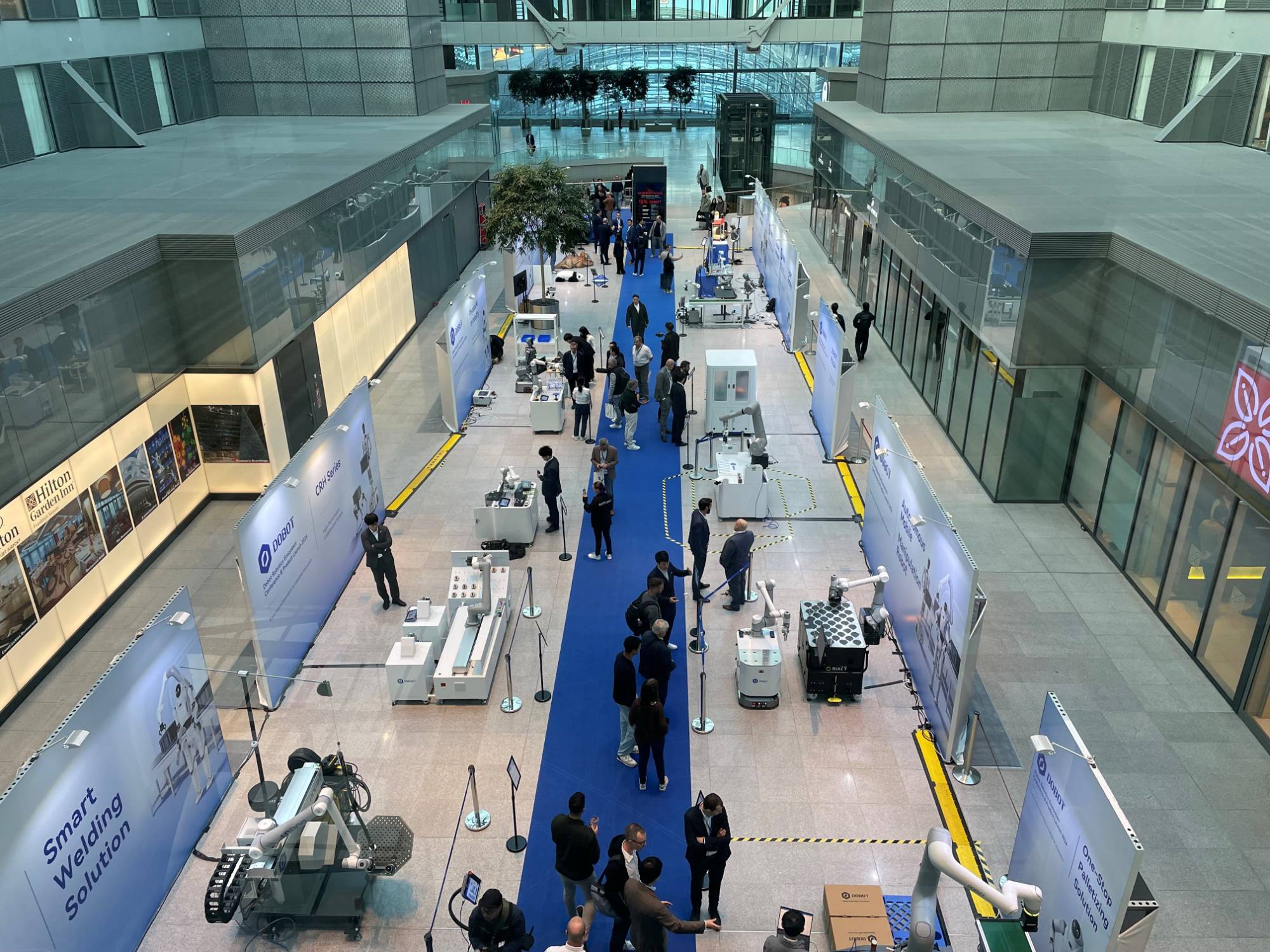
For the hotel, this represents an extension of its existing services. Conventional conference rooms are generally hired according to their size, seating arrangements and technical facilities. The atrium, by contrast, can fulfil several different purposes. An exhibition calls for different layouts and visitor routes from a reception, a dinner or a product launch.
This flexibility is one of the concept’s main advantages. The architecture itself helps create possibilities rather than merely providing the physical setting.
Christmas celebrations for five or 80 people
The planned Christmas market illustrates the different scales at which this approach can work. Larger companies often organise a single end-of-year celebration, while others now leave individual departments to arrange their own activities. For smaller teams, organising an exclusive party can be unnecessarily complicated.
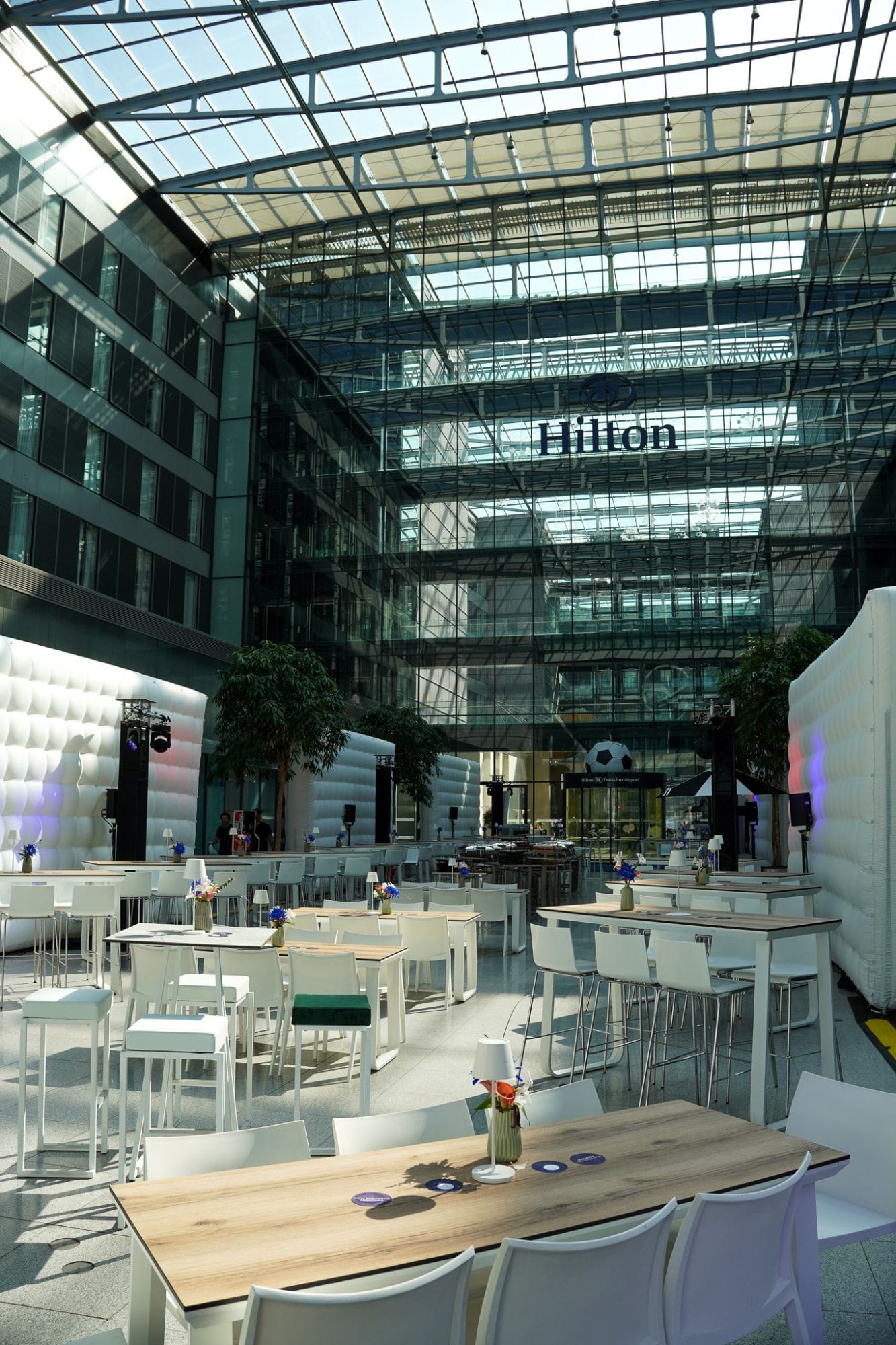
Hilton’s response is an Open Day, allowing groups of just five people to join a shared event. “The team leader simply needs to book places with us, bring the team together and enjoy the evening,” Thomas Langenstedt explains.
Other dates are intended for larger teams and companies. For groups of 80 people or more, the hotel can also offer an exclusive evening.
Budget considerations were part of the planning process. The aim was to offer companies a Christmas celebration that takes Germany’s tax rules for staff events into account.
Under Section 19(1), first sentence, no. 1a of the German Income Tax Act, a tax-free allowance of €110 per participating employee and qualifying company event is available for up to two events a year, provided the legal conditions are met. In particular, the event must be open to all employees of the company or the relevant organisational unit. All relevant event costs, including VAT, must be considered when calculating the allowance.⁴
The resulting offer is straightforward for corporate clients: rather than finding a separate venue and coordinating multiple suppliers, they can book an event format that the hotel has already developed.
Making the economics work
Developing an event concept inevitably creates additional operational demands. Technology, furniture, staffing, food and beverage, safety planning and coordination all need to work together. Thomas Langenstedt nevertheless believes such formats can be relatively straightforward when experienced partners and committed employees are involved.
“With good partners and a team where teamwork still matters and is genuinely practised, these formats are relatively easy to implement,” he says.
The key, in his view, is to involve everyone early and agree on procedures before an event takes place. The kitchen is just as important as the technical team, service staff and sales department. He particularly values the continuity of his culinary team: the person leading the kitchen has been with the hotel since its opening.
He also considers the financial proposition from the client’s perspective. Hiring a separate venue often involves additional expenditure on furniture, catering and transport. At Hilton Frankfurt Airport, several of these services can be combined in one location. The transport connections provide another advantage, with parking for up to 3,000 vehicles.
He is clear that the concept must ultimately be financially viable. The underlying idea is to use existing resources to offer services that were previously unavailable.
Reaching clients the hotel could not previously serve
STELLAIRE is intended first and foremost to provide existing corporate clients with additional options. At the same time, attracting new business is an explicit objective. The hotel is particularly interested in companies whose requirements the hotel previously struggled to accommodate, perhaps because there was no suitable space for an evening reception or an accompanying exhibition.
Another potential audience is professional and industry associations organising events for approximately 1,000 participants. These organisations have traditionally regarded Messe Frankfurt as their main option for events of this scale.
The new concept is intended to broaden the hotel’s appeal without replacing its established meeting and conference business. By introducing additional ways to use the property, Hilton hopes to develop new corporate relationships and potentially generate further overnight stays.
What smaller hotels can learn
Few independent hotels have an atrium like this. Thomas Langenstedt nevertheless believes the thinking behind STELLAIRE can be applied on a smaller scale. His main recommendation is to walk through the property with the people who would be responsible for turning an idea into a functioning event.
He suggests five practical steps:
- Look at existing spaces differently. A terrace, courtyard, hotel bar or breakfast room might be suitable for another purpose outside its usual operating hours.
- Involve staff and suppliers from the outset. Technology providers, furniture hire companies, kitchen and service teams, and operational managers may identify opportunities that would otherwise be overlooked.
- Challenge familiar assumptions. Hoteliers should move away from attitudes such as “We’ve always done it this way” or “We can’t make that work”. Looking at the property with fresh eyes is essential.
- Consult the authorities early. Before marketing a new format, he recommends discussing the concept with the local public order authority and fire service. This helps clarify safety requirements and avoids problems close to the event date.
- Develop the concept before selling it. Once the space, technology, staffing, safety arrangements and operational processes have been agreed, marketing can begin.
The final point is particularly relevant to smaller properties. They can market their own spaces more efficiently, avoid vacant periods and build closer ties with clients, keeping the full revenue of an event in-house rather than losing that business to external venues or competitors. A manageable, distinctive event that suits the character of the hotel and can be delivered reliably may be enough to create a new reason for guests and corporate clients to visit.
At Hilton Frankfurt Airport, an idea for a weatherproof Christmas market has become part of a wider event strategy. Thomas Langenstedt’s objective is not necessarily to create more physical space, but to give existing spaces more possibilities.
This article draws on an original written interview, official company information and German tax legislation.
-
Hospitality Net (2011)
Hilton Worldwide Opens Two New Hotels at Frankfurt Airport
Press release by Hilton Worldwide, December 2011. Opening of Hilton Frankfurt Airport and Hilton Garden Inn Frankfurt Airport in THE SQUAIRE, location and transport links. -
Hilton Frankfurt Airport (2026)
Hotel location
Hotel website, accessed 31 October 2026. Location above the long-distance railway station and pedestrian bridge to Terminal 1. -
Encore (2026)
Production Services
Company website, accessed 31 October 2026. Services in event production, technical planning and event technology. -
Federal Ministry of Justice (2026)
Einkommensteuergesetz, § 19 (German Income Tax Act)
Statutory text, accessed 31 October 2026. Tax-free allowance of EUR 110 per participating employee for up to two company events a year (Section 19(1), first sentence, no. 1a). Original publication in German.


