Self-service, a marketplace and digital check-in instead of a traditional bar: ibis Paderborn City shows how hotel spaces are changing. Behind the concept lies a much bigger question: if guests want more flexibility and staffing is becoming increasingly challenging, which parts of a hotel experience still need to be delivered in person?
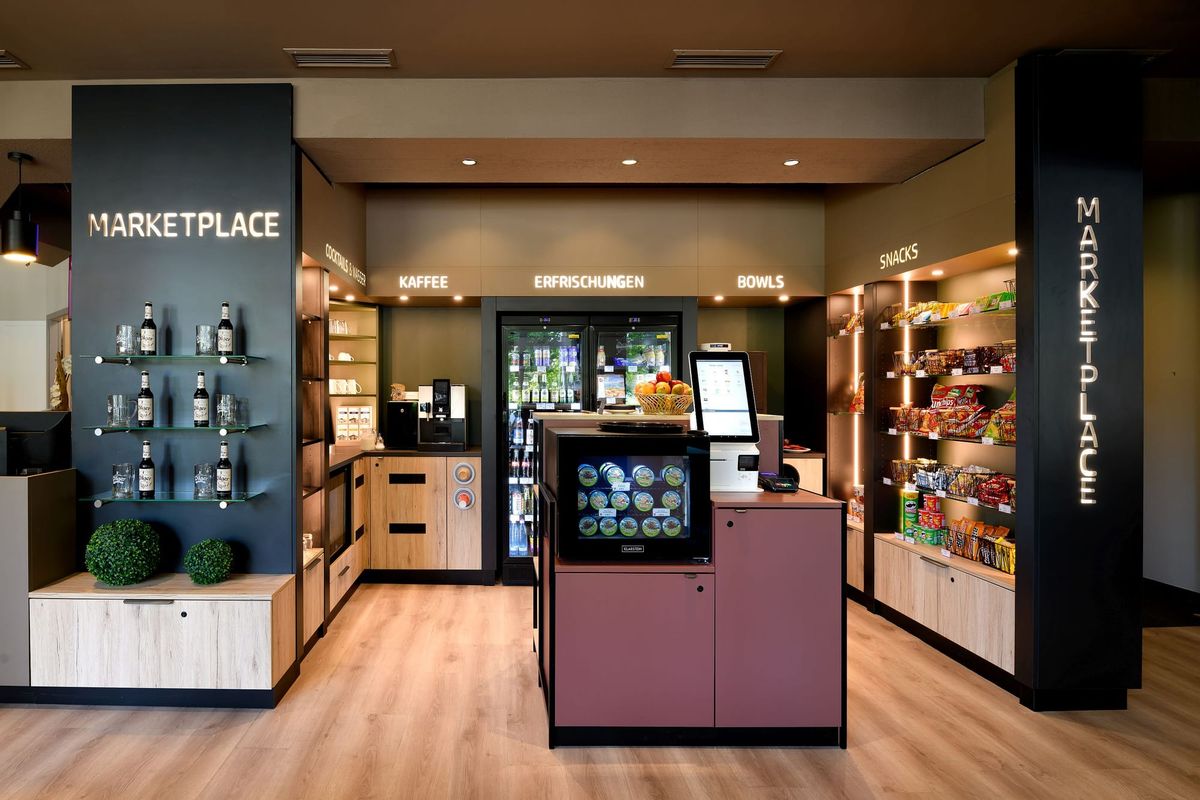
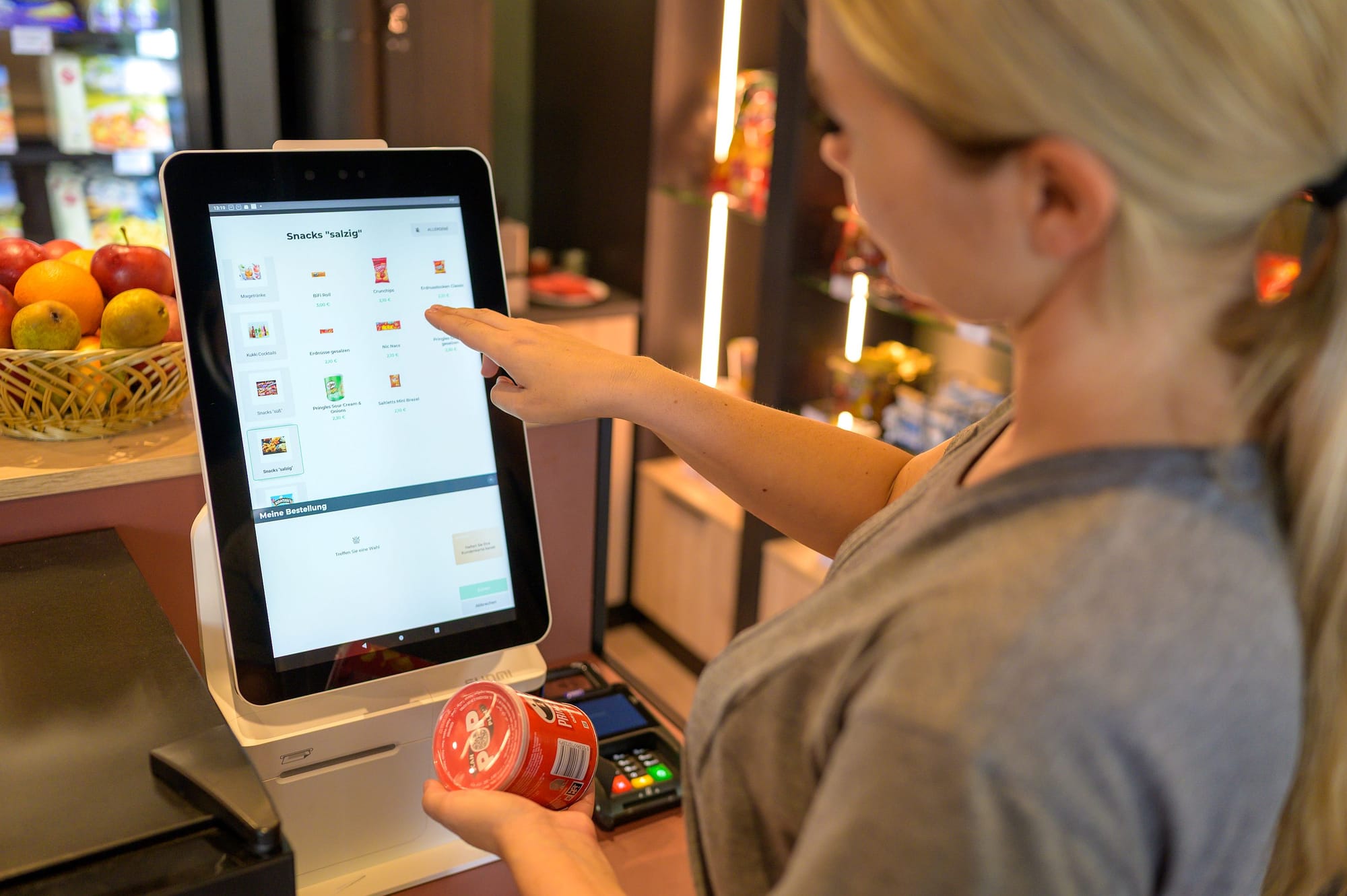
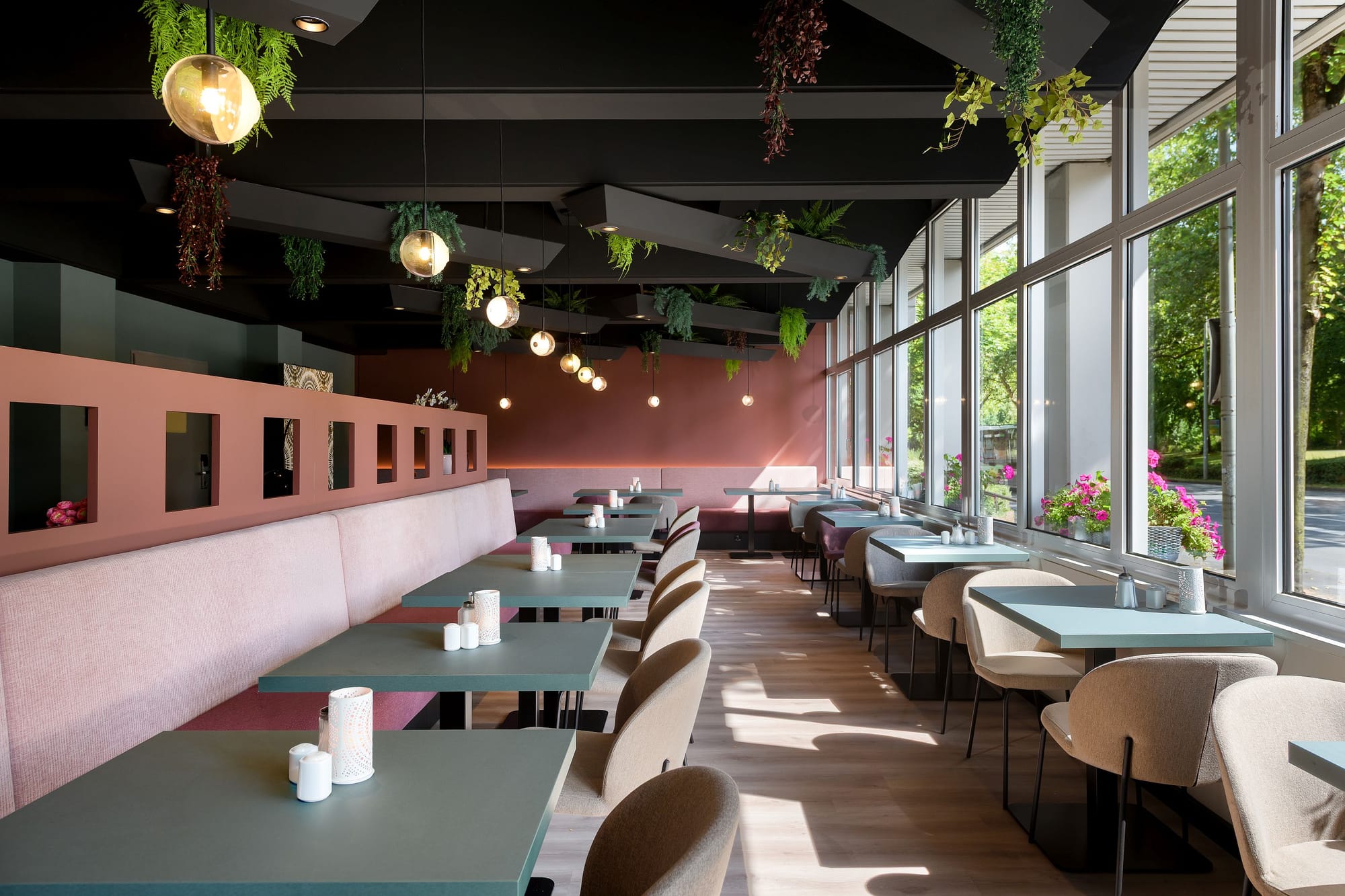
For many travellers, a hotel bar is simply part of what a hotel is supposed to offer. A beer after check-in, a glass of wine or a cocktail before heading to bed, perhaps a conversation with another guest or simply a quiet place to round off the evening — for decades, this has been a familiar part of the hotel experience. At ibis Paderborn City, however, this part of the property was deliberately rethought as part of a comprehensive refurbishment. The traditional hotel bar has disappeared and has been replaced by an open Welcome Lounge with an integrated marketplace. Food and drinks are available around the clock through a straightforward self-service concept, while digital check-in solutions are also intended to play a larger role in the future.¹
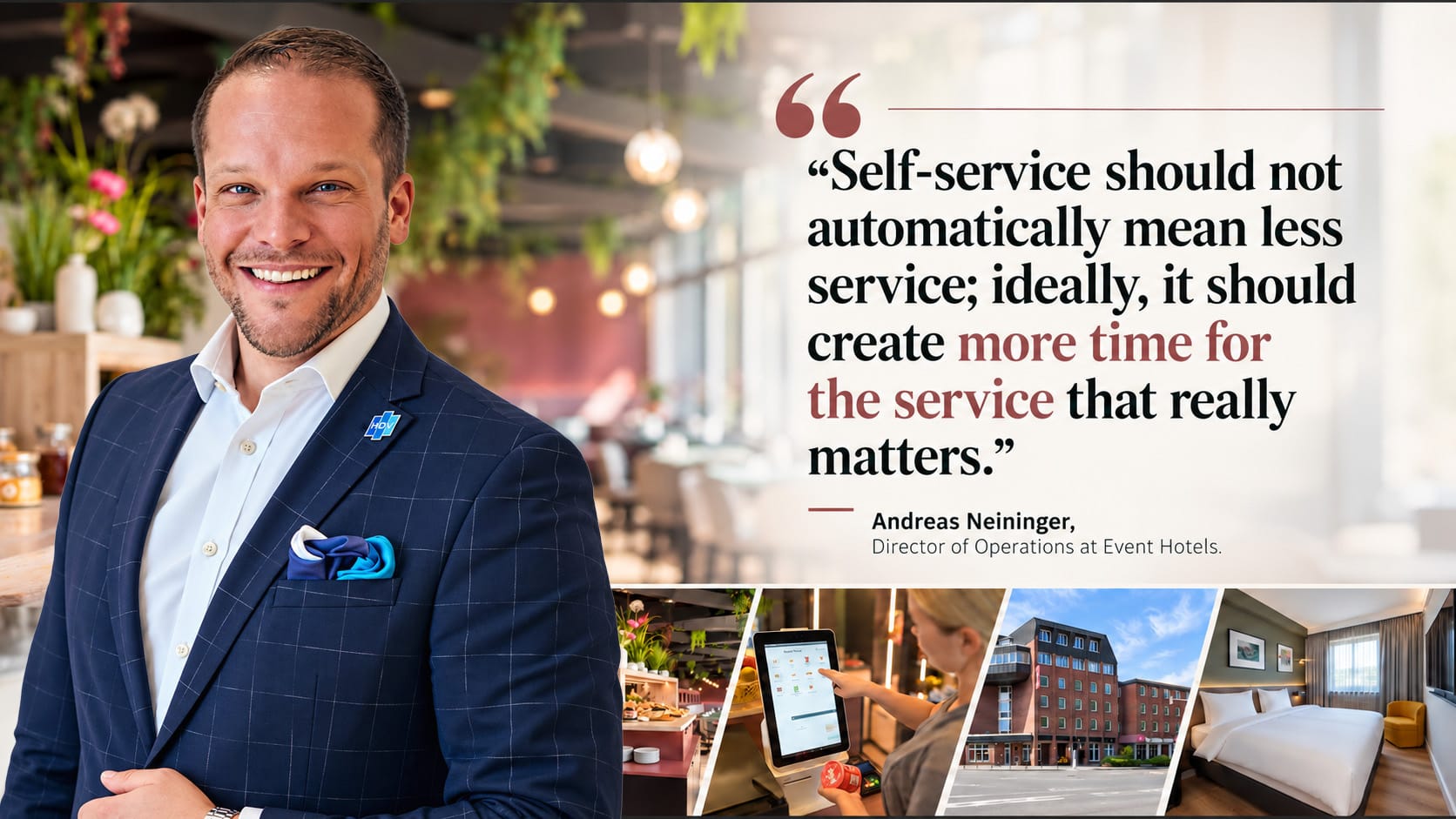
At first glance, this could easily be interpreted as another attempt to streamline hotel operations: less staff interaction, more self-service. Andreas Neininger, Director of Operations at Event Hotels, describes the idea rather differently. The refurbishment, he explains, was not simply about renewing rooms and interiors, but about adapting the hotel more closely to the way guests travel today. Many travellers want greater independence from fixed opening hours and service schedules, while hotel operators also need solutions that remain economically and operationally sustainable. Self-service, in this context, is not necessarily intended to mean less service. Ideally, it should create more time for the moments in which personal attention genuinely makes a difference.
The Traditional Hotel Bar Is Losing Some of Its Importance
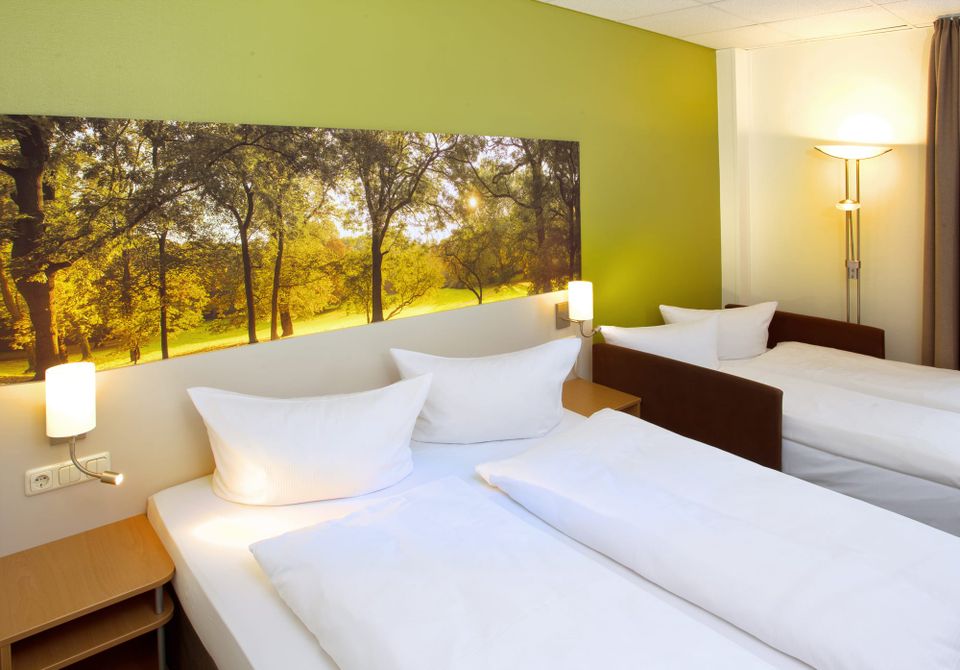
The changes in Paderborn extend far beyond the public areas. All 90 rooms were refurbished, air conditioning was installed, new room categories were introduced and the number of twin rooms was doubled.¹ Yet for Event Hotels, the project was apparently about more than updating the property visually. Neininger says that the traditional hotel bar no longer plays the same role in a property such as ibis Paderborn City that it once did. At the same time, flexibility, speed and uncomplicated access to food and drinks have become increasingly important for many guests.
The marketplace is intended to respond to precisely those expectations. Instead of limiting food and beverage services to fixed opening hours, guests can help themselves at any time of day. That also changes the function of the lobby. It is no longer simply a reception area, waiting space or passageway, but increasingly a place where arrival, work, food, drink and time spent in the hotel overlap.
This is by no means an isolated development in the hotel industry. Lobby markets and grab-and-go concepts are increasingly being used, particularly in city hotels, to provide guests with quick access to food, drinks and everyday items. An industry article published by Hospitality Net describes such markets as a potential source of additional revenue, while also warning against focusing solely on turnover. Product loss, spoilage, inventory management, technology and labour costs ultimately determine whether such a concept is actually profitable.²
What looks like a simple design decision therefore quickly becomes a business question. A traditional hotel bar comes with a different cost structure and different staffing requirements from a largely self-service marketplace. That does not automatically make the latter cheaper or more successful. Much depends on whether the concept fits the guest profile of the property and whether guests actually use it.
Self-Service as a Response to Staffing Challenges
The Paderborn concept becomes particularly interesting when staffing enters the equation. Bars and restaurants require employees not only during peak periods. Preparation, cleaning, payments, inventory management and numerous routine tasks continue even when only a few guests are using the service. Against the background of the long-standing labour shortage in hospitality, hotels increasingly have to ask whether every one of these tasks still needs to be carried out personally simply because that is how things have traditionally been done.
For Event Hotels, changing guest habits, economic considerations and staffing all played a role in the decision. Neininger argues that employees should be deployed where they can create the greatest value for guests. A marketplace can reduce repetitive operational tasks and potentially give the team more time for personal interaction. His central argument is therefore that self-service does not necessarily mean less service; in the best case, it creates more room for the kind of service that a machine cannot provide.
That represents an important shift in perspective. Discussions about automation often begin with the question of how much labour can be saved. A more interesting question may be: which tasks should employees actually still be expected to perform themselves? If a guest simply wants to take a drink from a refrigerator and pay for it, a personal interaction may add very little value. If the same guest needs a restaurant recommendation, has a problem with the room or simply needs orientation, the situation is entirely different.
The key is not to automate as many tasks as possible. What matters is whether routine processes can be simplified in a way that gives employees more time for personal guest care. Only then does self-service create a genuine benefit for the guest.
Guests Want Speed — But Not at Any Price
Current guest surveys show just how difficult that balance can be. A 2025 Ipsos survey commissioned by hotel technology provider Mews, involving 1,169 hotel guests in Germany, found that 42.2 percent were frustrated by long queues at check-in. At the same time, only 13.1 percent preferred a digital room key to a conventional key card, while just 13.6 percent considered chatbots helpful.³
At first, those figures appear contradictory. In reality, they make considerable sense. Guests seem to want faster and easier processes without necessarily wanting every personal interaction to be replaced by technology. Even technology providers increasingly frame digital tools in terms of reducing queues, paperwork and administrative friction so that employees have more time for meaningful guest interaction.
An international study by Oracle Hospitality and Skift reveals a similar tension. Seventy-three percent of surveyed travellers said they would be more likely to choose a hotel offering self-service technology designed to minimise unnecessary contact. Yet only 38 percent said they wanted a fully self-service model in which staff would only be available on request.⁴
The figures therefore suggest something more nuanced than a simple desire to remove people from the hotel experience. What guests appear to value is choice. Someone who wants to check in quickly, make a payment or grab a drink may not want to wait. But when assistance is needed, that same guest may still expect a person to be available.
Business Travellers May Have Different Priorities
Expectations also vary significantly between guest groups. Neininger observes that business travellers, younger guests and people who travel frequently tend to adopt self-service solutions quite naturally. For them, speed, availability and a frictionless process often matter most. Other guests place considerably more value on personal interaction and traditional forms of service.
That may be one of the central challenges for hotels. The same technological solution can feel convenient to one guest and impersonal to another. For that reason, Neininger does not believe hotels should think exclusively in terms of either “digital” or “personal”. Wherever possible, guests should be able to decide for themselves how much personal service they want to use.
That sounds straightforward in theory, but it is demanding in practice. Choice means maintaining several options at the same time. A digital check-in offers little value if it completely replaces the reception team and no one is available when something goes wrong. Conversely, a fully staffed desk provides little benefit to a frequent business traveller who simply wants a room key and has to wait ten minutes to receive it.
When the Lobby Becomes a Food and Beverage Space
The marketplace changes more than the organisation of service. It also changes the economic function of the lobby. Areas that once primarily served reception, waiting and general circulation are increasingly being viewed as spaces capable of generating additional revenue. Drinks, snacks, light meals and other products can be offered around the clock without necessarily operating a conventional restaurant or bar.
There is, however, an obvious risk in making the concept sound simpler than it is. A marketplace may appear straightforward: refrigerators, shelves, a payment system — done. In reality, it needs to be managed just as professionally as any other food and beverage operation. Which products actually sell? How much stock goes to waste? How high is shrinkage? How frequently does the area need replenishing? What technology is required, and how much labour does the operation still consume? The Hospitality Net article on hotel lobby markets explicitly argues that hotels should treat these areas as business units in their own right and measure costs just as carefully as revenues.²
For other hoteliers, that is perhaps one of the most useful lessons from Paderborn. The conclusion is not simply: remove the bar and install refrigerators. The more relevant point is that hotels can reassess their public spaces and ask what their guests actually use — and what infrastructure makes economic sense for that demand.
One Concept, Not a Blueprint
Event Hotels does not present the Paderborn model as a universal solution. Neininger emphasises that Paderborn is not an isolated experiment, but neither is it a blueprint that can simply be copied across every property. Marketplace and self-service solutions may play an important role at other locations, but guest structure, location and actual demand must always be considered.
That distinction makes sense. An airport hotel with a large number of late-arriving business travellers requires a very different food and beverage offer from a leisure hotel where guests deliberately spend their evenings on the property. A long-established hotel bar that attracts local residents can itself be an economic asset and part of the brand. A smaller city hotel, on the other hand, may benefit considerably from offering food and drinks after the kitchen has closed.
The lesson from Paderborn should therefore not be reduced to a simple industry rule. What is more interesting is the thinking behind it: rather than maintaining existing structures merely because they have traditionally belonged in a hotel, operators can ask what function those structures still serve for today's guests.
ibis Paderborn City
Want to discover the hotel for yourself? Explore current offers and booking options directly on the hotel's website.
Visit hotel websiteSo, Does a Modern Hotel Still Need a Traditional Bar?
For ibis Paderborn City, the answer appears to be: not necessarily. The traditional bar has been replaced by a marketplace that gives guests access to food and drinks around the clock. At the same time, the hotel team is intended to be relieved of routine tasks and given more time for personal guest care. Whether that promise works fully in day-to-day operations will only become clear over time.
For the hotel industry, however, another question may be more important. Not every service that used to be delivered personally must necessarily continue to be handled by a human being. At the same time, hospitality itself cannot simply be digitalised. Hotels therefore need to distinguish carefully between processes guests are happy to manage quickly and independently and situations in which a personal contact genuinely adds value.
Perhaps the real question is not whether the traditional hotel bar has a future.
It is where people will still be needed in the hotel of the future.
If self-service takes over where personal interaction adds little value, while employees genuinely gain more time for their guests, then less traditional service could paradoxically result in more hospitality. That, ultimately, is the idea behind the marketplace concept in Paderborn.
This article is based on our own editorial research, press materials, industry studies and specialist publications.
-
Event Hotels / ibis Paderborn City
Press information on the complete refurbishment of ibis Paderborn City and its new marketplace concept.
September 2026. -
Hospitality Net / Jill Dean Rigsbee
Increasing Relevance and Profitability in the Lobby Market.
Industry article on the development, operation and profitability of hotel lobby markets. -
Mews / Ipsos Hospitality Survey
Survey of 1,169 German hotel guests on digitalisation, check-in, digital services and personal interaction, 2025. -
Oracle Hospitality / Skift
Hospitality in 2025: Automated, Intelligent... and More Personal.
International study on self-service, automation and changing guest expectations in hospitality.