

Key points
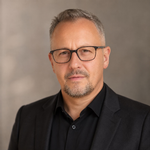
- For around 20 years, Armin Gross has been making Hotel Prinz-Luitpold-Bad in Bad Hindelang in the Allgäu more sustainable, step by step.
- It started in 2006 with a benchmark comparison: relative to revenue, his hotel had the highest energy costs.
- Guests are not asked to give anything up. The changes happen behind the scenes, such as a new roof, better insulation and solar panels.
- The commitment brings in hardly any extra bookings. Under the new rules against greenwashing, the hotel no longer advertises itself as climate neutral.
For 20 years, Armin Gross has been asking himself how his hotel, the Prinz-Luitpold-Bad in Germany’s Allgäu region, can become more sustainable. Even so, guests can still look forward to a heated outdoor pool, a generous breakfast buffet and all the comfort they are used to. Gross does not rely on sacrifice but on changes behind the scenes. And he speaks remarkably openly about what works, what meets resistance and why hardly any of it translates into additional bookings.
Anyone holidaying at the Hotel Prinz-Luitpold-Bad in Bad Hindelang is meant to do one thing above all: relax. The outdoor pool is heated, the rooms are pleasantly warm and at breakfast guests do not have to do without a wide choice. Even tropical fruit is still on offer. At first glance, this does not sound like a hotel that has been working intensively on sustainability for around two decades. Yet that is precisely Armin Gross’s approach. He wants to reduce his hotel’s use of resources without constantly reminding his guests of the effort this requires.
For them, sustainability should be as “effortless” as possible, he explains in conversation with eingecheckt. A guest who pays for a restful break should not be forced to choose between enjoying their holiday and caring for the environment. Gross sees it rather as his job as a hotelier to reconcile the two. He knows from his own experience that this is no easy promise to keep, particularly in a wellness hotel with heated pools and a correspondingly high demand for energy.
It all started with an uncomfortable figure
When Armin Gross joined his parents’ hotel in 2006, the business was facing considerable challenges. Changes in the healthcare system had taken their toll on the hotel financially, and at the same time investment was needed. So the young hotelier already had to take a hard look at costs, processes and the future viability of the business. One experience from that time was to shape his later work in particular.
At a meeting with other hoteliers, the participants compared their management accounts. Gross discovered that, measured against turnover, his hotel had the highest energy costs. It was an insight that brought together two issues that had until then occupied him separately: his interest in protecting the environment and his financial responsibility for the family business.
Suddenly, using energy more sparingly was no longer just a matter of personal conviction. It became a concrete business task. Gross began to look more closely at the hotel’s energy consumption, to bring in consultants and to look for ways of improving existing systems and processes. There was no quick fix. The challenges were too extensive and the available funds too limited.
“I can’t take giant steps, so I have to take small steps,” is how he describes his approach at the time. This idea gave rise to a way of working that he still follows today: investing continuously, combining measures and checking again and again which improvement is possible at what financial cost.
Why a new roof can achieve more than a grand vision
One project that Gross is particularly pleased with is the photovoltaic system on the hotel roof. However, the system was not the starting point. First, the old roof had to be renovated. Gross used this investment, which was necessary anyway, to improve the insulation at the same time and to create a way of generating the hotel’s own electricity. A structural necessity thus became an opportunity to influence the hotel’s energy needs in the long term.
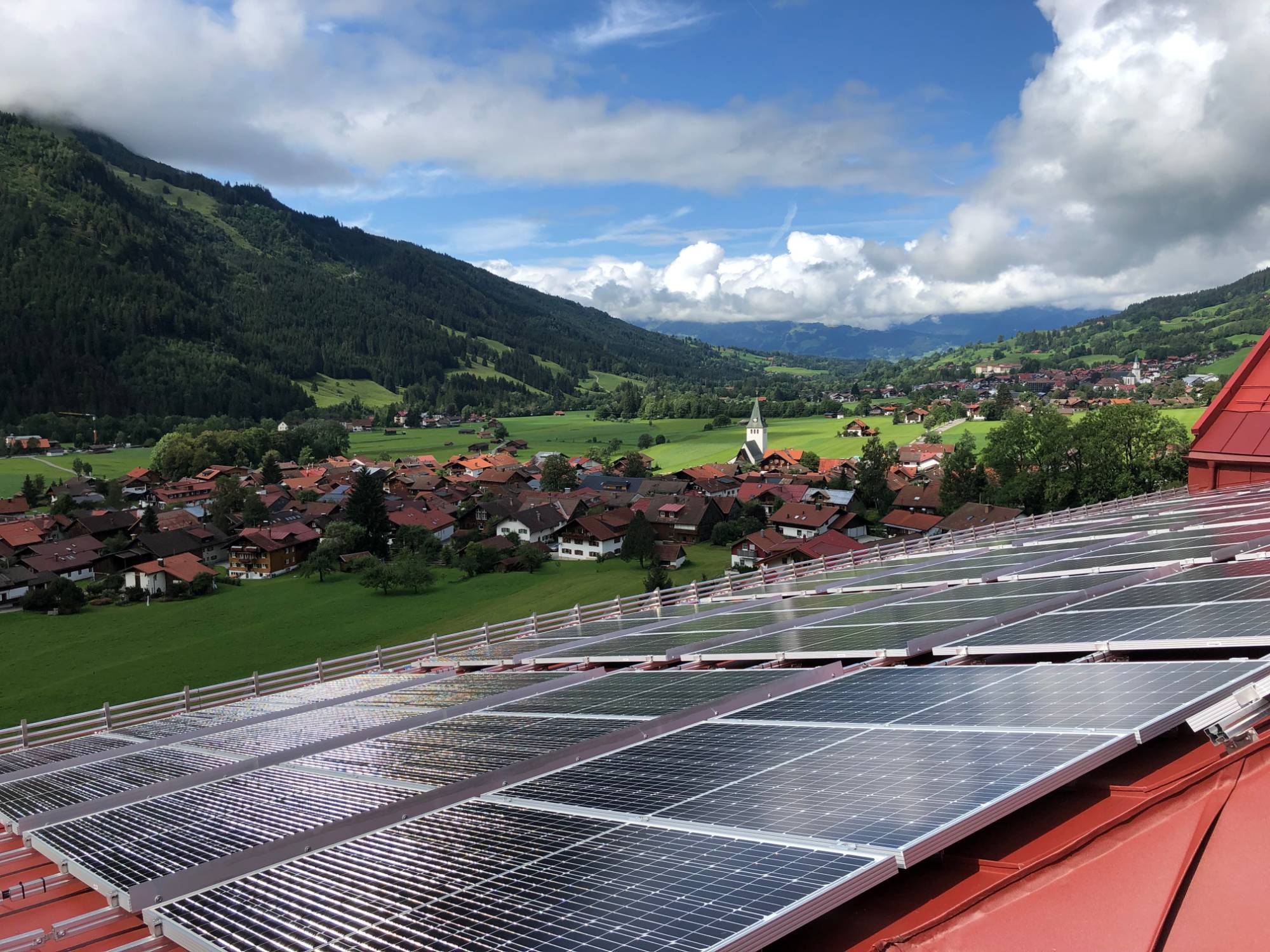
Connections like these play a central role in his sustainability strategy. Gross does not see a hotel as a collection of individual technical installations but as a system in which many decisions depend on one another. A more efficient heating system, for example, achieves less if the building envelope loses an unnecessary amount of heat. Conversely, an upcoming renovation can open up opportunities that would hardly arise if the costs were considered in isolation.
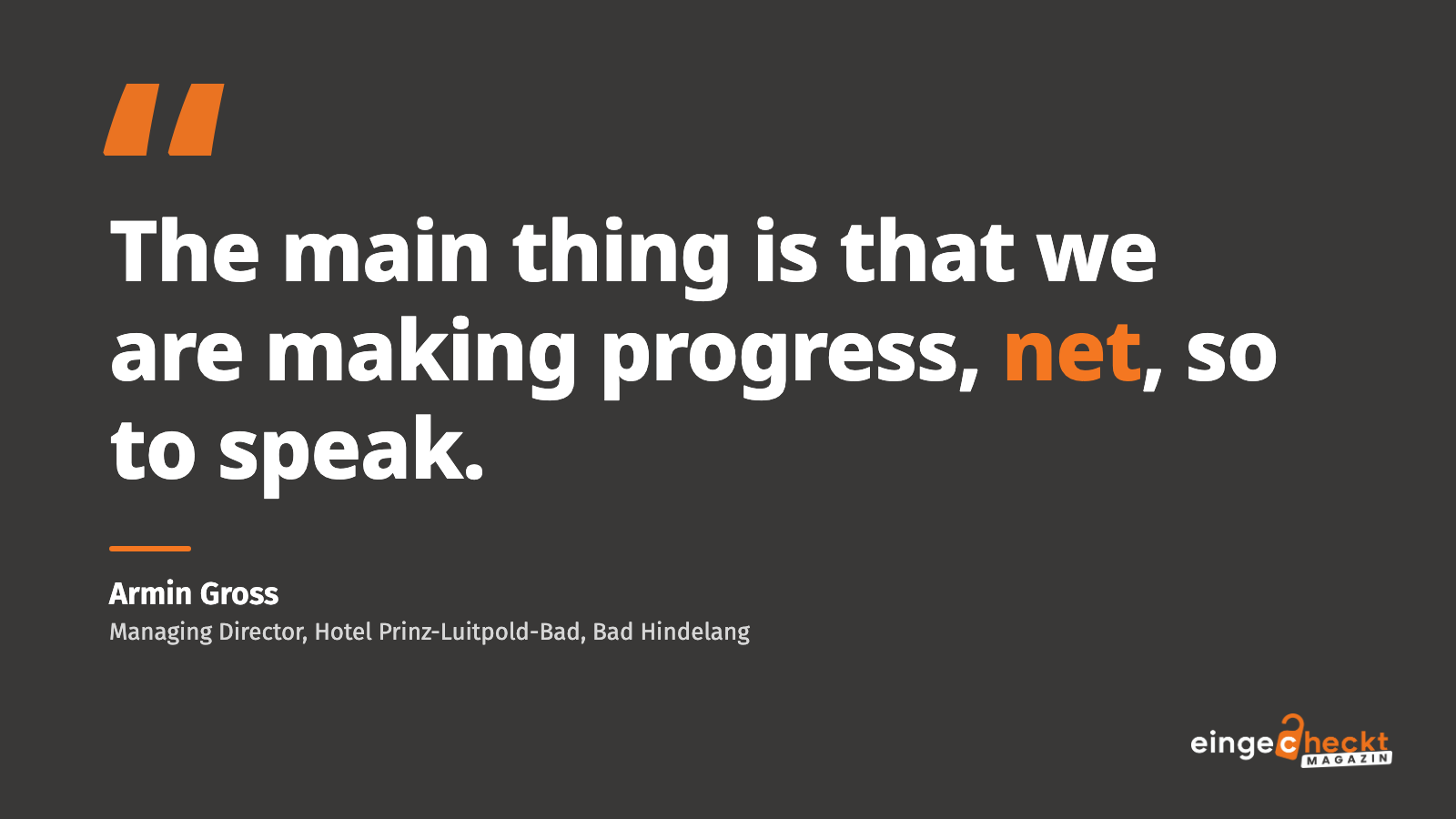
At the same time, Gross avoids big promises of success. In his experience, it is not always possible to determine clearly how much energy an individual measure actually saves. The hotel’s occupancy changes, as does the weather and numerous other factors. Instead of focusing on a particularly impressive savings figure, he relies on regular energy consulting and many coordinated improvements.
His understanding of sustainability now goes well beyond energy consumption. Since around 2021, he has been working systematically with the 17 Sustainable Development Goals of the United Nations. Alongside ecological aspects, these also include social and economic questions. For Gross, sustainability has long since become part of how the whole business is run, not just an additional project for the building services team.
What guests and staff make of it
Asked whether this commitment has an effect on bookings, Gross answers with surprising sobriety. In his perception, only a few guests choose the Hotel Prinz-Luitpold-Bad explicitly because of its sustainability measures. In any case, he cannot identify a noticeable marketing effect. Yet it would be perfectly understandable to look for this benefit: sustainability has long since become a selling point in the hotel industry, too. Certifications, environmental reports and labels on booking platforms are meant to show that a business acts responsibly.
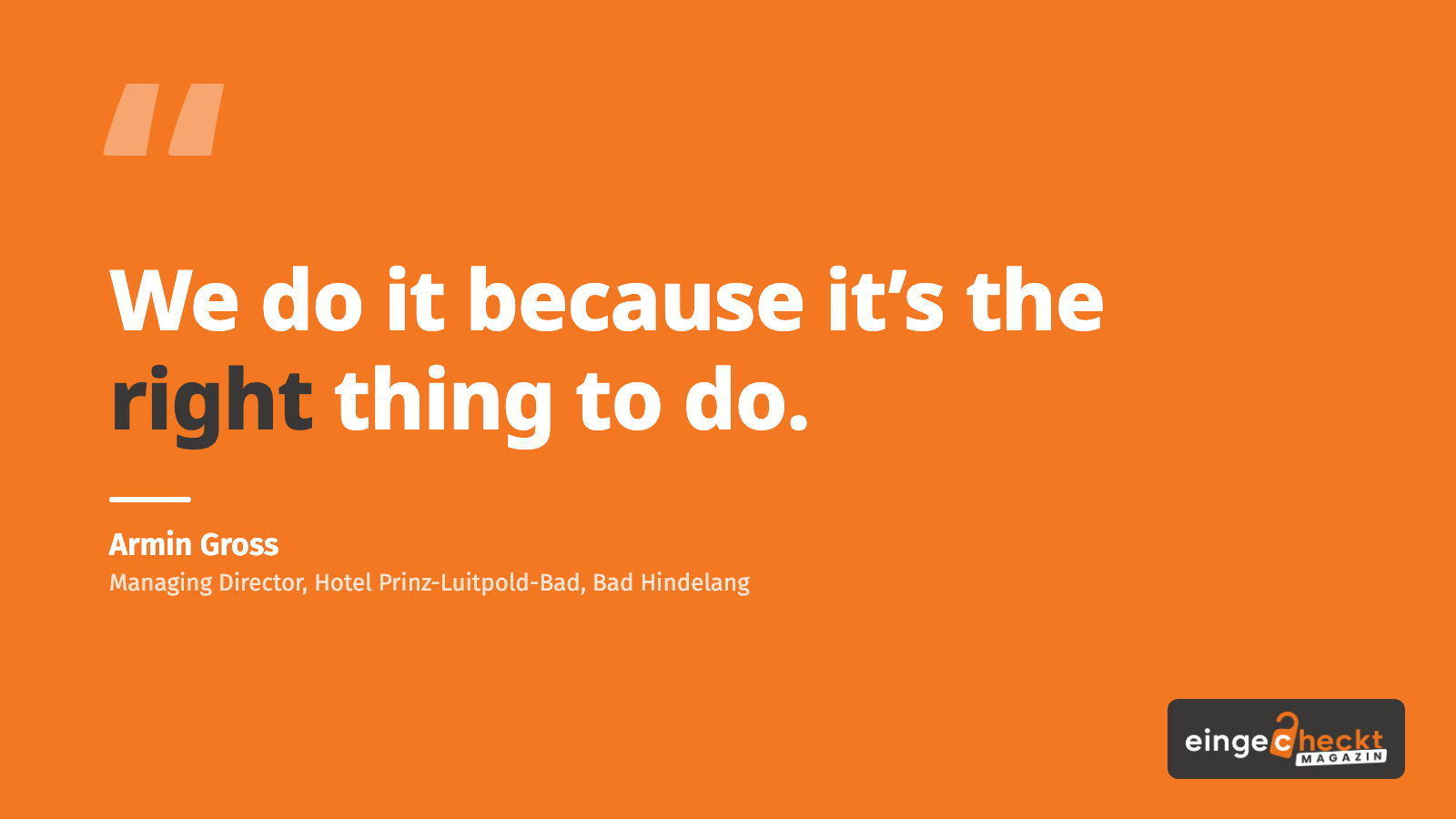
Gross sees things differently. He wants to run his hotel more sustainably because he believes it is right – regardless of whether the measures bring him additional guests. At the same time, he remains an entrepreneur and has to make sure that investments make economic sense. His approach therefore combines personal conviction with a decidedly pragmatic view of costs.
Not everyone in his own team is enthusiastic about the topic either. Staff generally implement the necessary changes but do not necessarily engage with them with the same passion as Gross. His technical manager, he says, is particularly committed. The introduction of a smart heating control system from Betterspace, for example, was by no means welcomed by everyone.
It is precisely this openness that makes his experience interesting for other hotels. New technology may make sense on paper, but in day-to-day work it also has to be accepted by the people who use it. Running a business sustainably therefore does not just mean finding technical solutions. It is just as much about changing habits, adapting processes and standing by decisions whose benefits are not immediately obvious to every member of staff.
When good intentions suddenly become harder to communicate
One issue is currently on Armin Gross’s mind in particular: the stricter legal requirements for environmental and sustainability claims. Since 27 September 2026, new rules implementing the European EmpCo Directive have applied in Germany. They are intended to protect consumers from misleading environmental promises and restrict, among other things, certain climate-neutrality claims that are based solely on offsetting emissions.¹ ²
In principle, Gross welcomes the crackdown on greenwashing. After all, he has been working on concrete measures himself for many years and knows how much effort real change can involve. Nevertheless, he sees a possible unintended consequence of the new rules. His hotel continues to support climate protection projects in order to offset emissions on paper. In the past, this commitment was also advertised with a climate-neutrality claim. The hotel no longer does so.
Gross fears that some businesses could stop making voluntary offsetting payments if they lose the associated advertising advantage. It is a consideration that goes beyond his own hotel: could stricter regulation of environmental advertising lead some businesses to invest less in voluntary climate protection projects? Whether this effect will actually materialise cannot be answered from his experience alone. But his concern shows how differently new rules can affect companies’ decisions.
The legal distinction is important here. Supporting climate protection projects remains permitted, as does factual and accurate communication about it. What is prohibited in particular are certain claims that present a product or service as climate-neutral solely on the basis of emissions offsetting.¹ ² For hoteliers, it is therefore becoming more important to distinguish clearly between actual emission reductions in their own business and voluntary contributions to climate protection outside the company.
Why it is about more than energy costs for him
For all the business considerations, Armin Gross’s commitment also has a personal side. He studied in Australia for his master’s degree and thus got to know a region that differs considerably from his home in terms of landscape and culture. His attachment to the Allgäu has remained. He wants to help ensure that the region retains its special character for future generations.
He is not only thinking of the landscape that holidaymakers enjoy on hikes or from their hotel balcony. Gross also talks about the farms that shape the Allgäu and whose economic future is closely linked to the preservation of this cultural landscape. He hopes that the region will continue to “feel a little like an unspoilt world” in the future.
For a hotelier in Bad Hindelang, this is by no means just a romantic notion. The surroundings are a key part of what guests value about a holiday in the Allgäu. If the landscape, farming and the regional way of life change, this will also affect tourism in the long term. For Gross, responsibility towards his home region and the future viability of his hotel are therefore connected.
Twenty years – and far from finished
Around 20 years have passed since the business comparison of 2006. The realisation back then about the unusually high energy costs set in motion a process for Armin Gross that continues to this day. His hotel has changed, new technology has been added, existing buildings have been improved and sustainability has found a firm place in his business decisions. He evidently does not see a point at which every possibility will have been exhausted.
His advice to other hoteliers is therefore, above all, to make a start. Not every measure has to be big, and not every investment can be made straight away. What matters, he says, is to keep at it, to seek expert advice and to use the available funds where they have the greatest effect. For smaller and family-run hotels in particular, this is likely to be an approach that makes sense, as they can rarely consider investments independently of their financial situation.
And the guests? They can still swim in the warm outdoor pool at the Hotel Prinz-Luitpold-Bad, help themselves at the breakfast buffet and enjoy their break in the Allgäu. For Armin Gross, this is no contradiction to his commitment. His aim is not to take away as much as possible from guests, but to make the business behind these offerings more responsible step by step.
Perhaps that sums up his attitude best: the guest should enjoy their holiday. The hotelier takes care of the changes in the background.
This article is based on a written interview with Armin Gross of the Hotel Prinz-Luitpold-Bad and additional editorial research.
-
Leipzig Chamber of Commerce and Industry (IHK zu Leipzig) (2026)
Regelungen gegen Greenwashing: EmpCo-Richtlinie
Information page, accessed on 15 October 2026. Overview of the new rules for environmental and sustainability claims. Original publication in German. -
European Union (2024)
Directive (EU) 2024/825 on empowering consumers for the green transition
Official Journal of the European Union, 6 March 2024. Rules against misleading environmental claims, including climate-neutrality claims based on emissions offsetting.


